
Liberia, a nation defined by its lush landscapes, rich biodiversity, and a history intrinsically linked to the soil, stands at a critical juncture in its developmental trajectory. For decades, the agricultural sector has been the backbone of the national economy, acting as the primary source of livelihood for the vast majority of its population. Yet, despite contributing approximately 31% to the nation’s Gross Domestic Product (GDP) and engaging roughly 60% of the workforce, the agricultural sector remains largely characterized by subsistence-level operations. The untapped potential of Liberia’s agricultural value chains—from the initial tilling of the soil to the sophisticated processing of commodities for international markets—represents the most viable pathway toward sustainable economic diversification, poverty alleviation, and national food security.
To understand why Liberia has yet to maximize this potential, one must look beyond the surface, examining the historical legacies, structural impediments, and the systemic shifts required to transform agriculture from a survival mechanism into a competitive industrial engine. Historically, Liberia’s agricultural narrative has been dominated by large-scale concession-based plantation models, particularly in the rubber sector. Following the arrival of Firestone in the 1920s, the nation’s economic identity became tethered to raw commodity exports. While these concessions brought infrastructure and employment, they often failed to foster an integrated national economy where local smallholders could thrive alongside industrial giants.
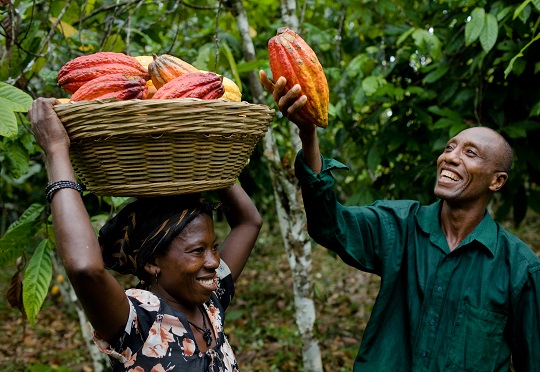
This historical imbalance has left a lasting footprint, creating a bifurcated sector where small-scale farmers often lack the access to finance, technology, and sophisticated processing equipment enjoyed by larger entities. This is the crux of the value chain challenge: Liberia exports raw, low-value products and imports high-value processed goods, effectively hemorrhaging capital that should be circulating within the domestic economy. The cocoa industry serves as a primary example of this untapped potential. According to data from the International Cocoa Organization, Liberia’s cocoa output has shown promising growth, rising from 8,000 metric tons in 2019 to 12,000 metric tons in 2020.
However, this figure is a mere fraction of what could be achieved with modernized agronomic practices. Currently, Liberian cocoa farmers grapple with a trifecta of constraints: limited access to specialized rural financing, aging tree stocks, and a fragmented market structure that leaves farmers at the mercy of middlemen who capture the lion's share of profits. By moving up the value chain—investing in local drying facilities, fermentation centers, and, eventually, value-added processing such as cocoa butter or chocolate manufacturing—Liberia could see its export revenues soar while creating a new tier of agribusiness employment. The social implication of this transition is profound; empowering rural farmers through cooperatives and access to capital could drastically reduce the rural-to-urban migration that currently places immense pressure on Monrovia’s infrastructure.
Simultaneously, the issue of food security remains a pressing national concern, particularly regarding rice, the primary staple crop. Despite the Food and Agriculture Organization (FAO) reporting a production output of approximately 420,000 metric tons in 2020, Liberia remains heavily dependent on rice imports. This dependence renders the nation vulnerable to global price volatility and supply chain disruptions, as seen during global economic crises. The irony of this dependence is that Liberia possesses the fertile lowlands and climatic conditions necessary to achieve near-self-sufficiency in rice.
The bottleneck here is not only biological or technical; it is infrastructural. Without reliable farm-to-market roads, the cost of transporting rice from the interior to urban centers often renders domestic rice more expensive than imported varieties. Furthermore, the lack of modern milling facilities means that the quality of local rice often does not meet the standards expected by urban consumers. Bridging this gap requires a multifaceted approach: government incentives for local mills, improved irrigation systems to allow for double-cropping, and policies that favor domestic procurement.
Moving into the broader regional context, Liberia is a signatory to the African Continental Free Trade Area (AfCFTA), which presents both an opportunity and a challenge. As trade barriers lower across the continent, Liberia must ensure its agricultural products are competitive enough to survive in an open market. This requires a rigorous focus on standards, quality control, and phytosanitary certification—elements that are currently underdeveloped. The rubber industry, which has long been the pillar of Liberia's export economy, faces similar systemic hurdles.
Despite its importance, the value chain is remarkably thin. The majority of raw rubber leaves the country with minimal processing. By analyzing this specific value chain, stakeholders can identify precise interventions: for example, investing in local crumb rubber production plants or rubber-based manufacturing units could create high-value employment and shift the economic narrative from resource extraction to local manufacturing. Such a shift is not merely an economic decision but a political one that requires consistent, long-term commitment from the state.
The path forward for Liberia requires a deliberate strategy that harmonizes private sector investment with government policy. First and foremost, addressing the financing gap is non-negotiable. Traditional banking models in Liberia are often risk-averse regarding agriculture, viewing it as too vulnerable to climate and market shocks. Microfinance and specialized agricultural credit facilities, supported by government-backed guarantees, could unlock the liquidity needed for farmers to purchase high-yield seeds, fertilizers, and equipment.
Secondly, the government must prioritize the rehabilitation of the "feeder roads" network. An agricultural value chain is only as efficient as the transportation system that supports it; produce left to rot on impassable roads is a loss that the national economy cannot afford. Third, the policy environment must be geared toward encouraging innovation. Digital platforms that connect farmers directly to markets, price transparency tools, and agricultural extension services delivered via mobile technology are low-cost, high-impact solutions that have seen success elsewhere in West Africa.
Ultimately, the development of value chains in Liberia is about value retention. When the processing of cocoa, rubber, and rice occurs within Liberia, the wealth generated stays within the national borders, stimulating local businesses, supporting the education and health sectors, and fostering a robust middle class. The transition from a commodity-based economy to a value-added, processed-goods economy is the most reliable path to achieving the targets of the 'Pro-Poor Agenda for Prosperity and Development.' As we look ahead, the stakeholders—from the Ministry of Agriculture to international development partners and private investors—must recognize that agricultural transformation is a marathon, not a sprint.
It requires a sustained focus on closing the gaps in technology, infrastructure, and institutional support. Liberia has the land, the labor, and the potential; the challenge lies in weaving these elements into a cohesive, competitive, and sustainable agricultural ecosystem that benefits the common Liberian farmer as much as the industrialist.


