
The Government of Liberia (GoL) is currently engulfed in a storm of controversy that strikes at the very heart of fiscal governance and institutional transparency. As the nation pivots toward the 2025 fiscal year, the draft national budget has become a lightning rod for scrutiny, specifically regarding glaring inconsistencies in salary compensation figures for 2024. As outlined in the proposed 2025 document, the estimated salary outturn for 2024 is reported at US$253,396,908, a figure that stands in stark contrast to the initially approved allocation of US$299,360,895. This variance of approximately US$46 million is not merely a technicality; it represents a significant departure from budgetary reality that demands rigorous interrogation.
In a nation where fiscal credibility is the bedrock of international partnership and domestic stability, such a discrepancy cannot be dismissed as a simple clerical error or a benign forecasting misstep. This analysis seeks to peel back the layers of this financial enigma, exploring whether the situation points toward deliberate fiscal manipulation or a breakdown in administrative competence that threatens the government’s credibility. Historically, Liberian budgets have been fraught with challenges ranging from revenue shortfalls to the infamous harmonization processes of previous administrations. The current controversy, however, adds a new chapter to the long-standing debate over how the Liberian state manages its largest expenditure item: the civil service payroll.
To understand the gravity of the current situation, one must look at the trajectory of salary allocations. In 2023, the outgoing administration budgeted approximately US$305 million for salary compensation. When the current government assumed power, it championed a compensation budget of US$299 million for 2024. This figure was presented to the public and the legislature as a testament to continuity and fiscal prudence.
Yet, the reported 2024 outturn of US$253 million creates an immediate paradox. If the government truly expended US$46 million less than the approved budget, it would imply a drastic, systematic reduction in the wage bill that has occurred entirely outside the public eye. Historically, salary reductions in Liberia are cataclysmic events; the harmonization of 2019 and 2020 resulted in deep cuts that sparked widespread civil servant protests and social tension. Achieving an additional US$46 million in savings within a single fiscal year without a single major labor strike or publicized layoff is, at best, a miracle of efficiency and, at worst, an indicator of significant accounting fabrication.
The mathematical inconsistencies within the 2025 draft budget only serve to deepen this suspicion. The proposal suggests an increase in salary compensation to US$315 million for 2025. If one takes the government’s claimed 2024 outturn of US$253 million as the baseline, an increase of US$16 million—which officials have cited—would logically lead to a total of US$269 million. Instead, the budget lists US$315 million.
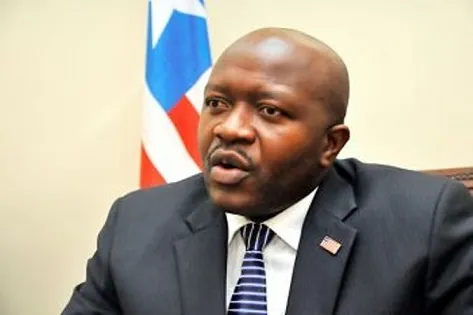
This leaves an unexplained gap of US$46 million. Furthermore, public statements from the Ministry of Finance have added layers of confusion. Finance Minister Augustine Ngafuan recently indicated on OK FM that the annual salary outturn is closer to US$309 million. If the outturn is indeed US$309 million, then the math underpinning the 2025 budget projections becomes even more convoluted.
Adding a promised US$16 million increment to a US$309 million base should result in a figure near US$325 million, yet the budget reflects US$315 million. These conflicting figures suggest that either the Ministry of Finance is operating under a flawed data architecture or that there is a deliberate attempt to obfuscate the true scale of government spending. The implications of this are profound for Liberia’s international reputation. Liberia currently operates under significant scrutiny from the International Monetary Fund (IMF) and other multilateral donors who emphasize the necessity of transparent fiscal reporting as a condition for budgetary support.
A US$46 million variance suggests a failure in the internal controls of the Integrated Financial Management Information System (IFMIS). If the government cannot account for the difference between its approved budget and its actual outturn, how can international partners trust the veracity of its macroeconomic indicators? Historically, the General Auditing Commission (GAC) has repeatedly flagged discrepancies in payroll management, pointing toward ‘ghost workers’ and unauthorized salary payments. The current government’s inability to provide a clear reconciliation of these figures echoes these past failures, suggesting that despite administrative promises of reform, the underlying structural issues remain unaddressed.
Some may argue that the US$253 million figure reflects a Year-to-Date (YTD) outturn for ten months of the fiscal year rather than the full twelve months. However, the budget document explicitly labels this as the outturn for the year, a framing that implies a finalized financial position. If it were a partial-year figure, labeling it as the annual outturn is a misleading practice that suggests either professional negligence or an intentional effort to manipulate public perception of the government’s fiscal health. By underreporting expenditures, the government might be attempting to create an illusion of austerity and success in fiscal consolidation, effectively masking the true cost of the civil service to the taxpayer.
Beyond the numbers, there is a social dimension to this controversy. Civil servants across the country have been waiting for salary adjustments and the clearing of arrears. If the government is indeed underreporting the payroll, it raises questions about whether funds intended for the public service are being diverted elsewhere or if the government is merely struggling to reconcile its own payroll database. The lack of transparency feeds into a broader sense of public cynicism, where taxpayers lose faith in the government's ability to allocate resources to essential sectors like health, education, and infrastructure.
In the context of the 2025 budget, which is intended to be a vehicle for national development, the discrepancy undermines the very foundation of the administration’s economic agenda. If the budget numbers do not add up, the entire plan for fiscal sustainability becomes a house of cards. To restore confidence, the government must adopt a posture of absolute transparency. The Ministry of Finance should immediately publish a detailed, line-item breakdown of the 2024 salary expenditures.
This data should be subjected to an independent audit—perhaps by an external accounting firm or a non-partisan legislative committee—to verify the actual outturns against the approved budget. Furthermore, structural reforms are required to modernize payroll monitoring. The reliance on manual or siloed financial reporting is a relic of the past that leaves the government vulnerable to both human error and intentional fraud. For Liberia to mature as a democracy, the management of its treasury must be transparent, verifiable, and above reproach.
The current controversy is a test of the government's commitment to these principles. Whether this is an honest mistake or a calculated deception, the burden of proof rests squarely on the shoulders of the Ministry of Finance. Without a clear, coherent, and public explanation that reconciles these disparate figures, the government risks losing the essential public trust required to implement its policy agenda. The people of Liberia deserve to know where their tax dollars are going, and the failure to provide this clarity in the 2025 budget is a dereliction of duty that cannot be swept under the rug.
Moving forward, the legislature must exercise its oversight power more aggressively, demanding a forensic reconciliation of the 2024 payroll before approving the 2025 budget. Failure to do so will only entrench the patterns of fiscal mismanagement that have plagued Liberia’s history, keeping the nation trapped in a cycle of budgetary uncertainty and economic stagnation.
