
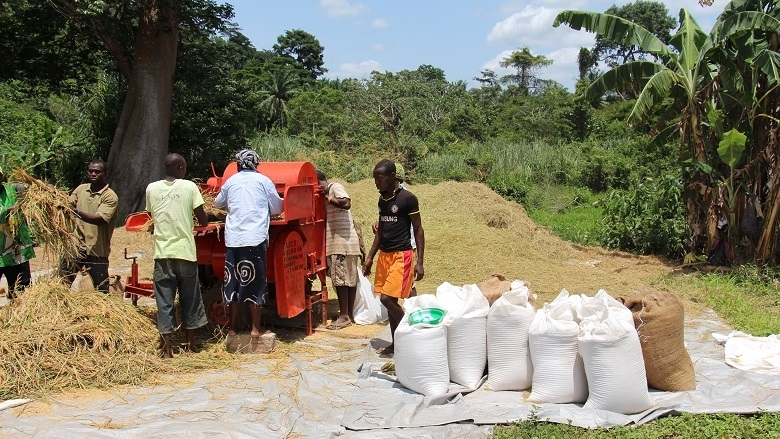
Liberia, a nation with a rich historical tapestry and abundant natural wealth, currently stands at a critical economic crossroads. A persistent and deep-seated characteristic of the Liberian economy is its high import dependency, a structural reality where the nation consumes far more in foreign goods and services than it generates through exports. This imbalance is not merely a statistical curiosity; it is a fundamental vulnerability that exposes the country to the whims of global market volatility, supply chain shocks, and inflationary pressures originating far beyond its borders. As the global economy experiences periodic turbulence, Liberia finds itself disproportionately affected, often with limited buffers to shield its citizens from the rising costs of imported food, energy, and manufactured commodities.
The systemic reliance on external producers creates an economic cycle that, if left unaddressed, threatens to stifle long-term development. Addressing this dependency requires a profound, multi-dimensional shift toward promoting local manufacturing—an objective that is as ambitious as it is essential for the nation's sovereignty and future prosperity. The current state of Liberia’s manufacturing sector is widely considered underdeveloped, characterized by a lack of scale and technological integration. This underdevelopment is a legacy of various historical, political, and economic factors, including years of civil instability, which decimated critical infrastructure and hindered the accumulation of industrial capital.
Today, the infrastructure deficit remains a significant barrier. The prohibitive cost and inconsistency of energy, coupled with inadequacies in road networks and port efficiency, act as a 'hidden tax' on any entrepreneur attempting to set up a factory in Monrovia or its environs. When it costs significantly more to transport raw materials from the hinterland to a processing plant, or to power machinery during peak hours, local businesses simply cannot compete with the economies of scale offered by foreign manufacturers who have already amortized their infrastructure costs. The consequences of this dependency are multi-faceted.
Firstly, Liberia is failing to capture the 'value-add' portion of its economic cycle. The country exports raw materials—rubber, timber, gold, and iron ore—in their primary state, only to import them back as finished goods like tires, furniture, and tools at a significant markup. By exporting jobs and value to other nations, Liberia effectively subsidizes the industrial growth of foreign economies while stagnating its own. Secondly, the lack of a robust industrial sector limits the creation of high-quality, sustainable jobs.
Agriculture and retail trade currently dominate the employment landscape, yet these sectors alone are insufficient to absorb the thousands of young people entering the workforce annually. Manufacturing is historically the engine of mass employment, providing stable wages and the potential for skills transfer that an import-reliant economy cannot match. Thirdly, this dependency disconnects Liberia from global value chains. In a modern interconnected economy, nations thrive by specializing in specific nodes of production.
Liberia's marginal participation in these chains leaves it on the periphery, dependent on commodities that are subject to volatile price swings. Transitioning toward local manufacturing is the only viable path to economic resilience. To initiate this transformation, the government of Liberia must act as both a facilitator and a primary catalyst. Investment in public infrastructure is the foundational requirement.
Without reliable electricity and efficient transportation, industrialization remains a theoretical goal rather than a practical possibility. The rehabilitation of existing power plants and the expansion of renewable energy sources—leveraging the country’s natural hydraulic potential—should be a national priority. Similarly, improving the efficiency of the Port of Monrovia is critical. When imported inputs take weeks to clear customs, production cycles are interrupted, and costs skyrocket.
Streamlining bureaucratic processes and digitizing customs clearance can drastically improve the business climate. Beyond infrastructure, the government must adopt a strategic approach to industrial policy. This involves identifying sectors where Liberia possesses a natural competitive advantage. The forestry sector, for instance, offers a clear opportunity for furniture manufacturing and high-end wood processing, rather than merely exporting raw logs.
The rubber industry, which has been a backbone of the economy for decades, could be modernized to move beyond raw rubber exports into the production of rubber-based industrial goods or medical equipment components. Similarly, the agribusiness sector holds immense promise; moving from the exportation of raw cocoa beans to the processing of cocoa liquor, butter, or even finished chocolate products would create a ripple effect of industrial activity. Tax policy also plays a pivotal role. The government can provide targeted tax breaks, duty-free exemptions on imported industrial machinery, and expedited business registration for entities that commit to a specific percentage of local value addition.
These incentives help mitigate the 'pioneer costs' faced by those willing to invest in the nascent manufacturing space. Furthermore, the regulatory environment needs a comprehensive overhaul to reduce the administrative burden on small-to-medium enterprises. A business-friendly environment is not merely about deregulation; it is about creating a predictable, transparent, and fair legal framework that protects investors while ensuring that local production standards are met. Data from the World Bank and other financial institutions underscore the urgency of this endeavor.
In 2021, Liberia’s import bill reached a staggering $2.5 billion, while the manufacturing sector’s contribution to GDP remained stagnant at around 12%. When roughly 85% of domestic demand is met by imports, the trade deficit becomes a drag on the national currency, contributing to devaluation and inflationary cycles. Furthermore, with an unemployment rate hovering around 15%—and significantly higher among the youth demographic—the necessity for labor-intensive industrialization is clear.
The human capital component cannot be ignored. A thriving manufacturing sector requires a workforce with specific technical skills, from machine maintenance to quality assurance and supply chain management. Vocational training programs must be aligned with the needs of emerging industries. Collaboration between the Ministry of Commerce and Industry, the Ministry of Education, and private sector stakeholders is vital to ensure that technical and vocational education and training (TVET) centers are graduating students who are immediately employable in a factory environment.
This creates a virtuous cycle: improved skills lead to higher quality production, which in turn leads to increased market demand and further investment. Ultimately, promoting local manufacturing is about national agency. It is about moving the nation from a passive consumer of global output to an active participant in global trade. It requires a long-term vision that transcends electoral cycles and a commitment to difficult structural reforms.
The transition will not be instantaneous, and it will likely face resistance from interest groups that benefit from the status quo of high import dependency. However, the path forward is illuminated by the success stories of other developing nations that have systematically moved up the value chain through targeted policy interventions. By leveraging natural resources for local processing, investing in energy and logistics, and nurturing a culture of entrepreneurship and technical excellence, Liberia can rewrite its economic narrative. The goal is to build a foundation where 'Made in Liberia' becomes a hallmark of quality and a driver of sustainable, inclusive growth.
Only by producing what we consume—or at least a significantly larger portion of it—can Liberia begin to insulate itself from global shocks and empower its citizens to build a prosperous, self-reliant future. This is a call to action for policymakers, the private sector, and the Liberian public to recognize that economic independence is not a distant ideal, but a tangible objective that starts with the very first factory established, the first product refined, and the first job created within our own borders.
