
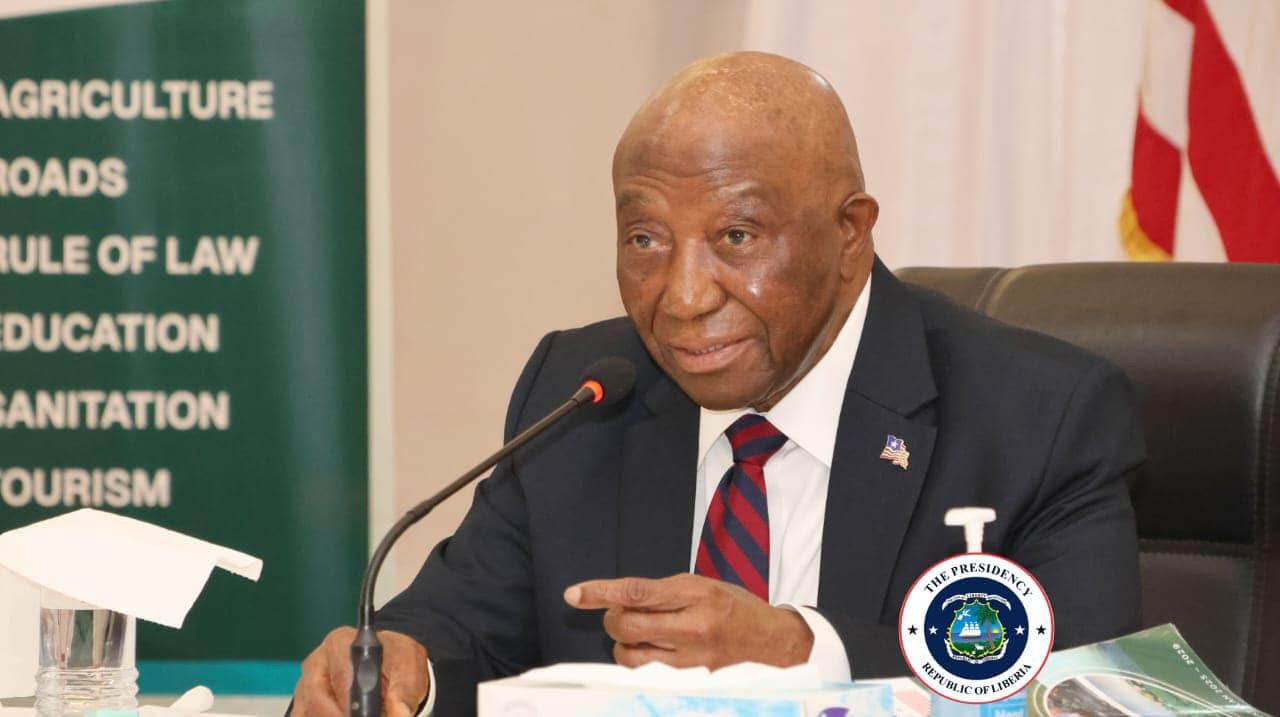
The introduction of the ARREST Agenda for Inclusive Development (AAID) 2025-2029 represents a pivotal moment in Liberia’s post-war trajectory, serving as the fourth iteration of the nation’s medium-term development strategy. As Liberia grapples with the transition from a low-income, aid-dependent economy to a more resilient, self-sustaining landscape, the AAID positions itself as the cornerstone of this evolution. By prioritizing Agriculture, Rule of Law, Roads, Education, Sanitation, and Tourism (ARREST)—a thematic framework that encapsulates the most urgent needs of the Liberian populace—the government aims to catalyze growth and bridge the yawning gap between potential and performance. However, as the nation embarks on this ambitious five-year journey, a critical question emerges: Is this roadmap a pragmatic instrument for national renewal, or does it succumb to the historical trap of over-ambition in the face of severe fiscal constraints?
The AAID is launched against a backdrop of deep-seated socio-economic fragility. With 45% of the population living in multidimensional poverty and a youth demographic—comprising 74.6% of the nation—facing structural unemployment, the stakes could not be higher. Historically, Liberia has struggled to translate natural resource wealth into equitable prosperity.
The AAID seeks to disrupt this pattern by aligning national objectives with regional and global frameworks, including the Sustainable Development Goals (SDGs), the Doha Program of Action, and Africa's Agenda 2063. While this alignment signals a sophisticated understanding of global development standards, the true test lies in the translation of these lofty goals into localized, tangible outcomes. The strategic framework of the AAID is rooted in an inclusive, multi-stakeholder model. By actively seeking to integrate the private sector, the diaspora, civil society, and local communities, the government aims to move away from the top-down planning approaches of the past.
This consultative methodology—bolstered by extensive engagements across 136 districts—is perhaps the plan's most significant institutional achievement to date. It fosters a sense of ownership that is essential for long-term sustainability, particularly in a nation where public trust in government institutions has been historically volatile. The central pillar of the AAID is the objective of transforming Liberia’s economy from a primary commodity-dependent model to one driven by value addition, innovation, and digital infrastructure. The plan’s commitment to digital transformation and the modernization of government services suggests a realization that Liberia cannot rely solely on traditional sectors to leapfrog into the future.
By focusing on the 'leapfrogging' potential of technology, the administration aims to optimize administrative efficiency and transparency. Furthermore, the plan’s explicit acknowledgment of corruption as a structural barrier to development is a marked departure from the rhetoric of previous administrations. By embedding anti-corruption mechanisms directly into the development roadmap, the AAID attempts to address the governance deficits that have traditionally deterred foreign investment and stunted fiscal discipline. However, the plan’s most glaring vulnerability lies in its fiscal architecture.
The AAID carries a price tag of US$7.6 billion, a colossal sum for an economy of Liberia’s size. Most concerning is the revelation that 70% of this budget is predicated on external funding. This extreme reliance on donor benevolence and international financial institutions introduces profound risks to the implementation schedule.
Global economic volatility, shifting geopolitical priorities among donor nations, and the inherent uncertainty of foreign direct investment mean that the AAID could be derailed by events far outside of Monrovia’s control. History serves as a cautionary tale; past development plans have often suffered from 'implementation fatigue' when projected inflows fail to materialize, leaving the state with half-finished infrastructure and unmet social targets. Furthermore, the targeted annual GDP growth rate of 6.3% is, by any objective standard, exceptionally optimistic.
Achieving such growth requires not only perfect policy implementation but also a stable global commodity environment and a drastic improvement in the ease of doing business—two variables that have proven elusive for Liberia over the last decade. The capacity constraints of the Liberian bureaucracy pose a secondary, yet equally significant, threat. Even with sufficient funding, the technical expertise required to manage multi-billion dollar, multi-sectoral projects is in short supply. The institutional limitations—ranging from inadequate data management systems to fragmented coordination between government ministries—could lead to significant bottlenecks.
To mitigate these risks, the AAID must move beyond its aspirational phase and transition into a model of rigorous, performance-based governance. The path to success hinges on a pivot toward domestic resource mobilization. Reducing the 70% dependence on external funding is not merely a financial preference; it is a sovereignty imperative. This requires aggressive tax reforms that move beyond traditional revenue streams to capture the informal economy and incentivize private sector investment.
Without broadening the tax base and improving the efficiency of tax administration, the government will find itself perpetually beholden to external actors, limiting its ability to pursue an independent national agenda. Moreover, the government must establish a robust contingency mechanism. Given Liberia's vulnerability to external shocks, the creation of a 'National Development Buffer Fund' could protect critical projects during economic downturns. This would provide the necessary stability to ensure that infrastructure and education initiatives are not cannibalized the moment global commodity prices falter.
Institutional capacity building must also be elevated from a secondary goal to a foundational priority. This involves more than just periodic training; it necessitates the professionalization of the civil service and the creation of clear, legally-binding accountability frameworks for every ministry tasked with delivering a component of the ARREST agenda. Data-driven governance should be the standard, ensuring that every dollar spent is tracked against specific, measurable milestones. The transparency of the monitoring and evaluation process will be the ultimate barometer of the plan's integrity.
By making this data accessible to the public, the administration can convert the 'inclusive' nature of the plan into a tool for civic oversight, thereby building the public trust necessary to sustain difficult reforms. In conclusion, the ARREST Agenda 2025-2029 is a technically sound and strategically robust framework that correctly identifies the levers of Liberia’s potential. Its focus on human capital, digitalization, and inclusive consultation addresses the core structural failures of the past. Yet, the plan’s reliance on external financing and its aggressive growth targets make it highly susceptible to systemic failure if not managed with extreme caution.
The government is not merely tasked with implementing a development plan; it is tasked with fundamentally rebuilding the relationship between the Liberian state and its citizens. If the administration can navigate the fiscal risks by prioritizing domestic resource mobilization and enhancing institutional capacity, the AAID could indeed set the trajectory for a new era of prosperity. If it remains trapped by its reliance on external funding and fails to address the underlying capacity constraints, it risks becoming another well-intentioned document relegated to the annals of unrealized national potential. The success of the next four years will depend not on the grandeur of the vision, but on the rigor, discipline, and pragmatism of the execution.
