
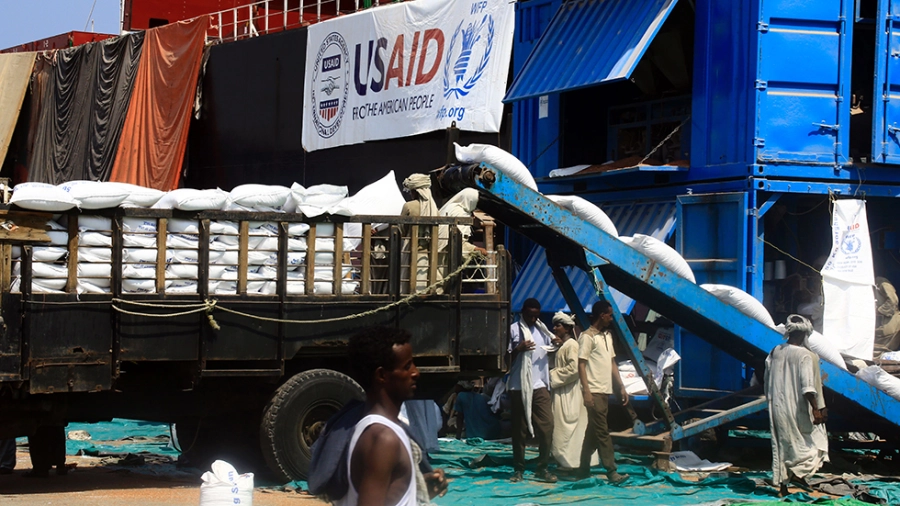
International aid and assistance have played a defining, yet profoundly complex, role in Liberia's economic and social trajectory since the cessation of the brutal civil war in 2003. For over two decades, the West African nation has existed in a precarious state of post-conflict reconstruction, a process heavily underwritten by an international community committed to stabilizing a state that had effectively collapsed. Donor countries and international organizations, ranging from the United States and the European Union to the World Bank and the International Monetary Fund, have poured billions of dollars into the country. These resources have been instrumental in rebuilding skeletal infrastructure, bolstering fragile healthcare and education systems, and attempting to ignite the engines of economic growth.
Yet, as Liberia moves further away from the immediate aftermath of conflict, the reliance on these external flows has transformed from a necessity into a structural dependency that demands critical examination. It is essential to analyze not merely the volume of aid entering the country, but the efficacy of its utilization, the transparency of the mechanisms governing its distribution, and the long-term impact on Liberia’s sovereignty and economic self-sufficiency. Historical context is vital here; Liberia, as Africa’s first republic, has long navigated a turbulent relationship with foreign influence. The post-2003 era marked a transition where aid became the primary lubricant for governance.
In 2018 alone, Liberia received over $1 billion in foreign aid, a figure representing roughly 14% of the national GDP. This high degree of aid integration into the national budget illustrates a country tethered to external fiscal cycles, often leaving local policy-making subservient to the priorities of international donors. The reliance on institutions like the World Bank and the IMF often comes with conditionalities that prioritize macroeconomic stability—such as austerity measures—which can sometimes clash with the immediate, visceral needs of a population struggling with systemic poverty. For instance, while foreign aid has been essential in the transport sector, funded through vehicles like the Liberia Road Asset Management Project, the sustainability of this infrastructure remains questionable.
Roads rehabilitated through donor funds frequently fall into disrepair within a few years due to a lack of domestic maintenance budgets. The World Bank’s involvement in infrastructural connectivity is intended to facilitate trade and reduce the isolation of rural agricultural communities, yet the lack of a robust domestic revenue base means that when the aid cycle shifts, these critical lifelines risk degradation. Similarly, the African Development Bank’s investment in the Roberts International Airport was a strategic effort to integrate Liberia into the global economy, aiming to boost tourism and business travel. However, infrastructural development cannot exist in a vacuum; without an accompanying investment in institutional capacity and local service maintenance, the country remains a recipient rather than a primary owner of its development assets.
The healthcare sector serves as a sobering case study for both the successes and the limitations of aid-led development. The 2014-2015 Ebola virus disease outbreak exposed the frailty of the health system, revealing that despite years of foreign assistance, the country lacked a resilient foundation to withstand a major crisis. The subsequent influx of emergency aid, while vital for saving lives, underscored the extent to which the national healthcare infrastructure was effectively managed by international NGOs rather than the state. Organizations like USAID and the World Health Organization became the de facto providers of basic services, funding the construction of facilities like the Redemption Hospital in Monrovia.
While these projects provided maternal and child health services to thousands of vulnerable Liberians, they simultaneously highlighted the 'hollow state' phenomenon—where the government becomes a conduit for international service delivery rather than an active provider. This dynamic creates a dangerous moral hazard: if donors are willing to step in and fund the hospitals, clinics, and vaccination drives, the incentive for the domestic government to prioritize healthcare in its national budget is often severely diminished. The implications of this are not merely administrative; they are fundamentally political. When a government does not fund its own essential services, it becomes less accountable to its citizens and more accountable to its foreign donors.
This creates a democratic deficit, where the social contract between the state and the people is weakened because the state is not the primary guarantor of its people’s welfare. Furthermore, the persistent issue of corruption and financial mismanagement continues to cast a long shadow over the efficacy of aid. Despite numerous reform programs, the diversion of funds—whether through procurement fraud, inflated project costs, or systemic patronage—remains a significant hurdle. When aid is mismanaged, it not only wastes precious resources but also fuels public cynicism toward development projects.
The lack of transparency in how funds are allocated and utilized remains a sore point in Liberia's political discourse, with opposition figures and civil society organizations frequently calling for deeper audits of donor-funded initiatives. The regional significance of Liberia’s experience cannot be overstated. As part of the Economic Community of West African States (ECOWAS), Liberia's economic health impacts its neighbors. A stable, self-sufficient Liberia could act as a regional anchor, yet a country locked in a cycle of debt and aid dependency struggles to play that role effectively.
The current economic strategy, encapsulated in the 'Pro-Poor Agenda for Prosperity and Development' (PAPD), is a bold attempt by the government to pivot toward domestic resource mobilization and private sector investment. This move is long overdue. For Liberia to break the cycle of overreliance, it must transition from a model of aid-led growth to one of trade-led growth. This requires creating an environment conducive to private investment, reducing the cost of doing business, and tackling the endemic corruption that discourages local entrepreneurs and foreign investors alike.
The reliance on foreign aid is a legacy of the desperation that followed the civil war, but it cannot be the blueprint for the next century of Liberian history. Sustainable development requires the maturation of domestic institutions, the strengthening of the rule of law, and a shift in mindset that prioritizes long-term systemic change over short-term project-based relief. Liberia must move toward a future where its roads, hospitals, and schools are funded by its own tax base and managed by its own citizens. This process will be difficult and may involve short-term pain, as the withdrawal of aid can lead to immediate budgetary shocks.
However, the alternative—a permanent state of dependency—is an untenable path for a nation that holds the promise of significant natural wealth and a young, vibrant population. To achieve true independence, Liberia must aggressively pursue economic diversification, reducing its reliance on rubber and iron ore exports, and instead investing in agriculture, tourism, and human capital. The international community, for its part, must transition from the role of 'donor' to that of 'partner,' shifting focus from project implementation to institutional capacity building. Only by fostering an environment of mutual accountability and genuine local ownership can Liberia emerge from the shadows of its past and establish a robust, self-reliant future.
The current era of international aid has been a lifeline for Liberia, but the true measure of success will be the speed and effectiveness with which that lifeline is eventually no longer needed.



