
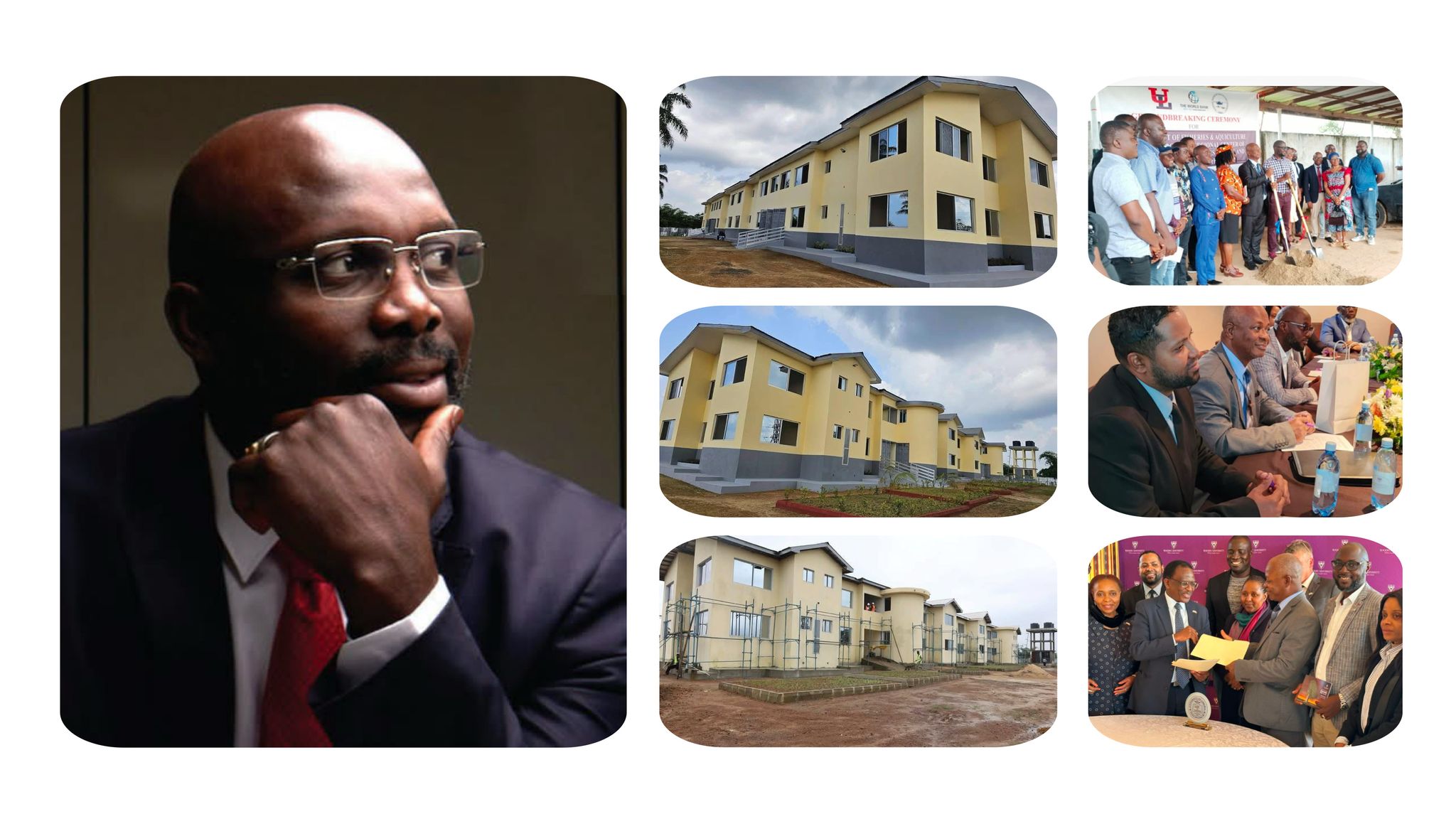
As the curtains draw on the final stages of the multi-million dollar infrastructure project at the University of Liberia’s (UL) Fendell campus, the nation stands on the precipice of a significant academic and economic shift. With the project now reported at 98% completion, the National Fisheries and Aquaculture Authority (NaFAA) initiative—birthed under the administration of former President George Manneh Weah—serves as a poignant case study in long-term developmental planning. This $1.8 million endeavor, characterized by the construction of a cutting-edge academic building and a modern student dormitory, represents a deliberate attempt to pivot Liberia away from its status as a peripheral player in the maritime sector toward becoming a regional hub for fisheries science and management.
The significance of this project cannot be overstated; it is the physical manifestation of a strategic vision to bridge the gap between Liberia’s untapped blue economy and the technical expertise required to manage it effectively. For decades, Liberia’s coastline—stretching over 570 kilometers—has been a source of significant untapped potential, yet the nation has struggled with systemic challenges, including illegal, unreported, and unregulated (IUU) fishing, limited post-harvest infrastructure, and a profound lack of specialized local expertise. By launching the first-ever Bachelor of Science degree program in Fisheries Science in January 2023, and anchoring it with dedicated physical infrastructure, the Weah administration sought to address these foundational weaknesses. The project, funded by the World Bank under the Liberia Sustainable Management of Fisheries Project (LSMFP), was not merely a construction contract; it was a systemic intervention designed to build institutional capacity within the University of Liberia.
The academic building, contracted to Mak Enterprises Inc., is intended to serve as a research and training epicenter. It is complemented by a two-story dormitory built by Bitar Construction Company, designed to house students pursuing this specialized degree, thereby ensuring that the program attracts and retains talent from across Liberia’s fifteen counties. The competitive bidding process that led to the selection of these firms was a testament to the effort to maintain international standards of accountability and transparency in the project’s execution.
Historical context is vital to understanding the weight of this initiative. Historically, Liberia’s educational institutions have struggled with a curriculum mismatch—producing graduates whose skills did not always align with the nation’s core economic pillars of agriculture, mining, and maritime. By focusing on fisheries, the government acknowledged that the marine sector is not just a food security issue; it is an economic powerhouse that, if managed with scientific rigor, could generate thousands of formal jobs and contribute significantly to the national GDP. The involvement of the World Bank is perhaps the most significant indicator of the program's long-term viability.
The LSMFP is a comprehensive framework that goes beyond classroom walls, looking toward the entire value chain. The acting World Bank country manager, Mack Cape-Hart Mulbah, noted during the groundbreaking phase that the investment is intended to trigger a cascade of benefits, from job creation to the eventual implementation of advanced processing facilities and cold storage technology. This is crucial for Liberia, where a substantial portion of artisanal fish catch is lost due to poor preservation methods. When Hon.
Augustine Manoballah, the Deputy Director General of NaFAA, addressed the groundbreaking ceremony in July 2023, he articulated a vision that transcended political cycles. He described the project as a dream realized for the youth of Liberia, underscoring that the administration viewed human capital development as the bedrock of sustainable national growth. The collaboration between NaFAA and the University of Liberia acts as a model for how state agencies and academic institutions can partner to solve real-world problems. Dr.
Sarwolo Nelson Jr., while serving as President of the University of Liberia, echoed these sentiments, emphasizing that the facilities would position Liberia to compete globally in fisheries governance. This is a bold claim, but it is one supported by the reality of the regional landscape. With West African waters currently under immense pressure from climate change and industrial overfishing, having a cadre of homegrown, scientifically trained marine biologists and policy experts provides Liberia with a strategic edge in negotiating regional maritime policies.
The economic implications are staggering. If the program achieves its goal of producing a steady stream of graduates skilled in aquaculture, oceanography, and resource management, Liberia will eventually reduce its dependency on imported technical expertise for the management of its offshore assets. Furthermore, the focus on sustainable fisheries management aligns with global environmental standards, which could open doors for carbon credits and international climate funding, further diversifying the national revenue base. However, as the project hits 98% completion, the conversation among stakeholders has naturally shifted to the question of sustainability.
In the context of Liberia’s political landscape, where administrations often experience shifts in policy priority, there is a clear imperative for the current administration—led by President Joseph Boakai—to embrace and expand upon this foundation. The transition of power from the Weah government to the Boakai government has brought new focus to the 'ARREST' agenda (Agriculture, Roads, Rule of Law, Education, Sanitation, and Tourism). Fisheries fall neatly under the umbrella of agriculture and economic empowerment, making this facility a perfect candidate for continued support. For the students currently enrolled in the Fisheries Science program, the completion of these buildings means more than just having a roof over their heads; it provides the laboratories, the connectivity, and the environment conducive to innovation.
It symbolizes the institutionalization of knowledge. The challenge now lies in ensuring that the faculty is sufficiently resourced, that the research agenda remains cutting-edge, and that the link between the university and the private sector remains robust. The project serves as a reminder that infrastructural development is at its best when it serves a human-centric purpose. As the final touch-ups are applied to the academic building and the dormitory, the focus must move toward the recruitment of the next cohort of students and the procurement of the necessary scientific equipment to make the laboratories fully functional.
The success of this facility will be measured not by the square footage of the construction, but by the performance of its graduates in the professional marketplace and their impact on Liberia’s sustainable blue economy. In the broader regional context, Liberia is now poised to influence the Gulf of Guinea’s marine policies. If this program flourishes, it could become a destination for students from neighboring West African states, effectively turning Monrovia into a center of excellence for regional fisheries training. This level of impact is what was envisioned when the groundbreaking ceremony occurred in 2023, and it remains the ultimate benchmark for the project’s success.
As the nation watches the final 2% of the work conclude, there is a sense of cautious optimism. If the momentum generated under the previous administration is maintained with the same vigor by the current authorities, the Fisheries Science facility at Fendell could very well be remembered as one of the most successful, foresight-driven investments in post-war Liberian history. It is a bridge between a traditional, subsistence-based past and a modern, knowledge-based future. For the University of Liberia, it is a chance to define a niche in the global market, and for the students, it is an entry point into a sector that is increasingly critical to the survival and prosperity of the planet.
The trajectory of this project will undoubtedly remain a focal point for Insights Liberia, as we continue to track how these critical investments translate into tangible, long-term national progress.
