
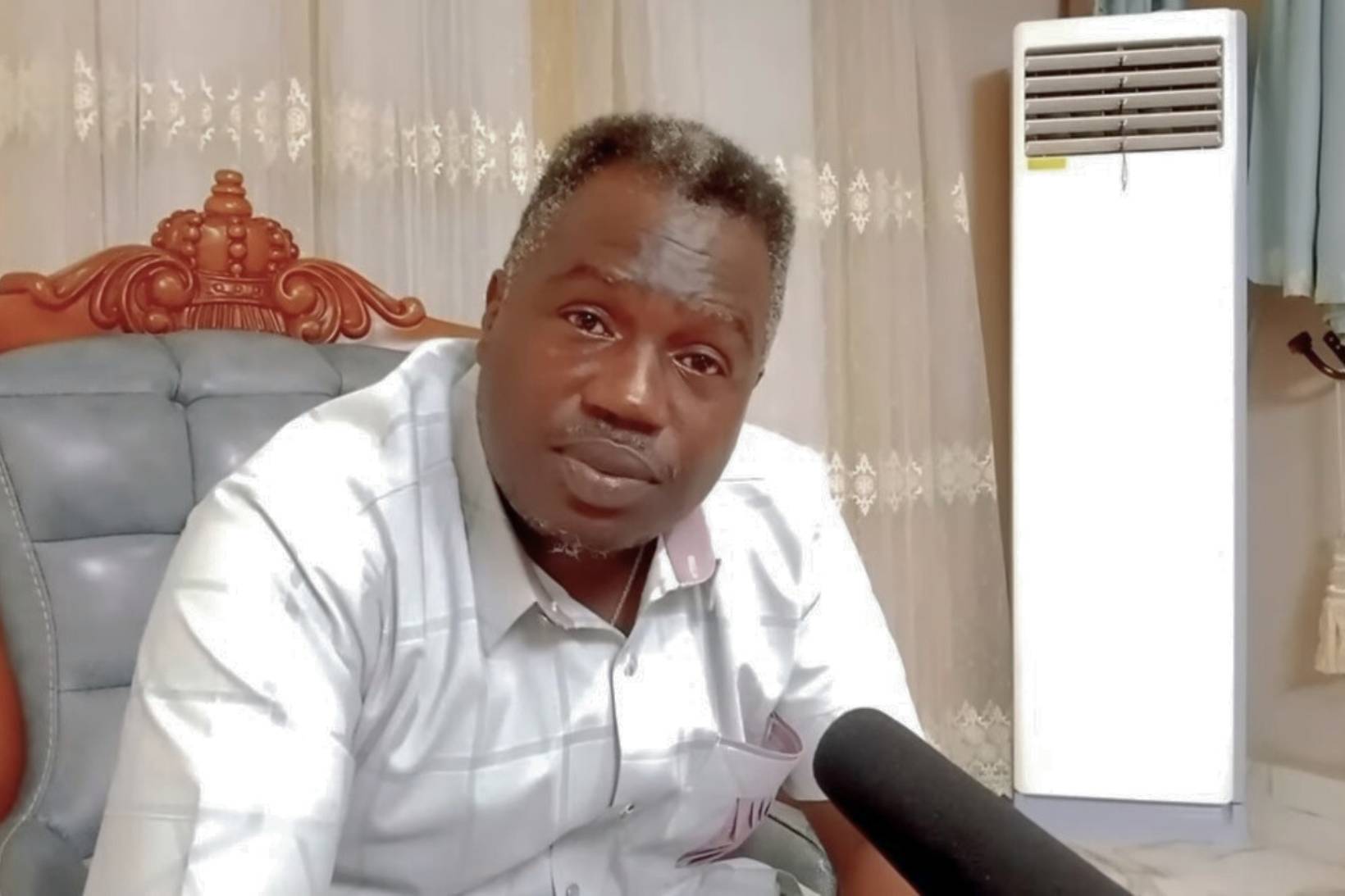
In the labyrinthine corridors of Liberian politics, where the ghosts of a fourteen-year civil war still cast long shadows over the national psyche, the strategic choices made by those in power are rarely viewed as merely personal or routine. They are interpreted as signals of intent, warnings of future shifts, and barometers of the country’s fragile stability. Recently, Vice President Jeremiah Koung’s overt endorsement of Representative Samuel Kogar, framed through the lens of tribal and ethnic balance within Nimba County, has sent shockwaves through the political establishment. This move, which observers characterize as an attempt to mobilize ethnic constituencies, is more than a parochial political calculation; it is a dangerous flirtation with the very dynamics that fueled the conflagration of the 1990s and early 2000s.
As Liberia struggles to transition from a post-conflict state to a mature democracy, the resurgence of identity-based rhetoric in the nation’s second-most populous county threatens to undo decades of work toward social cohesion. Nimba, a county historically defined by both its economic potential and its strategic political importance, finds itself once again at the center of a national debate on whether we are moving toward a more inclusive future or regressing into the fractured loyalties of the past. The Vice President, whose rise to power was facilitated by the support of influential figures like Senator Prince Yormie Johnson, occupies a position that demands national statesmanship. By descending into the theater of tribal politics, Koung risks diminishing his office and alienating the very demographic he purports to serve: the collective citizenry of a united Liberia.
The history of Liberia is an arduous narrative of institutional failure and the weaponization of identity. From the days of the True Whig Party, which solidified the divide between the Americo-Liberian elite and the indigenous majority, to the military coup of 1980 that utilized ethnic grievances to justify the violent dismantling of the state, the misuse of tribal identity has been the engine room of national trauma. During the civil war, the manipulation of ethnic loyalties became the primary tool for mobilizing militias, turning neighbors into enemies and tearing the social fabric of rural counties like Nimba apart. While some argue that tribal identity is an inherent component of local governance, the politicization of this identity—the 'tribal card'—is a deliberate instrument designed to consolidate power through exclusion.
When leaders insist on balancing ethnic representation at the cost of merit and national unity, they inevitably foster a zero-sum political ecosystem. In this view, if one group gains, another is perceived to lose, leading to disenfranchisement, resentment, and eventually, cycles of political instability. The legacy of Senator Prince Yormie Johnson, often referred to as the 'Godfather' of Nimba, is complex and contentious. While he maintained a fierce grip on the county’s political machinery for decades, his approach—while undeniably populist and sometimes volatile—was grounded in a unique, albeit controversial, form of political patronage that transcended singular ethnic boundaries during specific electoral cycles.
He understood that to maintain power, one must at least simulate a broad base of support. However, by invoking the necessity of 'ethnic balance' to justify the endorsement of Representative Kogar, Vice President Koung is not emulating the tactical nuances of his predecessor; he is institutionalizing tribalism as a legitimate political criteria. This is a marked regression. The argument for ethnic balance in the context of the Nimba senatorial vacancy is logically and historically flawed.
Data from the National Elections Commission (NEC) since 2005 reveals a persistent dominance of the Gio ethnic group in holding senatorial positions, winning five out of the seven by-elections held in the county during that period. Yet, this dominance did not occur because the Gio are inherently better suited to governance; it occurred because of entrenched political networks, wealth, and electoral influence. By emphasizing that the seat must go to a specific ethnic group to maintain 'balance,' the Vice President is essentially suggesting that the seat belongs to an ethnic group rather than to the people of Nimba. This ignores the substantial presence and legitimate aspirations of the Mandingo, Gbei, Krahn, and Kpelleh communities, who have as much stake in the county’s future as anyone else.
When a national leader suggests that one group has a 'turn' or that another must be excluded to maintain an equilibrium, they are essentially telling these minority groups that they are secondary citizens. The economic implications of this are dire. Development in Liberia is already hampered by systemic corruption, lack of infrastructure, and a lack of investor confidence. When political appointments and elections are filtered through the prism of ethnicity, meritocracy dies.
If the most qualified individual is bypassed for an ethnic protégé, the quality of governance suffers. Furthermore, regions perceived to be controlled by specific tribal factions often suffer from uneven development, where public resources are channeled toward the kin and clients of the political elite, further entrenching the divide. This creates a cycle where communities feel that their only hope for development is to capture political power, thereby intensifying the struggle for control and reinforcing the very tribal politics that led to the underdevelopment in the first place. The regional context of West Africa adds another layer of urgency.
We have witnessed in recent years, in countries like Guinea and Côte d’Ivoire, how quickly peaceful democratic transitions can be derailed when ethnic rhetoric is allowed to fester in the public square. Liberia is often cited as a success story for its ability to maintain peace after a devastating war, yet this peace is arguably 'negative peace'—the absence of active shooting rather than the presence of true justice and social cohesion. This fragile equilibrium is easily disturbed. When the second-in-command of the nation engages in identity politics, it provides a moral permit for local politicians and agitators to do the same, leading to the hardening of boundaries at the village and district levels.
We must move toward a political culture that prizes institutional vision and service over the narrow interests of the tribe. The role of a Vice President is to safeguard the national interest, ensuring that the policies of the administration work for all Liberians, from the coastal cities to the farthest reaches of Nimba’s interior. By prioritizing the interests of a select group, Koung is signaling that his loyalty resides with his constituency rather than the Constitution he swore to uphold. This is the antithesis of the leadership needed in an era where climate change, economic volatility, and post-war trauma require a unified, national response.
For Liberia to mature, the citizenry must hold their leaders accountable, rejecting the siren call of tribalism in favor of candidates who offer comprehensive developmental agendas. We must ask: what does Representative Kogar offer in terms of health, education, infrastructure, and economic reform? If the primary answer is his ethnicity, then the question is not about his viability, but about the failure of our political discourse. The political parties, which should be the vehicles for ideology and platform-based competition, have largely morphed into personal fiefdoms or tribal umbrellas.
This failure of the party system is precisely why tribal politics finds such fertile ground. Strengthening political institutions, ensuring the independence of the judiciary, and demanding transparency in the NEC’s operations are all essential, but they cannot replace the fundamental need for a shift in political ethics. We must reject the notion that Nimba, or any other county, is the private property of a few, and that its representative seats are merely bargaining chips for ethnic appeasement. The road to a prosperous Liberia is paved with the inclusion of every citizen, regardless of their origin, language, or heritage.
If we continue to dance with the ghost of tribalism, we will eventually be forced to face the reality of the consequences. The flames of ethnic conflict, once ignited, are rarely extinguished by those who lit them. It is time for Vice President Koung and all leaders across the political spectrum to demonstrate a commitment to a vision that sees the Liberian nation not as a collection of tribes, but as a unified, purposeful, and ambitious collective. The time for tribal politics has long since passed; the time for national leadership is now.



