
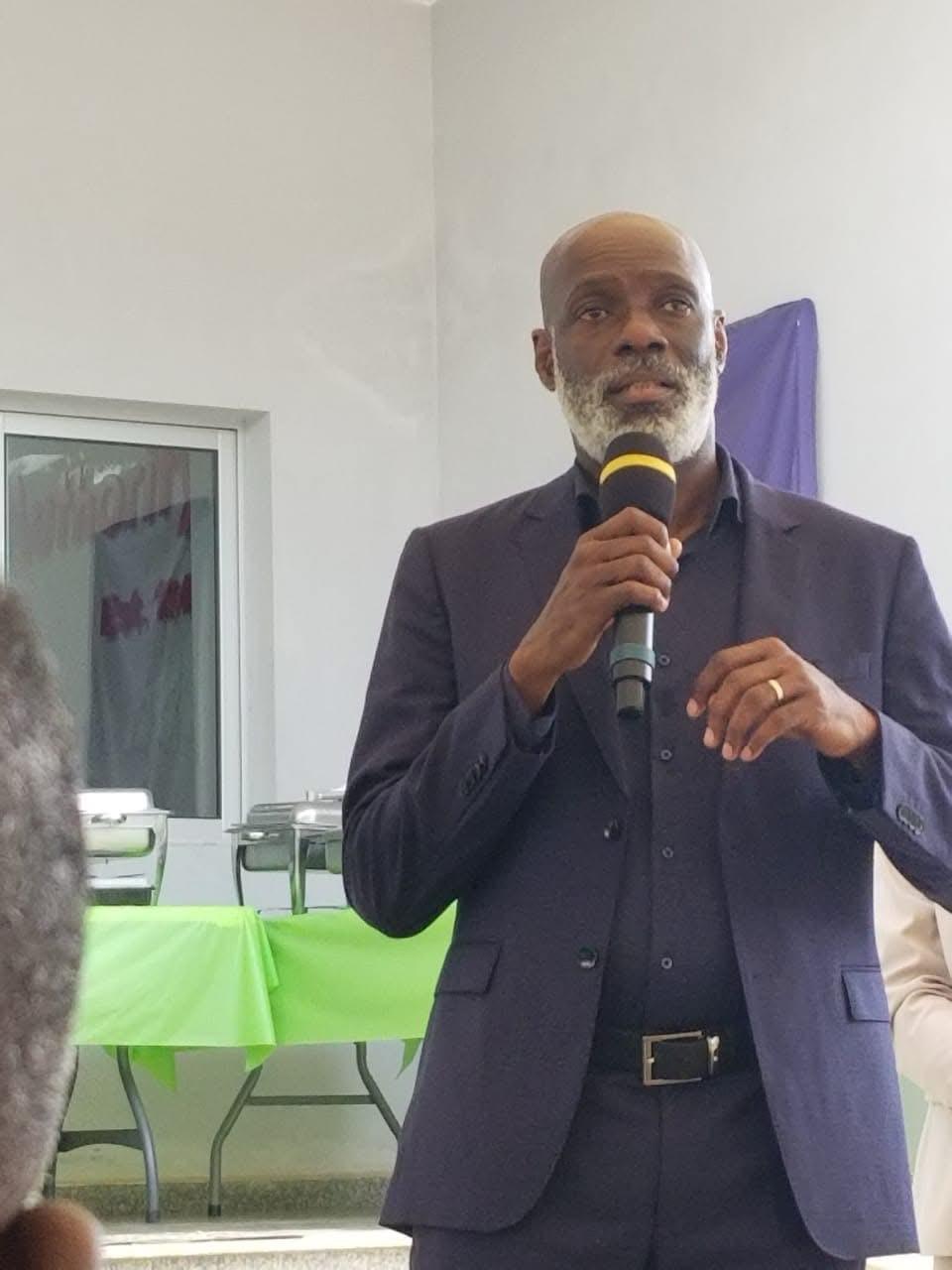
The political landscape in Liberia remains volatile, characterized by a sharp exchange between the former ruling Coalition for Democratic Change (CDC) and the current Unity Party (UP) administration. Lenn Eugene Nagbe, the former Maritime Commissioner and Chief of Staff to the immediate past President, George Manneh Weah, has emerged as a vocal antagonist to the Boakai-led government. In a recent appearance on the popular talk show 'OK Morning Rush,' Nagbe issued a scathing indictment of the current executive branch, labeling government officials as 'Vision Rogues.' This provocative characterization rests on an accusation that the current administration is systematically appropriating political capital from projects initiated during the Weah administration while failing to conceptualize or execute independent developmental agendas. The discourse surrounding this allegation is not merely a petty squabble over credit; it strikes at the core of governance, transition transparency, and the integrity of national policy continuity.
Nagbe’s critique centers on the perception that the Boakai administration is engaged in a strategic effort to obscure the historical origins of key infrastructure projects. By presenting ongoing developments as their own, the Unity Party is, according to Nagbe, engaging in a form of political dishonesty designed to diminish the legacy of the previous government. He specifically delineated several flagship transportation projects that were, by his account, fully conceptualized, funded, and inaugurated under the stewardship of President Weah. These include the critical Sackaypea to Tapeta road corridor, the Tapeta to Toe Town segment, and the subsequent connection to Zwedru. Furthermore, Nagbe highlighted the rehabilitation of the ELWA to Roberts International Airport (RIA) highway, the renovation of the Gabriel Tucker Bridge to the St. Paul Bridge, and the commissioning of the National Fisheries and Aquaculture Authority (NaFAA)-funded university annex as evidence of the CDC’s unfinished business now being rebranded by the incumbent regime. For the observer of Liberian politics, the dispute highlights a recurring phenomenon in the country’s democratic evolution: the struggle over credit for long-term infrastructural developments that span across different administrative tenures.
Moving from economic policy to national security, Nagbe leveled a severe professional critique against Mr. Sam Gaye, the current head of the Executive Protective Services (EPS). Nagbe’s assessment of Gaye as 'incompetent and lacking the capacity to handle the protection of the Presidency' is not an isolated outburst but represents a deepening rift between the former and current security apparatuses. The conflict specifically erupted over public allegations made by Gaye regarding the status of presidential assets, specifically vehicles left behind during the transition. Nagbe characterized these allegations as reckless, claiming that Gaye operated on the basis of rumor and misinformation rather than documented fact-finding. This, according to Nagbe, is a major breach of professional protocol for an individual tasked with the sensitive duty of protecting the sitting head of state.
The debate over assets has become a microcosm of the broader distrust defining the current transition. Nagbe forcefully rebutted the claims regarding a specific presidential vehicle, asserting that it is the personal property of former President Weah and not, as suggested, a state asset being withheld. He further challenged the EPS leadership to account for the fleet of newly procured Land Cruiser Jeeps acquired in August 2023, which were transferred to the incoming administration in good faith. By invoking the meticulous documentation of the transition team, Nagbe sought to shift the narrative from one of alleged theft to one of administrative negligence on the part of the new government. The dispute raises deeper questions about the continuity of institutional memory during transitions and the vulnerability of assets when political rhetoric overrides bureaucratic transparency.
Perhaps the most potent aspect of Nagbe’s critique involves the financial conduct of the Boakai administration, particularly regarding the procurement of luxury vehicles. As the public scrutinizes the government’s spending in the face of widespread economic hardship, the acquisition of high-end armored Lexus SUVs has become a lightning rod for criticism. Nagbe challenged the administration on its own rhetoric, pointing out that the Unity Party heavily criticized the previous government for its spending habits while in opposition. He revealed that the actual cost of the current armored vehicle fleet is approximately $1.2 million, contradicting the lower figures circulating in the public sphere. This revelation, if accurate, exposes a significant discrepancy between the administration's stated commitment to austerity and its actual procurement behavior. For many citizens already grappling with inflation and high unemployment, the expenditure on luxury transport for officials serves as an unfortunate symbol of elite disconnect.
The public reaction to Nagbe’s revelations was immediate and intense. Talk show lines and social media platforms served as barometers for a populace increasingly frustrated with what they perceive as a lack of clear direction from the executive. Callers frequently expressed that while the political blame game is common, the core issues raised by Nagbe—such as the lack of originality in project development and the opacity of state spending—are legitimate concerns that require formal governmental response. The frustration expressed by these citizens suggests a growing demand for a higher standard of governance. They are not merely interested in the grievances of the previous administration; they are, in many instances, articulating their own fatigue with political rhetoric that avoids accountability.
From an analytical perspective, this political theater highlights the complexities of governing a nation with deeply entrenched developmental needs. When projects take multiple years to complete, they inevitably bridge the divide between administrations. If the culture of governance remains fixated on 'who started it' rather than 'how can we optimize it,' the country’s progress is ultimately compromised. The 'Vision Rogues' moniker is a calculated rhetorical device intended to paint the current administration as opportunistic. Whether the Unity Party is intentionally obfuscating the past or simply prioritizing the completion of inherited projects, the lack of a clear communication strategy regarding project continuity has left them vulnerable to these accusations.
Furthermore, the focus on the EPS leadership indicates a potential fragmentation within the state’s security architecture. When high-ranking officials engage in public, ad-hominem attacks, the professional culture of the civil service and security sectors is degraded. The integrity of the Presidency requires a buffer between political disputes and the professional management of the state's security assets. By dragging these internal debates into the public square, both sides contribute to a climate of instability that discourages potential foreign investment and undermines confidence in the Liberian democratic process.
As the Boakai administration navigates the remainder of its early term, the pressure to produce tangible, original results will only intensify. The critique from figures like Lenn Eugene Nagbe serves as a constant reminder that the public is watching not only the progress of infrastructure but the honesty of the narrative surrounding that progress. Accountability in Liberia is slowly being redefined by the digital age, where documentation and historical fact-checking can be leveraged to challenge government claims in real-time. Moving forward, the administration must decide whether to continue the defensive posture of responding to accusations or to shift toward a more transparent, fact-based approach that acknowledges the complexities of governance. The 'Vision Rogues' label may be a political attack, but it serves as a potent warning: without a clear, original, and fiscally responsible agenda, the current administration risks being defined by its inability to move beyond the shadow of the one that preceded it.



