
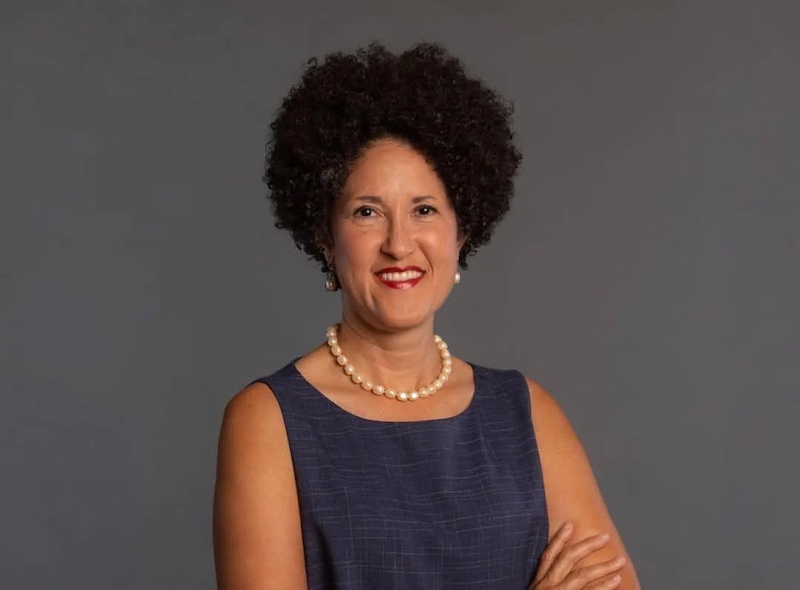
The appointment of Dr. Layli Maparyan as the 16th President of the University of Liberia represents a watershed moment for the nation’s premier institution of higher learning. As Liberia navigates a complex period of post-conflict reconstruction and economic transition, the leadership of its flagship university—the oldest public degree-granting institution in West Africa—becomes a focal point for national development. Dr.
Maparyan’s ascension to this role is not merely an administrative shift; it is a profound experiment in integrating international academic expertise with the rugged, often volatile realities of the Liberian educational landscape. Her selection by President Joseph Nyuma Boakai reflects a strategic desire to infuse the university with global standards and administrative modernization, yet it simultaneously ignites a long-simmering national conversation about the role of diaspora scholars and foreign-trained professionals in domestic institution building. Dr. Maparyan arrives with a formidable academic pedigree.
With a Ph.D. in Psychology from Temple University and her distinguished tenure as the Executive Director at the Wellesley Centers for Women, she brings a focus on womanism and social identity that is intellectually rigorous and potentially transformative. However, the University of Liberia (UL) is not a conventional campus.
It is an institution forged in the fires of 1862, having survived the catastrophic civil wars of the 1990s and early 2000s, and it now grapples with the lingering scars of systemic underfunding, infrastructural decay, and a massive surge in student enrollment that often outpaces the school’s logistical capacity. The history of the University of Liberia is inextricably linked to the history of the Liberian state. It was created to produce the civil servants and intellectuals who would define the country’s trajectory. Today, the university serves as the primary engine for social mobility for thousands of Liberians, many of whom are the first in their families to pursue higher education.
Consequently, the expectations placed upon the Office of the President are immense; students, faculty, and political observers view the university’s success as a proxy for the nation’s own prospects. The initial reception to Dr. Maparyan’s appointment has been cautiously optimistic. Key stakeholders, most notably the University of Liberia Staff Association (ULSA) and the ever-vigilant Student Unification Party (SUP), have offered a degree of goodwill that is rare in the university’s highly politicized environment.
The SUP, historically the most powerful student movement in Liberia, has signaled support for her leadership, provided that she remains committed to advocating for the resources that the institution so desperately lacks. This support is conditional and pragmatic; the students are well aware that a new president, regardless of her credentials, cannot perform miracles in the absence of a substantial government commitment to the national budget. The debate surrounding her appointment often centers on the 'foreign' status of her leadership. Critics argue that the University of Liberia, in its pursuit of excellence, risks losing its soul by looking beyond its own borders for its top leadership.
They posit that the nuanced challenges of managing a Liberian university—where institutional memory, local political alliances, and deep-seated cultural hierarchies define the day-to-day operations—require a leader deeply embedded in the local fabric. This is a recurring tension in post-colonial African higher education: the pursuit of the international academic 'gold standard' versus the preservation of local institutional identity. However, Dr. Maparyan is not a total stranger to the halls of Capitol Hill, Fendall, or the medical school campus.
Her experience as a Fulbright Specialist at the University of Liberia in 2010 provides her with a vital baseline of knowledge. During that period, she witnessed firsthand the structural obstacles that hinder student progress and faculty productivity. This previous engagement suggests that her appointment is not a blind gamble, but a calculated effort to leverage someone who already understands the language of the institution. Furthermore, the global perspective she brings is arguably exactly what the university needs to bridge the digital and resource gaps that have left it trailing behind its peers in the West African sub-region.
By integrating modern administrative systems and potentially attracting international research grants, she could begin to alleviate the chronic financial instability that has plagued the university for decades. Nevertheless, the road ahead is fraught with institutional inertia. The physical infrastructure at the UL campuses is in a state of crisis. Laboratories are outdated, library collections require massive digitization, and the faculty-to-student ratio remains skewed, limiting the quality of personal interaction and research mentorship.
Dr. Maparyan’s stated commitment to solving 'problems that people never thought of' is a bold and necessary ambition. Yet, she will soon learn that in the context of the Liberian public sector, the 'unthought of' problems are often dwarfed by the massive, visible, and deeply entrenched problems of salary arrears, equipment failure, and political interference. The success of her tenure will depend on her ability to navigate the complex triad of academic governance, governmental relations, and student activism.
She must become a master of political diplomacy, ensuring that the executive branch remains focused on the university as a priority, while simultaneously resisting the temptation of the university becoming a political pawn in national partisan cycles. The economic implications are also profound. A university is a center for human capital development; if the University of Liberia is under-resourced, the entire national economy suffers from a skill deficit. Dr.
Maparyan must treat the university as a strategic asset for national economic policy, linking academic output to the developmental goals of the state. Her work in womanism provides an interesting framework for this; she understands that marginalized voices must be integrated into the core of institution-building. If she can successfully modernize the institution while honoring its unique history and the specific socio-political weight it carries, she may define the future of the university for the next generation. As she takes the helm, the entire nation is watching.
The 'foreign' label will fade if she produces tangible results—higher graduation rates, improved facility conditions, and a more transparent administration. Conversely, if the structural barriers remain immovable, her tenure will likely be scrutinized with the same intensity that has characterized the departure of many of her predecessors. The appointment of Dr. Layli Maparyan is a testament to the fact that Liberia’s academic community is ready to embrace external expertise, but the burden of proof rests squarely on her shoulders.
Her challenge is to prove that global leadership models can be successfully adapted to the Liberian context, turning the University of Liberia into a beacon of excellence rather than a monument to potential unfulfilled. For the students of SUP and the staff of ULSA, and indeed for the Liberian public at large, the hope is not just for a new administrator, but for a transformative period that will finally align the University of Liberia with the aspirations of the people it was built to serve.



