
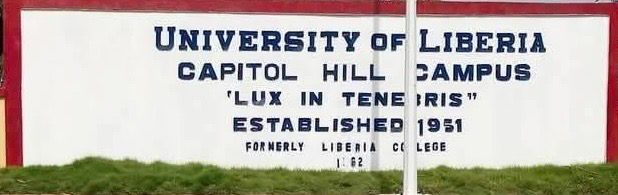
The University of Liberia (UL), the nation’s oldest and most prestigious institution of higher learning, finds itself at a defining crossroads. On September 12, 2025, the UL Board of Trustees issued a sweeping reaffirmation of its ban on student political activities, a move described by administrators as a necessary intervention to halt the cycle of violence that has paralyzed academic operations on both the Capitol Hill and Fendall campuses. This decision, while framed as a corrective measure for campus security, reverberates across Liberia’s political landscape, challenging the historical status of the university as a primary incubator for the nation’s democratic discourse. The announcement follows a volatile two-week period during which campus life was destabilized by multiple physical confrontations, forcing the immediate suspension of student orientation activities and prompting a rare display of administrative force.
The violence, which saw clashes between student factions and campus security personnel on September 1 and September 11, has stripped away the veneer of normalcy that the university has struggled to maintain throughout the 2024 and 2025 academic years. By enforcing a prohibition first introduced in 2024, the Board of Trustees has signaled that the era of permissive campus politics, which often blurred the lines between academic pursuit and partisan street mobilization, is effectively over. The directive includes the immediate suspension of students alleged to have incited or participated in the recent disruptions, with cases now forwarded to a newly established Standing Disciplinary Committee. This committee is tasked with ensuring that future enforcement is consistent, transparent, and detached from the political maneuvering that has historically undermined internal investigations.
The institutional crisis at the University of Liberia is not merely a localized issue of student conduct; it is a symptom of deeply ingrained systemic weaknesses that have long plagued Liberia’s tertiary education sector. To understand the gravity of the current crackdown, one must acknowledge the unique historical role that the University of Liberia has occupied since its inception in 1862. For over a century, the student body—particularly through the Student Unification Party (SUP)—has functioned as the vanguard of political opposition and social justice. From protesting against the Tolbert administration in the late 1970s to acting as a critical check on power during the post-conflict transition, the university has been a microcosm of Liberia’s broader political battles.
In this light, the Board’s decision to muzzle political activity is seen by many analysts not just as a move toward stability, but as an attempt to decouple the university from its identity as a political engine. The economic and social implications of this shift are profound. When academic life is constantly interrupted by partisan infighting, the university loses its capacity to produce the skilled labor force required for Liberia’s development. The financial strain on students—many of whom travel long distances to the Fendall campus—is exacerbated when classes are canceled or suspended, leading to prolonged graduation timelines and mounting debt.
Furthermore, the Board’s acknowledgement of these grievances is evidenced by their simultaneous directive to prioritize long-postponed infrastructure improvements. By ordering the immediate renovation of critical facilities, specifically campus bathrooms and sanitary infrastructure, the administration is attempting to offer a trade-off: security and order in exchange for improved living and learning conditions. Whether this will satisfy a student population that feels marginalized by high fees and poor services remains an open question. The faculty, represented by the University of Liberia Faculty Association (ULFA), remains a crucial player in this complex dynamic.
The Board has urged administrators to reach an immediate resolution with the faculty, whose persistent negotiations regarding salaries, benefits, and working conditions have frequently coincided with student protests. The university administration recognizes that peace cannot be achieved if the teaching staff is perpetually at odds with the governing authorities. However, the distrust between the faculty, the students, and the Board of Trustees is systemic. Critics argue that the crackdown ignores the root causes of student radicalism, which often stems from a lack of effective channels for grievance redress.
By banning political activity entirely, the university risks pushing dissent into the shadows, where it may manifest in more volatile and less predictable forms outside of the formal campus structure. The broader regional context further complicates the situation. Liberia, as a post-conflict nation still cementing its democratic norms, watches its premier university as a bellwether for the country’s stability. When the university fails to function as a space for debate, the political impact is felt in the streets of Monrovia.
If the Board succeeds in sanitizing the campus, the university may gain institutional order, but it may also lose its relevance as a site of intellectual growth and political critique. Conversely, if the ban fails to stem the violence, the Board’s credibility will be severely diminished, potentially leading to a broader crisis of governance within the Liberian educational system. For the students, the current situation is a bitter realization that the university experience, once defined by radical political engagement, is being reshaped by a demand for total institutional compliance. The Board of Trustees has banked its reputation on the idea that these strict measures—backed by swift disciplinary action and tangible physical renovations—will restore confidence in the institution.
They believe that by separating student politics from the classroom, they are protecting the rights of the majority of students who wish to learn in a safe environment. However, history suggests that the students of Liberia are unlikely to remain silent for long. The challenge for the administration is not just to maintain order through prohibitions but to integrate the student voice into a new, stable, and transparent governance structure. Without this, the current calm may prove ephemeral, and the underlying tensions may return with even greater force.
The coming semester will be a crucial test of whether the university can emerge as a transformed, modern institution or if it will remain a battleground for competing interests. As the Standing Disciplinary Committee begins its work, the eyes of the nation remain fixed on Capitol Hill and Fendall. The ultimate success of this initiative will be measured not by the absence of protest, but by the ability of the University of Liberia to reclaim its role as the premier intellectual hub for a nation seeking to reconcile its turbulent past with its aspirations for a stable, prosperous future. The Board’s mandate is clear: restore the sanctity of the classroom.
Whether this can be achieved without stripping the university of its essential, albeit contentious, civic soul is a question that will define the tenure of the current university leadership and shape the trajectory of Liberian politics for years to come.
