
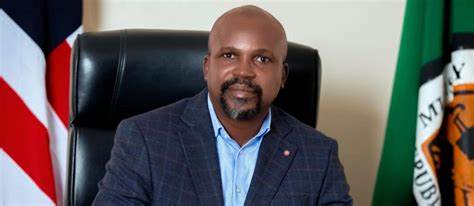
The Unity Party's tenure in the Ministry of Public Works (MPW) under the leadership of Minister L. Roland Giddings during the 2024 calendar year presents a complex, often sobering picture of governance where grand institutional ambition is starkly tempered by the realities of an underdeveloped fiscal landscape. When President Joseph Nyuma Boakai assumed the presidency, his administration articulated a vision of infrastructure as the cornerstone of national renewal, emphasizing connectivity as the primary engine for economic growth and rural integration. However, as the months have progressed, the disconnect between these articulated plans and tangible ground-level execution has widened, prompting a re-evaluation of the administration's strategic capacity.
The challenges facing the current government are not merely technical; they are deeply rooted in the historical cycle of bureaucratic inertia, resource scarcity, and the inherent friction between campaign rhetoric and administrative feasibility. Under the guidance of Minister Giddings, the MPW has made overtures toward reform, yet the metrics of success remain elusive, highlighting a persistent gap between the government’s stated priorities and its operational output. One of the administration's self-proclaimed achievements involves its renewed focus on road rehabilitation efforts in traditionally marginalized regions, specifically targeting Lofa and the disparate southeastern counties. For decades, these areas have suffered from extreme isolation, particularly during the grueling rainy seasons when critical arteries turn to impassable mud.
By prioritizing these corridors, the Boakai administration is signaling an awareness of the geographical inequities that have historically fueled regional resentment and stifled domestic trade. However, intent alone does not build bridges or pave highways, and critics argue that these projects often lack the long-term sustainability required to withstand Liberia’s challenging topography and high annual rainfall. The commitment to rural connectivity is theoretically sound, but without a robust maintenance framework, these interventions risk becoming superficial remedies for deeper, structural infrastructure failure. A critical flashpoint in the current administration’s performance is the contentious $20 million procurement initiative for earth-moving equipment.
This decision was framed by the executive as a bold, proactive step to enhance the state’s internal capacity to maintain roads without total reliance on international contractors. Yet, the proposal has been met with intense skepticism from opposition parties, civil society organizations, and fiscal watchdogs who cite a lack of transparency in the bidding process. This public distrust is a symptom of a larger malaise in Liberian governance, where high-stakes procurement is frequently viewed through the lens of patronage rather than public utility. The demand for greater accountability regarding these funds reflects a populace weary of historical patterns where large-scale government investments evaporate without resulting in permanent public assets.
This scrutiny underscores the essential, yet often ignored, reality that in a post-conflict democracy, public trust is the most critical currency for infrastructure development. President Boakai’s signature 100-Day Action Plan initially captured national attention by promising to catalyze 11 key road projects, covering a distance of 783.5 km across multiple counties. This ambitious roadmap was intended to set the tone for an administration dedicated to rapid transformation.
Unfortunately, the performance reports from the first eight months of 2024 reveal a sobering reality: a meager 3% implementation rate of 119 tracked government promises. This figure is not merely a statistical anomaly; it serves as a damning indictment of the administration’s ability to synchronize its policy agenda with executive execution. The disparity between the promise and the delivery creates a credibility trap that the Unity Party is finding increasingly difficult to navigate. The political stakes are high; for an administration that campaigned on the promise of ‘Rescue,’ failing to deliver on tangible infrastructure projects is a vulnerability that opponents are eager to exploit.
In examining the transition of power, it is essential to compare the current trajectory with that of the previous Coalition for Democratic Change (CDC) government. The CDC, led by former President George Manneh Weah, placed immense emphasis on ‘pro-poor’ infrastructure, specifically focusing on paving existing urban and rural roads to improve accessibility. While the CDC era was marked by significant controversy regarding the quality and cost of these roads, the previous administration claimed to have paved roughly 400 km of roads during its tenure. The Unity Party, by contrast, has struggled to move beyond the inception phase of large-scale, transformative projects.
Whereas the CDC often prioritized finishing legacy projects while balancing them with new initiatives, the current administration’s reliance on bureaucratic process and its slow-moving procurement pipelines have stalled momentum. The political consequences are visible in public perception; while the CDC faced skepticism regarding its fiscal management, the current government is facing mounting frustration due to a perceived paralysis. The infrastructure deficit in Liberia is a legacy issue, deeply compounded by the country’s prolonged civil conflict, which decimated basic utilities and institutional expertise. Historically, infrastructure development in Liberia has been hindered by a lack of sustainable domestic financing, heavy reliance on international donors such as the World Bank and the African Development Bank, and a persistent ‘brain drain’ of technical professionals.
The MPW remains a pivotal institution, yet it often finds itself at the mercy of delayed budget appropriations and shifting political mandates. For the Unity Party to move forward, it must shift away from the tendency to view infrastructure as a political tool for short-term visibility. Instead, the government requires a sustainable, multi-year strategic framework that prioritizes the maintenance of the existing road network alongside the development of critical new corridors. Economic implications of this failure are significant; as road connectivity remains poor, the cost of transporting agricultural produce from rural to urban markets remains prohibitively high, keeping food inflation elevated and stifling the growth of the SME sector.
Furthermore, the regional significance cannot be ignored. As part of the Mano River Union, Liberia’s infrastructure status directly impacts its ability to facilitate regional trade with neighbors like Sierra Leone, Guinea, and Côte d'Ivoire. A failure to develop the transit corridors mandated by the ECOWAS regional protocols leaves Liberia increasingly marginalized in the regional economic integration agenda. The scrutiny over the $20 million equipment procurement is emblematic of a broader, systemic challenge.
Transparency is not merely a bureaucratic requirement; it is a prerequisite for mobilizing both domestic private capital and international support. As the Boakai administration looks toward the remainder of its term, it faces a stark choice: continue the current path of slow, opaque implementation, or pivot toward a more collaborative and accountable model of governance. Reclaiming public trust will require more than rhetoric; it will require the completion of high-impact projects that demonstrate an immediate return on investment for the average Liberian. The ‘Rocky Road to Progress’ is a phrase that aptly characterizes the current state of infrastructure in Liberia—it is a path defined by profound obstacles that require not just engineering solutions, but deep-seated political and institutional reform.
If the Unity Party is to succeed, it must demonstrate the political willpower to strip away the inefficiencies that have historically throttled the Ministry of Public Works and ensure that every cent spent on infrastructure translates into lasting progress for the nation.
