
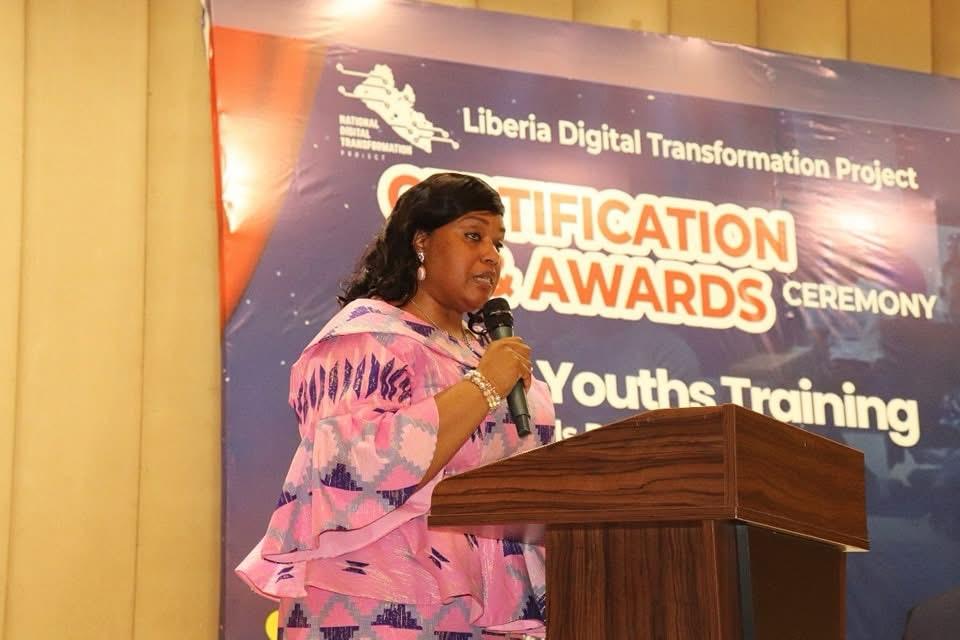
The launch of the Liberia Digital Transformation Project under the administration of President Joseph N. Boakai has ignited a fervent national conversation regarding the intersection of modern technological advancement and the deep-seated economic realities of a post-conflict nation. At its core, the project seeks to equip 10,000 Liberian youths with essential digital skills, a mission that serves as a cornerstone of the current administration’s 'ARREST' agenda—Agriculture, Roads, Rule of Law, Education, Sanitation, and Tourism—with an unspoken but vital seventh pillar: Technology. While the initiative is undeniably ambitious and reflective of a government eager to leapfrog traditional stages of economic development, a critical examination reveals a complex landscape of operational hurdles, structural gaps, and the persistent tension between rapid interventionism and long-term capacity building.
Liberia, a nation still grappling with the legacies of a fourteen-year civil war that decimated its educational infrastructure and left a generation behind, looks to digital literacy as a potential panacea for high youth unemployment. However, the trajectory of this specific project—moving from an initial two-week training concept to a three-month and potentially six-month program—underscores a fundamental challenge: the government’s initial planning may have underestimated the sheer magnitude of the digital divide. The realization that two weeks of instruction could not possibly produce a workforce ready for the global digital economy forced a reactive, albeit necessary, pivot. This shift from a crash course to a more structured curriculum is a microcosm of Liberia’s broader struggle to transition from emergency-style humanitarian responses to sustainable developmental policies.
The program’s focus on basic digital literacy, e-commerce, and digital marketing provides participants with a foundational toolkit. In the context of Monrovia’s budding tech scene and the increasing ubiquity of mobile money services, these skills are undeniably relevant. However, the term 'cutting-edge' often bandied about in government communiques warrants scrutiny. Proficiency in basic office software or social media marketing, while useful, does not translate directly into the high-value software development or data analysis roles that define modern global digital economies.
There is a palpable disconnect between the marketable output of the program and the existing demands of Liberia’s narrow private sector, which is still largely dominated by informal trade, extractive industries, and traditional retail. This gap raises the question: are we training youths for jobs that exist, or for a digital landscape that has yet to be constructed? The expansion of the project to 12,000 participants across all 15 counties is a testament to the logistical reach of the Ministry of Education and its partners. In a country where the 'Monrovia-centric' nature of development is a perennial complaint, the attempt to ensure geographic inclusivity is a commendable endeavor.
Yet, this scale brings with it the risk of the 'dilution effect.' Maintaining consistent standards of instruction in Montserrado County is one thing; doing so in remote areas of Grand Kru or Lofa requires a level of human and physical capital that is currently in short supply. Without robust quality assurance frameworks and high-speed, reliable internet infrastructure—a luxury that remains intermittent at best in the Liberian hinterland—the digital certificates granted may lose their currency in the eyes of potential employers. If the quality of the training varies wildly based on geography, the program risks creating a two-tiered system where only those trained in the capital enjoy genuine job prospects.
Sustainability remains the ultimate litmus test for the Boakai administration’s digital strategy. The decision to allocate $250,000 in seed funding for entrepreneurial ventures is an essential, albeit modest, step toward bridging the gap between training and implementation. Micro-entrepreneurship is indeed the engine of the Liberian economy, and injecting digital tools into this sector could modernize local trade. However, history is littered with well-intentioned government grants that failed due to a lack of long-term oversight and mentorship.
For these startups to survive, they require a business ecosystem that includes legal support, access to credit, and reliable digital payment gateways—all of which remain nascent in Liberia. The proposed integration of ICT training into the national high school curriculum is perhaps the most promising element of the government’s long-term vision. This structural change targets the root of the problem: the absence of a foundational digital education system. If successfully implemented, it would move Liberia away from the current 'quick-fix' model and toward a pipeline of talent that is nurtured over years rather than weeks.
Nevertheless, the history of educational reform in Liberia suggests that policy announcements often outpace the availability of functional computer labs, reliable electricity, and trained ICT educators. The success of this policy will depend entirely on a sustained budgetary commitment that transcends political cycles and shifts in ministerial leadership. Looking toward the broader regional context, Liberia finds itself in a competitive race. Neighbors such as Ghana and Nigeria have made significant strides in their digital transformation agendas, largely driven by vibrant private-sector investments and aggressive policy support for fintech.
For Liberia to compete, it must move beyond basic literacy. It requires a policy framework that attracts foreign investment into data infrastructure and incentivizes local tech firms to provide internships and apprenticeships. Currently, the project appears to be a top-down government mandate. True, lasting digital transformation in the West African sub-region has historically succeeded only when there is a symbiotic relationship between government policy, private sector dynamism, and academic rigor.
The Liberia Digital Transformation Project, as it stands, is an essential first act in a much longer, more difficult play. It has succeeded in raising awareness and fostering a digital consciousness among the youth, which is no small feat in a society traditionally tethered to more agrarian or service-oriented roles. However, to translate this into economic growth, the government must move from being a sole training provider to being a market facilitator. This means refining the focus of the training to meet specific industry needs, ensuring that the 'digital' in the project title encompasses high-level cognitive and technical skills, and perhaps most importantly, ensuring that the electricity and connectivity needed to sustain these digital activities are prioritized in national infrastructure planning.
In conclusion, while the initial skepticism regarding the duration and depth of the program was warranted, the administrative willingness to adapt is a positive indicator. The government has clearly learned that technological capacity-building cannot be rushed or standardized without regard for the local context. The success of these 12,000 trainees will be the primary metric for the success of this administration’s digital agenda. As these young people enter the job market, they will encounter the harsh realities of a challenging economic environment.
It is the responsibility of the state to ensure that their new skills do not become a source of frustration, but rather the catalyst for a more innovative and resilient Liberian economy. The bridge across the digital divide is being built, but for it to hold the weight of a nation’s aspirations, the foundation must be deep, the materials must be durable, and the blueprint must be followed with unwavering commitment.
