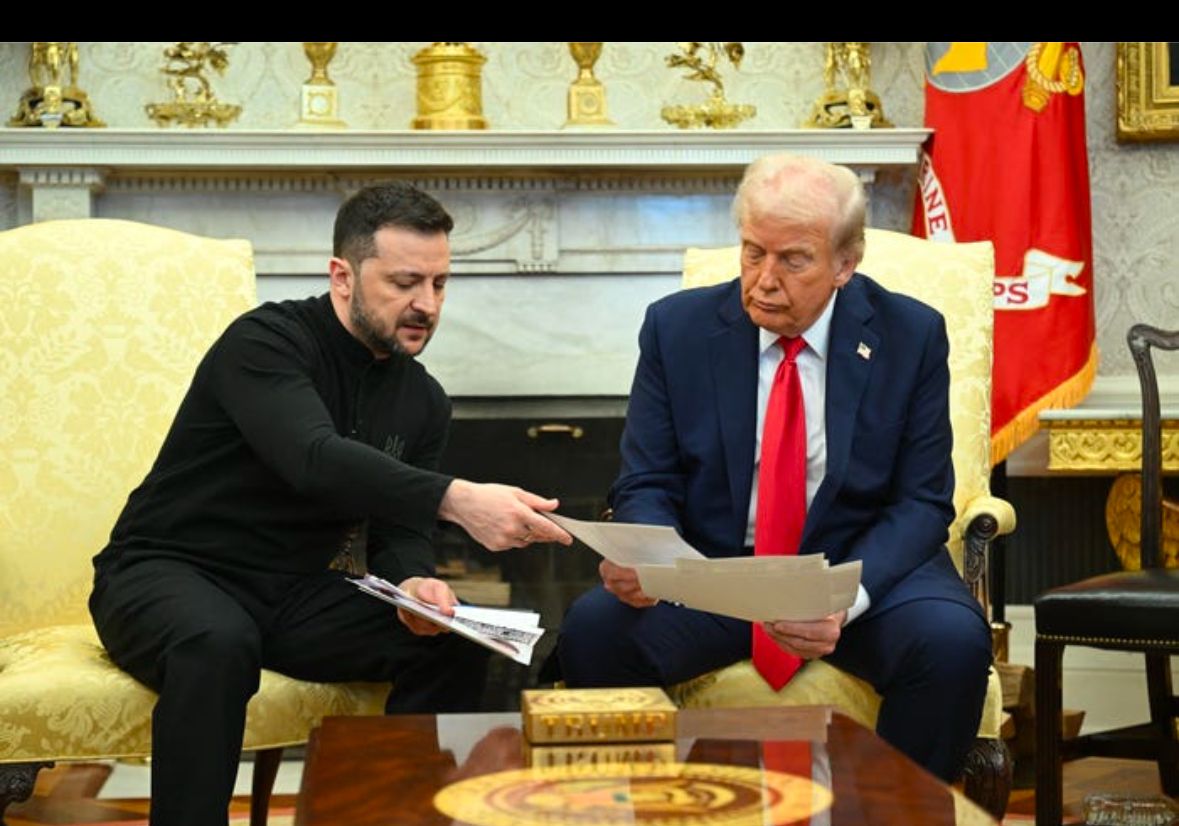
The recent, high-tension meeting between President Donald Trump and Ukrainian President Volodymyr Zelensky at the White House has sent shockwaves through the corridors of international diplomacy, marking a definitive and troubling pivot in United States foreign policy. For observers in Liberia and across the African continent, where the sovereignty of nations and the sanctity of borders have often been central to our own tumultuous political history, this clash serves as a stark reminder of how quickly the foundations of global alliances can shift under the weight of transactional leadership. The Oval Office encounter was not merely a diplomatic disagreement; it represented a fundamental schism regarding the future of European security and the ethical boundaries of American engagement in foreign conflicts. Trump’s confrontational approach—characterized by his public berating of Zelensky to adopt a more 'thankful' disposition and his explicit demand that Ukraine concede to Russian terms or risk the total withdrawal of U.
S. military and financial support—signals an abandonment of the post-World War II order that has long emphasized the collective defense of democratic states against authoritarian encroachment. This shift is not merely a change in administrative style; it is a profound departure from the established doctrine of unwavering support for Ukraine that characterized the previous phases of this conflict. For a nation like Liberia, which has historically relied on the consistent, principled engagement of international partners to navigate its own recovery from civil strife and political instability, the spectacle of a superpower conditioning its support on immediate, ego-driven political concessions is deeply unsettling.
The alarm felt by European allies and Ukrainian officials is well-founded. Many fear that Trump is maneuvering toward an imposed peace agreement, one that inherently favors the Kremlin and undermines the democratic legitimacy of the Ukrainian government. Perhaps most alarming is the President’s vocal adoption of Russian-aligned narratives regarding the genesis of the war. By echoing propaganda that characterizes Ukraine as a provocateur, Trump risks aligning the American presidency with the geopolitical objectives of Vladimir Putin.
This alignment does more than just confuse the international community; it calls into question whether the United States is intentionally dismantling its own influence in the region to accommodate an adversary. In the context of Liberian political analysis, we understand that power often pivots on narrative; when a global leader validates an aggressor’s justification for war, it sets a dangerous precedent for international norms, particularly in regions where territorial integrity is constantly contested. Trump’s obsession with securing access to Ukraine’s rare earth minerals as a central condition of any 'deal' introduces a layer of cynical mercantilism that harkens back to the most predatory forms of 20th-century resource extraction. Framing the defense of a sovereign nation as a ledger to be balanced by mineral concessions suggests that the lives of those fighting on the front lines are merely collateral in a broader economic negotiation.
This transactional approach effectively reduces the Ukrainian struggle for survival to a trade agreement, stripping away the moral weight of the conflict and replacing it with the cold calculus of profit. For stakeholders in the global south, this is a familiar and wearying sight: the conversion of a humanitarian and political crisis into a mechanism for resource acquisition. Furthermore, the volatility of Trump’s personal interactions with Zelensky—swinging from branding him a 'dictator' to granting him a seat at the White House—highlights a mercurial style of governance that erodes the predictability required for global stability. Diplomacy relies on the assumption that an administration’s word is bond; when that word changes with the tides of political convenience, it weakens the credibility of every treaty, agreement, and partnership held by the United States.
The exclusion of Ukraine from the direct discussions Trump seeks to hold with Vladimir Putin is particularly egregious. To negotiate the fate of a sovereign nation in its absence is a betrayal of the principle of self-determination, an idea that has been central to the liberation movements across Africa, including those in Liberia during our own long struggle for political autonomy. By potentially legitimizing Russian aggression through these exclusionary tactics, Trump is not seeking 'peace' in the conventional sense; he is facilitating an environment wheremight makes right. Additionally, the President’s attempts to undermine Zelensky’s domestic legitimacy by questioning Ukraine’s internal electoral processes—especially while that country is under existential threat—demonstrates a misunderstanding, or a willful dismissal, of the realities of wartime governance.
Interference in the domestic politics of an ally is not just a breach of etiquette; it is an attempt to destabilize the very structures needed to maintain a cohesive front against an invading force. As we analyze this from Monrovia, we must acknowledge the broader implications. If the United States, as the primary broker of the global security architecture, retreats into a policy defined by the extraction of rare earths and the appeasement of dictators, the repercussions will be felt far beyond the borders of Eastern Europe. It creates a vacuum of power that emboldens other autocrats to pursue expansionist agendas, knowing that the international system is becoming increasingly fragile and self-interested.
The case of the 'mineral deal' deadlock is a microcosm of a larger, systemic crisis. It reflects a world where the protection of democratic values is increasingly subjected to the volatility of populism. The history of Liberia, marked by our own struggles with foreign intervention, debt, and the necessity of navigating the interests of global superpowers, teaches us that when external actors demand concessions in the face of crisis, it rarely leads to long-term prosperity or peace. The deadlock between Trump and Zelensky is not just a matter of two men disagreeing in an office; it is a clash between the legacy of a rules-based international order and a new, aggressive, and unpredictable model of global engagement that threatens to reshape the 21st century.
As the world watches, the question remains whether the U.S. will ultimately prioritize its role as a defender of democratic principles or succumb to the temptation of short-term economic gains at the expense of its own credibility and global security.