
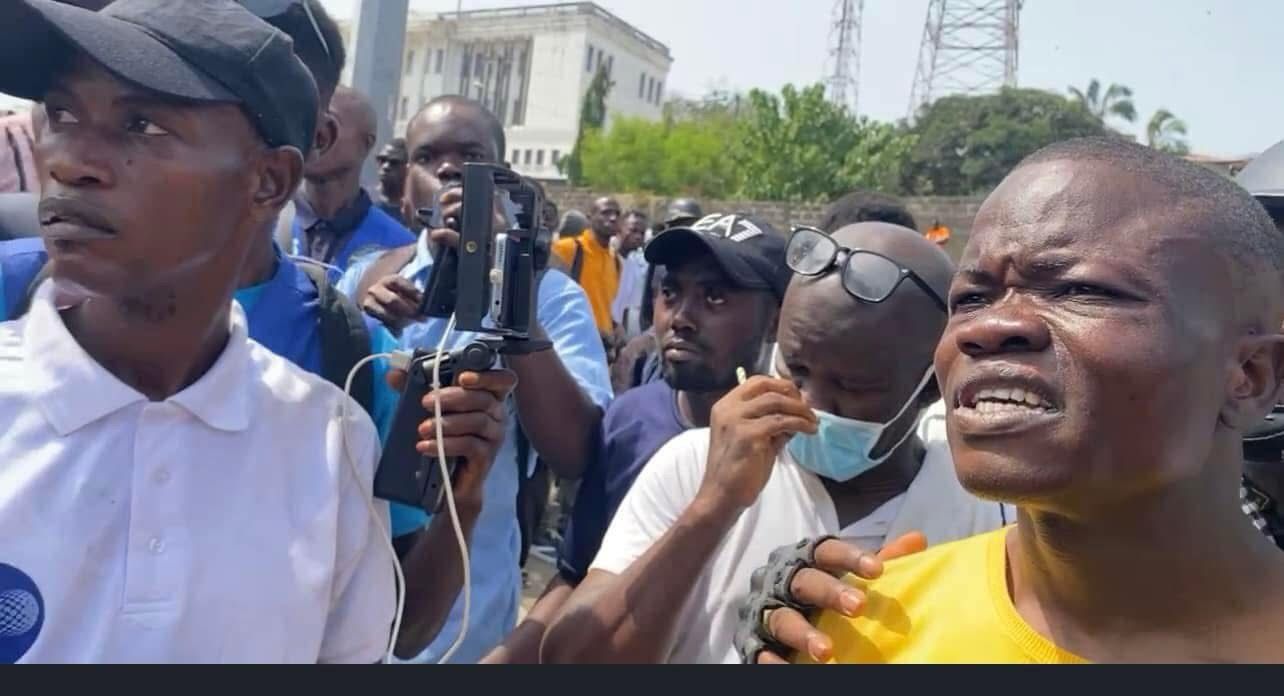
In the bustling, often chaotic streets of Monrovia, the motorcycle—colloquially known as the 'peh-peh'—serves as the backbone of urban transit. For over 250,000 Liberians, the motorcycle is not merely a mode of transportation; it is a vital engine of economic survival in a nation still grappling with the scars of post-war recovery. Yet, this essential service now faces an existential threat, embodied in a chilling campaign of state-sponsored intimidation. At the center of this storm is Trokon Gray, the President of the Supreme Motorcycle Transport Union of Liberia (SUMTUL), who has become the primary target of what he describes as a systemic effort by senior law enforcement officials to crush the advocacy of riders.
Gray’s ordeal is not an isolated incident; it is a sobering symptom of a broader struggle over the governance of public spaces, the limits of police authority, and the sanctity of constitutional rights in post-conflict Liberia. The conflict ignited on March 17, 2025, following a public statement attributed to the Deputy Inspector General of Police for Operations, Col. J. Nelson Freeman.
According to reports from the frontline, Freeman allegedly declared, “Get ready to bury more cyclists.” For the thousands of riders who navigate the potholed, congested, and often perilous roads of Monrovia, these were not merely empty words—they were viewed as a declaration of open season. The grim reality of this rhetoric became apparent within 48 hours, when a motorcycle rider was killed in circumstances that remain deeply concerning to the transport union. The synergy between inflammatory executive rhetoric and actual violence on the ground has created a climate of fear, effectively transforming the Liberia National Police (LNP) from a protective entity into an adversarial force in the eyes of the working class.
Gray, who has tirelessly advocated against police brutality and the imposition of unjust, arbitrary restrictions on motorcyclists, now finds himself living in a state of constant, precarious movement. He has reported multiple narrow escapes from harm, incidents that he asserts are directly linked to his vocal criticism of Col. Freeman. The most recent and brazen escalation occurred on April 6, 2025, when Gray was intercepted by individuals who allegedly operated under explicit directives from the Office of the Deputy Inspector General.
During this confrontation, he was singled out as a marked target, and his motorcycle—the primary instrument of his livelihood and his mobility—was confiscated. This act, while framed by the police as an enforcement measure, is perceived by civil society as a calculated attempt to silence a persistent voice of dissent. To understand the gravity of this situation, one must look at the historical context of the motorcycle sector in Liberia. Following the end of the civil war in 2003, the sector emerged organically as a response to a devastated public transport infrastructure.
Thousands of ex-combatants and unemployed youths flocked to the trade, turning a social necessity into a massive informal economy. Over the decades, however, the relationship between the government and the riders has been fraught with tension. Periodic bans on motorcycle traffic in central Monrovia have been implemented by successive administrations, often citing security or traffic order, yet these bans frequently fail to provide viable alternatives for the hundreds of thousands who rely on these bikes to reach work, hospitals, and markets. The failure of the state to integrate this sector into formal policy has left a power vacuum, one that has been filled by intermittent police crackdowns.
Col. J. Nelson Freeman’s rhetoric represents the most extreme manifestation of this long-standing disconnect. Critics, including veteran advocacy leader Mulbah Morlu, have condemned Freeman’s comments as “dangerous provocation.
” In a fragile democracy, the use of such language by a high-ranking official is not just an individual lapse in judgment; it is seen as a weaponization of law enforcement. When police leaders signal that violence against a specific demographic is permissible, they effectively authorize rogue elements within the force to abandon professional standards. The constitutional implications are profound. Article 17 of the Liberian Constitution guarantees the right to assemble and peaceably petition the government, while Article 15 protects the freedom of speech.
By targeting a labor leader like Trokon Gray, the authorities are accused of not only infringing upon the economic rights of the riders but of actively suppressing the democratic right to critique state policy. The economic ramifications are, quite simply, staggering. A sudden, uncoordinated crackdown on motorcycle movement sends a ripple effect through the Liberian economy. Many riders serve as the final leg of the supply chain, transporting goods into low-income communities where standard vehicles cannot navigate.
By restricting these riders, the government is inadvertently increasing the cost of living for the most vulnerable citizens, pushing struggling families into deeper financial precarity. The LNP, for its part, has consistently dismissed the allegations against Col. Freeman, maintaining that their actions are grounded in professionalism and the necessity of enforcing traffic regulations. However, the disconnect between this official narrative and the mounting pile of anecdotal evidence, witness accounts, and physical confrontations suggests a significant credibility gap.
The persistent reports of harassment, extortion, and the seizing of property without due process speak to an urgent need for an independent inquiry into the conduct of the LNP leadership. This situation serves as a litmus test for the current Liberian government’s commitment to the rule of law. If the state chooses to prioritize the silencing of labor leaders over the protection of citizens' rights, it risks setting a dangerous precedent for future governance. The eyes of international observers, including ECOWAS and various human rights watchdogs, are currently fixed on Monrovia.
Regional instability is often preceded by the erosion of public trust in state institutions. When a large, organized segment of the population feels that they are no longer protected by the police, but instead hunted by them, the social contract effectively collapses. The struggle of Trokon Gray is therefore not merely a localized dispute between a union leader and a police official; it is a microcosm of the broader effort to define what justice and accountability look like in a modern, democratic Liberia. For the advocacy of the Supreme Motorcycle Transport Union of Liberia to continue, there must be a genuine, transparent dialogue between the leadership of the LNP and the representatives of the riders.
This requires more than just press releases; it requires a commitment from the top brass of the police force to rein in inflammatory rhetoric and ensure that the individuals patrolling the streets are held to a standard of conduct that reflects the dignity of their office. Until such reforms are enacted, the specter of violence will continue to loom over the streets of Monrovia. The riders, who represent a vital pillar of the informal sector, deserve to operate without the fear of state-sanctioned reprisal. Trokon Gray, through his resilience, has forced the public to confront these uncomfortable truths about power, prejudice, and policy.
Whether the Liberian authorities will choose the path of reconciliation and reform or continue on the current trajectory of confrontation remains the central question facing the nation today. The safety of an advocate should never be the price paid for voicing the concerns of the voiceless, and the stability of the state depends on its ability to uphold this fundamental principle of justice.
