
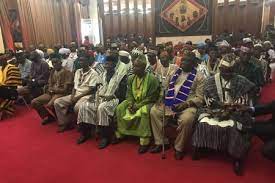
Traditional power brokers, spanning the lineage of tribal chiefs, clan heads, and influential local figures, have long occupied a central, albeit enigmatic, position in the tapestry of Liberian politics and socioeconomic governance. For centuries, these figures have functioned as the bedrock of communal cohesion, acting as custodians of cultural heritage and the primary arbiters of justice in rural Liberia. However, as the nation strives toward modernization and democratic consolidation, the influence of these traditional power brokers—frequently referred to as the 'Big Men' of the Liberian hinterland—creates a complex, often dualistic dynamic. Their influence on the business environment is particularly intricate; while they can serve as gateways to local stability, they also pose significant challenges to transparency and the rule of law.
Understanding their reach is not merely an academic exercise but a practical necessity for any investor or policymaker seeking to navigate the challenging landscape of Liberia. Historically, the authority of the 'Big Man' in Liberia is rooted in a system of patrimonialism that predates the formation of the modern Liberian state in 1847. Following the arrival of the Americo-Liberian settlers, the relationship between the central government in Monrovia and the indigenous populations was often characterized by a delicate, and frequently strained, negotiation of power. The government utilized the system of indirect rule, empowering local chiefs to manage tax collection and labor mobilization in exchange for political recognition.
This historical precedent cemented the role of traditional leaders as essential mediators between the state and the people. Today, even with a formal administrative structure in place, the 'Big Man' remains the ultimate authority for many rural citizens, often commanding more immediate loyalty and obedience than elected members of the House of Representatives or the Senate. The political utility of these figures is immense. In the lead-up to general elections, political aspirants invariably make pilgrimages to rural strongholds to secure the 'blessings' of paramount chiefs.
By mobilizing their communities, these brokers can act as kingmakers, determining the outcomes of electoral contests in districts where formal party infrastructure is weak. This mobilization is rarely altruistic; it is a transactional arrangement where votes are exchanged for promises of development, infrastructure, or personal patronage. A 2018 report by the United Nations Development Programme (UNDP) highlighted this phenomenon, noting that traditional leaders are consistently consulted by government officials as a shortcut to securing local compliance with national policies. Yet, this system presents a significant barrier to the decentralization of power.
When local decision-making is sequestered within the exclusive purview of a small cadre of traditional elite, the broader citizenry is often sidelined, leading to a democratic deficit that hampers sustainable development. The impact on the business environment is equally profound. For multinational corporations and domestic investors alike, the traditional power structure creates a dual-track governance system. On one hand, these leaders can facilitate market entry by providing access to land and local labor, serving as a social buffer that mitigates the risk of civil unrest.
In a country where formal property rights are often contested or overlapping with customary land tenure, a 'Big Man's' endorsement can be the difference between a project’s success and its failure. On the other hand, the opacity of these arrangements is a significant risk factor. The informal nature of negotiations often leads to demands for 'compensation'—a practice that can skirt the thin line between legitimate community social responsibility and outright corruption. This ambiguity makes it difficult for businesses to comply with the Foreign Corrupt Practices Act (FCPA) or local anti-corruption laws, as the lines between traditional tribute and bribery are often blurred by cultural norms.
A pertinent case study illustrating this friction is the saga of the Sime Darby Plantation. In 2009, the Malaysian palm oil giant signed a multi-decade concession agreement with the Liberian government covering over 220,000 hectares. The project was conceived as a landmark investment to revive the agricultural sector. However, it quickly became entangled in the complexities of land rights and customary ownership.
Local communities, often guided by their traditional leaders, protested that they were excluded from the negotiations. The lack of a clear, legally recognized framework to integrate customary land holders into the investment process created a vacuum that traditional brokers were all too eager to fill. They demanded extensive benefits and compensation packages, which led to years of operational paralysis and ballooning costs for the company. This case highlights a critical failure in the intersection of top-down state planning and bottom-up local reality: the inability of the government to reconcile statutory law with the de facto power of the 'Big Man.'
Furthermore, the broader regional significance of this issue cannot be overstated. Throughout West Africa, the 'Big Man' politics have been a catalyst for conflict when the state fails to mediate between traditional interests and economic development. In Liberia, the legacy of the civil war has made this even more sensitive. During the conflict, traditional structures were often fractured or co-opted by warring factions, leaving a fragile trust that current political actors must navigate carefully.
The economic implications are severe; when business environments are predicated on the whims of individuals rather than the consistency of law, capital flight becomes a real threat. Investors seek the predictability of the rule of law, not the unpredictability of local negotiation. The failure to modernize this relationship means that development projects—whether in mining, forestry, or agriculture—remain perpetually vulnerable to local dissatisfaction. For Liberia to mature as a modern business destination, there must be a move toward more transparent, institutionalized engagement with traditional leaders.
This involves formalizing land use, creating clear legal frameworks for community benefit agreements, and ensuring that 'Big Man' influence is balanced by democratic accountability. Traditional power brokers are an inseparable part of Liberia's social fabric, and they offer a wealth of local knowledge and potential for partnership. However, their role must evolve from being autonomous gatekeepers of resources to being partners in a rule-of-law-based economic system. Until then, businesses must engage with extreme caution, ensuring that all dealings are meticulously documented and that social investment is directed toward the community at large, rather than into the pockets of the few.
The path to a more prosperous Liberia lies in bridging the gap between the traditional and the modern, ensuring that the influence of the 'Big Man' serves as a bridge to growth, rather than a barrier to progress.
