
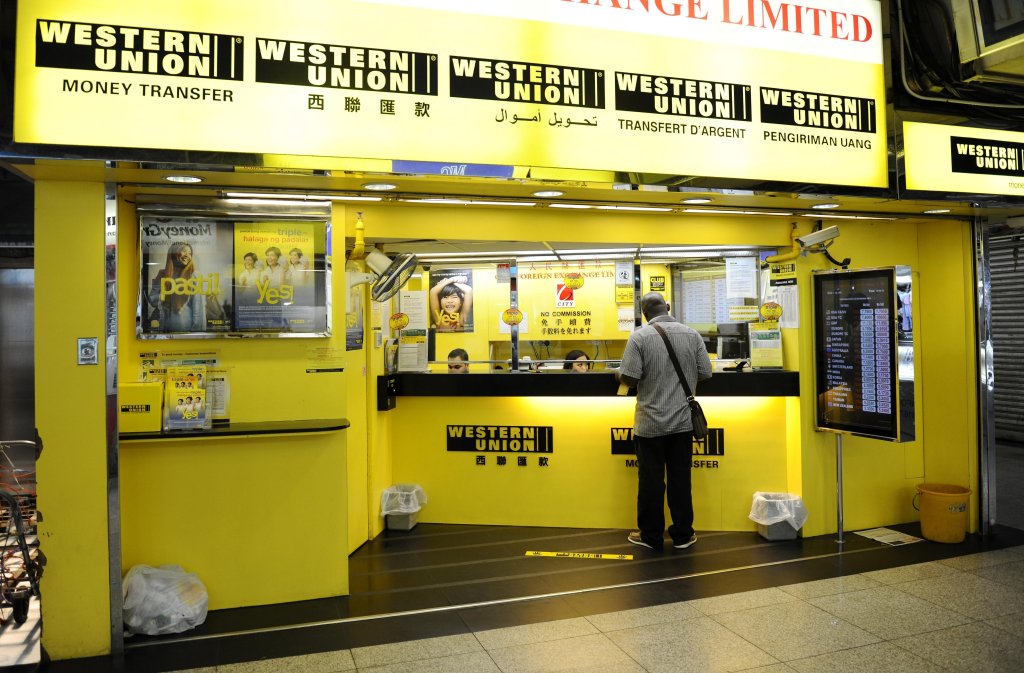
Liberia's balance of payments, which includes the flow of remittances, provides significant information on the country's financial reliance on external support, painting a complex portrait of a nation striving to reconcile its post-conflict reconstruction with the realities of a globalized economy. According to detailed data from the World Bank, remittance inflows to Liberia reached USD 424 million in 2020, accounting for approximately 12.3% of the country's GDP (World Bank, 2021). The profound importance of these inflows cannot be understated; they serve as a critical lifeline that contributes to economic stability while exerting a measurable impact on household income, poverty alleviation, and grassroots investment.
To truly grasp the gravity of Liberia's dependence on external financial support, one must situate these inflows within the wider landscape of capital movement. In 2020, Liberia received USD 225 million in foreign direct investment (FDI) and USD 579 million in official development assistance (ODA). While remittances constituted a smaller share of total external financing compared to the heavy reliance on aid, they surpassed private investment by a considerable margin, highlighting a systemic issue: the country's inability to attract significant commercial capital compared to the survival-driven capital provided by its diaspora. Historically, Liberia's economic trajectory has been punctuated by periods of instability, primarily the civil wars that decimated infrastructure and forced a mass exodus of talent.
This historical context is vital; the 'brain drain' that occurred during the 1990s and early 2000s effectively outsourced the Liberian middle class. Today, those who fled have become the primary sponsors of the national economy. The economic impact of remittances is deeply multifaceted, operating through both microeconomic and macroeconomic channels. On the micro level, remittances function as a direct social safety net, improving the quality of life for thousands of recipient households by supplementing precarious incomes.
A landmark study by Adams and Cuecuecha (2013) found that a 10% increase in remittances led to a 3.5% decrease in the poverty headcount ratio. Beyond immediate consumption, households receiving these funds demonstrate higher levels of investment in education, healthcare, and micro-entrepreneurship, essentially financing the human capital development that the state often fails to provide. On the macro level, remittances act as a vital buffer for Liberia's foreign exchange reserves, reinforcing the country's balance of payments and providing a mechanism to mitigate volatile fluctuations in the exchange rate.
However, this dependence presents a paradox. Overreliance on remittances may inadvertently expose the Liberian economy to exogenous shocks, such as the economic downturns in host nations like the United States or countries within the European Union, as was witnessed during the global COVID-19 pandemic. When remittance-sending countries face crises, the ripple effect on Liberian consumption is immediate and devastating (Ratha et al., 2020).
Furthermore, sustained, heavy remittance inflows can lead to the 'Dutch Disease' phenomenon—the appreciation of the real exchange rate—which can inadvertently diminish the competitiveness of Liberia's nascent export sectors, such as agriculture and processed goods. The narrative of remittances in Liberia experienced a dramatic surge in recent years. By 2022, remittance inflows had surged to $1.2 billion, a staggering increase from the $900 million recorded in 2021.
This exponential growth is not merely a statistical anomaly but a reflection of a more formalized digital infrastructure for money transfers and the strengthening of the Liberian diaspora's sense of obligation toward their homeland. The main drivers remain consistent: a large, resilient diaspora population living primarily in the United States and other parts of West Africa. For many, these transfers are not just altruistic; they are survival mechanisms meant to sustain aging family members, fund private school tuition, and provide startup capital for local businesses. This informal private sector growth, fueled by diaspora cash, remains the most dynamic part of the Liberian economy.
The government of Liberia has recognized this, with the Central Bank of Liberia and various political administrations acknowledging that remittances represent a potential engine for economic growth and stability. Policy shifts aimed at reducing the high cost of transfers—which currently serve as a 'tax' on the poor—are essential. High transaction costs, often caused by inefficient banking systems or limited digital competition, continue to siphon millions of dollars away from households. The impact of these remittances on the balance of payments is a double-edged sword.
While they enhance the current account balance, providing much-needed foreign currency, they also influence the domestic currency, the Liberian dollar. When massive inflows enter the economy, they can create inflationary pressure if not matched by productivity gains, potentially making imports more expensive for domestic businesses. Navigating this requires a delicate balance. Policymakers must move beyond simply celebrating the inflow of cash and focus on 'remittance-led development.'
This involves creating investment vehicles that allow diaspora members to invest in large-scale infrastructure, agriculture, or energy projects rather than just relying on family-to-family transfers for consumption. Regional comparisons are also instructive; nations like Ghana and Nigeria have integrated their diaspora into national development plans far more aggressively than Liberia. For Liberia to mature economically, the state must institutionalize these flows, perhaps through diaspora bonds or targeted incentives for business expansion. The challenges are clear: Liberia must diversify its revenue sources, move away from reliance on raw commodity exports like iron ore and rubber, and transform the diaspora's capital into a sustainable engine for industrialization.
While remittances are currently a cornerstone of resilience, they are not a substitute for a robust, productive national economic strategy. As the country moves forward, it will be the synergy between diaspora support and systemic, transparent, and accountable domestic governance that will define whether these billions can truly lift the nation out of the poverty trap. The current trajectory suggests that while the flow of funds is stable, the structural reliance is a vulnerability that requires careful, strategic management. The government's recent steps to digitize financial services and lower barriers to entry for fintech companies are positive, but the road toward an inclusive and productive economy remains long.
The insights provided by this analysis are intended to foster a necessary national debate on how to convert private survival funds into a vehicle for public prosperity. Get Involved: Do you have additional facts to add to this insight or have an opinion that you would like to express? Email us at analysis@insightsliberia.com.
References: Adams, R. H., & Cuecuecha, A. (2013).
The Impact of Remittances on Investment and Poverty in Ghana. World Development, 50, 24-40. Ratha, D., De, S.
, Kim, E. J., Plaza, S., Seshan, G.
K., & Yameogo, N. D. (2020).
COVID-19 crisis through a migration lens. World Bank. World Bank. (2021).
World Development Indicators.
