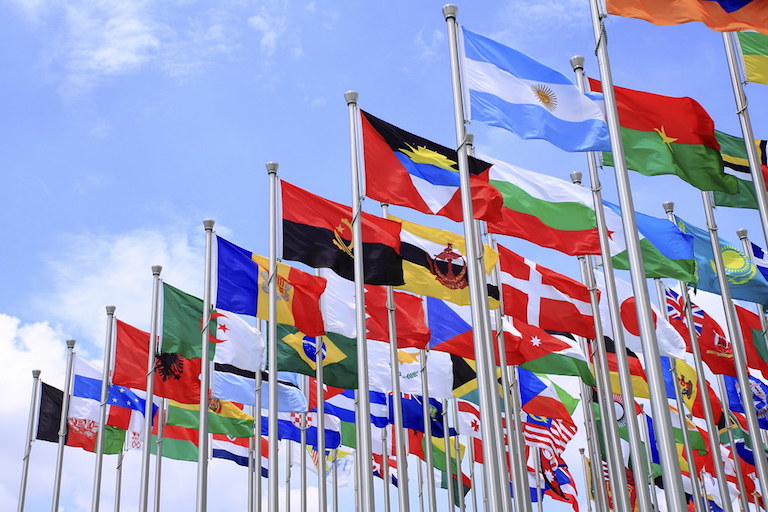
Liberia’s geopolitical positioning within the Mano River Basin is not merely a matter of geography; it is the fundamental pillar upon which the nation’s fragile peace, post-war stability, and economic recovery rest. As a foundational member of the Economic Community of West African States (ECOWAS) and the Mano River Union (MRU), Liberia is inextricably linked to the socio-political and economic trajectories of its neighbors: Sierra Leone, Guinea, and Côte d'Ivoire. This intricate web of relationships is essential for regional security and sustainable development, yet it remains fraught with historical complexities, persistent border tensions, and the formidable challenges of post-conflict reconstruction. Understanding the nuance of these dynamics requires a deep dive into the historical underpinnings of West African integration, where the aspirations of regional unity often collide with the stark realities of weak governance, poor infrastructure, and the illicit exploitation of natural resources.
Historically, the Mano River Union, established in 1973, was designed as a bold experiment in economic cooperation. It aimed to foster regional integration, industrial development, and the harmonization of trade policies among Liberia, Sierra Leone, and Guinea, with Côte d'Ivoire later joining as an associate member. The dream was to leverage shared mineral wealth, timber, and agricultural potential to create a unified market that could withstand the shocks of the global economy. However, the dream was interrupted by the devastating civil wars that swept through the region in the 1990s and early 2000s.
These conflicts, characterized by the cross-border movement of rebel factions and the exploitation of 'blood diamonds,' created deep-seated mistrust that arguably persists in the administrative and security apparatus of these nations to this day. In recent years, while the region has enjoyed relative peace, the relationships between Liberia and its neighbors have been tested by intermittent crises. A glaring example occurred in 2020, during the height of the global uncertainty surrounding health security. The decision by the Liberian government to restrict movement along its porous borders with Sierra Leone and Guinea, ostensibly to mitigate the spread of the Ebola Virus Disease and COVID-19, triggered diplomatic frictions.
These tensions were not merely health-related; they exposed the underlying precariousness of cross-border trade, which is the lifeline for thousands of small-scale traders who traverse these boundaries daily. When borders close, the impact on local livelihoods is catastrophic, leading to accusations of unfair protectionism and triggering localized economic stagnation. Beyond health, the issues of illegal migration and the management of natural resources remain perennial points of contention. The vast, often poorly patrolled border regions are susceptible to the smuggling of gold, timber, and agricultural goods.
This illicit activity has a two-fold negative impact on the Liberian state: it represents a significant loss of domestic revenue that could otherwise be utilized for public infrastructure, and it undermines the legitimacy of state authority in remote provinces. The failure to effectively regulate these zones creates a climate of impunity that threatens the security of the entire Mano River region. Trade figures tell a compelling, if complex, story regarding the potential for integration. According to World Bank data, Liberia’s imports and exports with its immediate neighbors have shown modest growth, yet they remain a small slice of the nation's overall trade profile.
In 2019, Liberia’s exports to West African countries hit $121 million, balanced against $120 million in imports. While these figures represent tangible cooperation, they pale in comparison to trade with extra-regional powers like China and India, which dominate the export of raw materials like iron ore and rubber. Only about 7% of Liberia's total trade is with its direct neighbors. This imbalance is largely attributed to the persistent lack of physical infrastructure, such as interconnected road networks, and the bureaucratic 'red tape' that hampers the flow of goods across the border.
Corruption remains a significant bottleneck; despite various trade agreements, the cost of transit, combined with the presence of multiple checkpoints, discourages formal trade and forces merchants into the informal—and often illegal—economy. Despite these impediments, there are success stories that offer a blueprint for the future. The collective response to the West African Ebola outbreak of 2014-2016 remains a high-water mark of regional cooperation. Recognizing that a pathogen knows no political borders, Liberia, Sierra Leone, and Guinea moved beyond historical grievances to share medical resources, information, and surveillance strategies.
This cooperation proved that when the existential stakes are high enough, regional integration is not just a policy ideal but a practical necessity for survival. Furthermore, in 2017, the signing of a memorandum of understanding between Liberia and Sierra Leone to enhance border security demonstrated a proactive shift toward shared responsibility. By focusing on joint patrols and intelligence sharing, the two countries sought to address the root causes of insecurity, such as human trafficking and the illicit transport of goods. Such initiatives are critical.
They acknowledge that Liberia’s stability is inseparable from the stability of its neighbors. A prosperous Guinea or a stable Sierra Leone directly contributes to a safer and more investment-friendly Liberia. Regarding foreign direct investment (FDI), the reliance on regional neighbors is notable. Côte d'Ivoire, Guinea, and Sierra Leone remain significant sources of investment, showing that the private sector is often faster than the state in recognizing the benefits of regional integration.
These investments are crucial because they create jobs and promote the modernization of trade practices. However, to maximize this, Liberia must improve its business climate, focusing on transparency and rule of law to attract more sustained capital. Looking toward the future, the challenge for Liberia lies in moving from transactional relationships to strategic regional partnerships. This involves moving beyond the limitations of the Mano River Union as it stands and embracing the broader, more integrated ECOWAS framework more aggressively.
The regional body provides a mechanism for free movement and the reduction of trade barriers, but it requires political will from leaders to enforce these treaties locally. Liberia, having endured years of isolation during its dark period of conflict, now understands that its future is undeniably African. The potential for a regional common market is vast, provided that the focus remains on building 'soft infrastructure'—such as the digital integration of customs, the harmonization of labor laws, and the creation of standardized trade protocols. The road ahead is not without obstacles.
Domestic political cycles often lead to short-term policies that overlook regional stability. Furthermore, external geopolitical influences continue to play a role in how these nations manage their borders. However, the path to prosperity for Liberia is clearly mapped through its neighbors. As the country seeks to diversify its economy and move away from its dependence on the extraction of raw materials, the markets of its neighbors offer the best potential for growth in processed goods and local services.
In conclusion, the relationship between Liberia and its neighbors is a work in progress. It is a relationship defined by historical trauma but tempered by the necessity of peace. While challenges in trade, security, and infrastructure remain, the demonstrated capacity for collaboration—whether during health crises or through recent security protocols—suggests that a more integrated future is possible. For Liberia, the goal must be to champion a vision of regional solidarity that prioritizes the economic security of its people, ensuring that borders become gateways for prosperity rather than barriers to development.