
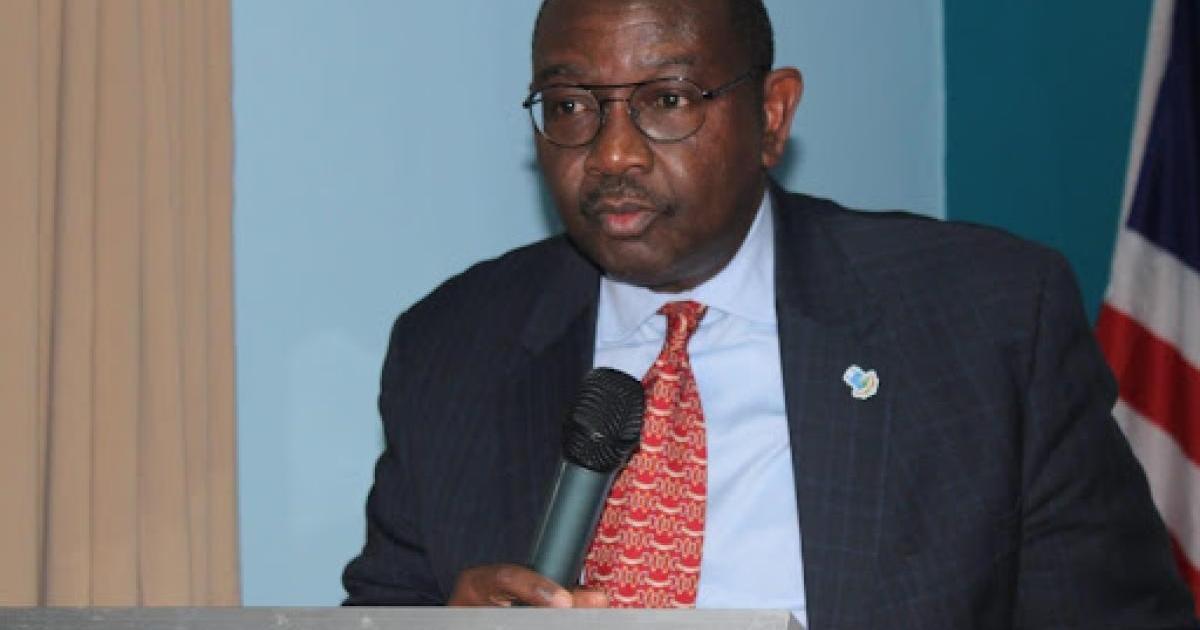
The New Final Arbiter: A Constitutional Crisis in Liberia. In the delicate architecture of Liberia’s democratic experiment, the judiciary has long served as the ultimate bulwark against the encroaching tides of executive overreach. However, the nation now finds itself gripped by an unprecedented constitutional crisis that threatens to dismantle this foundational pillar. At the center of this turmoil is an opinion issued by Justice Minister Oswald Tweh, which does more than merely offer legal counsel; it actively challenges the Supreme Court’s authority, creating a dangerous precedent that jeopardizes Liberia’s constitutional order.
By attempting to circumvent the Court's explicit ruling—which dictates that the Constitution must be interpreted as an integrated whole rather than through sequestered pronouncements—the Ministry of Justice has effectively declared itself a rival to the judiciary. This move is not merely a technical disagreement; it is a fundamental assault on the Separation of Powers. The Justice Minister's opinion, issued under the guise of Section 22.2 of the Executive Law, seeks to provide a veneer of legality to legislative actions that the Supreme Court has already labeled 'ultra vires.'
By doing so, the Executive Branch has signaled a willingness to prioritize political expediency over the rule of law. The crisis deepens when one considers the role of the Senate, which has alarmingly chosen to endorse the 'majority bloc’s' controversial agenda based on the Minister’s opinion rather than the definitive rulings of the highest court in the land. This elevation of executive interpretation over judicial command is a hallmark of democratic backsliding. Historically, Liberia’s journey toward democracy has been fraught with challenges, from the cycles of authoritarianism in the 20th century to the post-war reconstruction efforts aimed at rebuilding state institutions.
The 1986 Constitution was specifically designed to ensure that no single branch of government could hold absolute sway, establishing the Supreme Court in Article 66 as the final arbiter of constitutional issues. By defying this mandate, the Minister is not just challenging a specific ruling; he is undermining the very legitimacy of the Liberian state. The Court was unambiguous: 'whether a simple majority is sitting or a lower number, in both cases a Presiding Officer, defined in Article 49 of the Constitution is the Speaker, and in his/her absence, the Deputy Speaker.' This language leaves no room for creative interpretation.
Yet, the Minister suggests alternative arrangements, effectively proposing a parallel legal framework that contradicts the explicit text of the Constitution. This is a direct affront to the legislative independence guaranteed under our laws. The socio-economic implications of this crisis are staggering. Governance in Liberia relies on the predictability and stability of the legal environment.
If the budget process—the lifeblood of any government—is based on 'ultra vires' legislative actions that are being shielded by executive fiat, international donors and domestic investors alike will rightly view the Liberian state as an unreliable partner. The uncertainty surrounding the legality of these proceedings means that any appropriations made under this cloud of suspicion are potentially voidable, leading to a state of paralysis in public service delivery. The Senate's complicity in this matter is particularly concerning, as it represents the upper house of the legislature abdicating its duty to protect the constitutional sanctity of the law-making process. By backing the majority bloc, the Senate is participating in a power struggle that prioritizes short-term political dominance over the long-term health of our democracy.
This is a dangerous game. In the context of the West African region, where democratic governance has been tested by military coups and constitutional amendments in neighboring states, Liberia has often been held up as a success story of post-conflict institutional consolidation. This crisis threatens to tarnish that reputation. If the Executive branch succeeds in overriding the Supreme Court, it establishes a precedent where constitutional requirements can be selectively ignored to serve the interests of those in power.
Such a shift would be catastrophic for the rule of law. Furthermore, the reliance on Section 22.2 of the Executive Law to override judicial decisions is a perversion of the statute's intent. The office of the Attorney General, while tasked with providing legal advice to the President, was never intended to function as an appellate body over the Supreme Court.
The Minister’s opinion attempts to validate legislative maneuvers that the Court has already declared incompatible with Articles 33 and 49, effectively creating a system of 'selective legality.' This environment breeds cynicism among the citizenry, who are left to wonder if the law applies only when it is convenient for the governing class. The broader regional significance of this cannot be overstated; Liberia is a member of the ECOWAS community, which stresses the sanctity of constitutional governance. Defying the Supreme Court is an invitation for regional instability and could lead to diplomatic repercussions if the international community perceives a total breakdown of the rule of law.
The path forward remains treacherous. The Minister’s attempts to justify the current legislative impasse are not merely flawed; they are an attempt to rewrite the rules of governance from within. The Supreme Court has laid out clear, unambiguous guidelines on how the Legislature should function to ensure its actions are constitutional. To ignore these guidelines is to invite a crisis of legitimacy that no amount of political spin can resolve.
The Liberian public, civil society organizations, and the legal fraternity must remain vigilant. The survival of our democratic order depends on the recognition that the Supreme Court, and only the Supreme Court, possesses the authority to interpret the Constitution. If the executive branch continues to act as a parallel arbiter, the check and balance system that prevents autocracy will cease to function. We must ask: what is the purpose of a Constitution if its interpretation is subject to the whim of a political appointee?
This is the fundamental question that every stakeholder must now confront. The current situation is not just a constitutional crisis; it is a test of our national character. Will we uphold the supremacy of the law, or will we allow the dictates of the few to supersede the will of the people as expressed through the established constitutional order? The time for political gamesmanship is over; the time for defending the sanctity of the judiciary and the rule of law has arrived.
The stability of our republic and the confidence of our people in the democratic process hang in the balance, and the consequences of inaction are too high to contemplate.
