
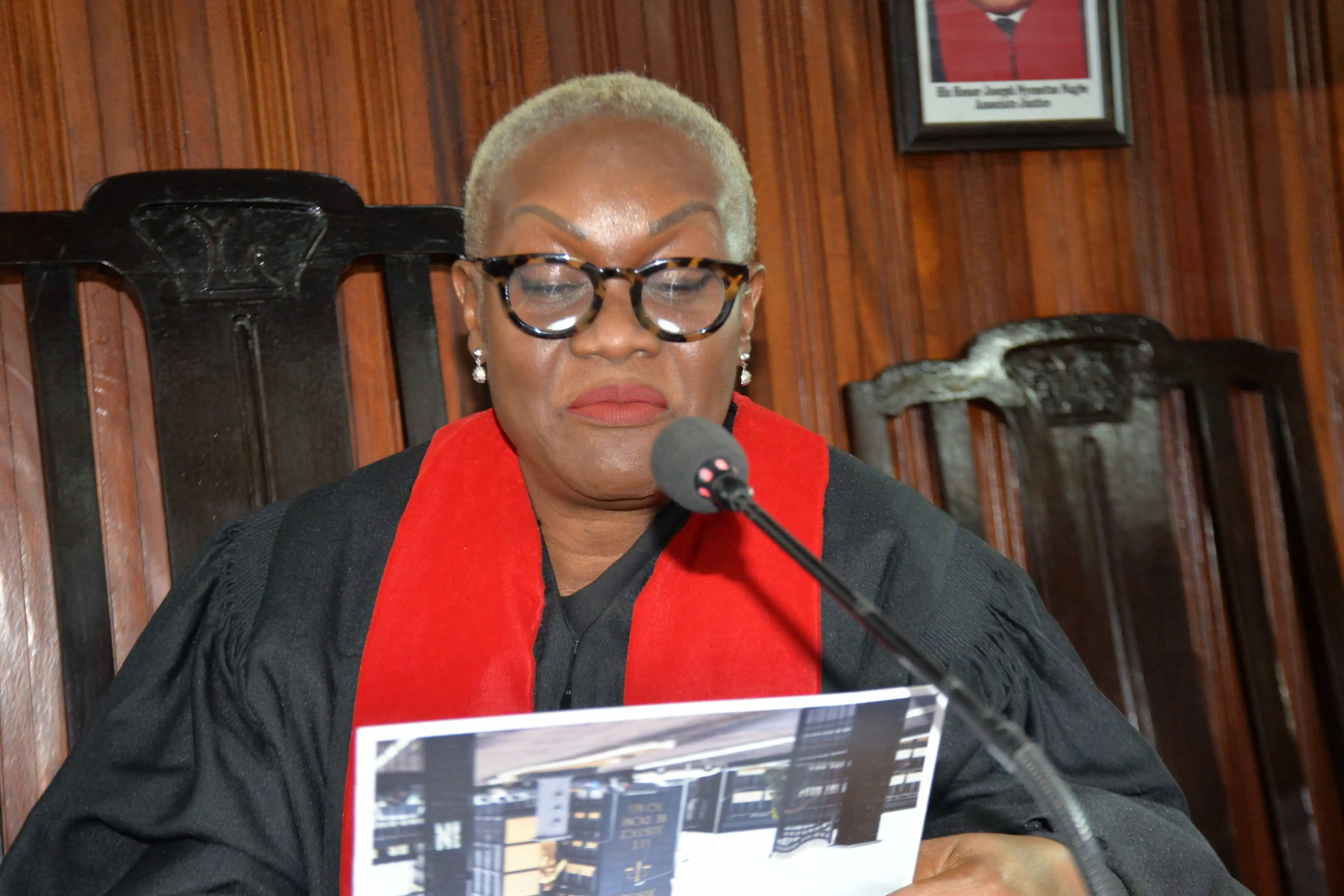
The Legacy at Stake: Liberia's Supreme Court and the Constitutional Crisis. With allegations of bribery schemes, reported back-channel lobbying from the executive branch, and whispers of secret meetings swirling around the corridors of the Temple of Justice, Chief Justice Sie-A-Nyene G. Yuoh and her colleagues find themselves at the epicenter of a storm that could redefine the trajectory of Liberian democracy. As the Supreme Court prepares to deliver its verdict on the attempted removal of Speaker J.
Fonati Koffa, the institution is facing perhaps the most defining moment of its modern judicial history. Reports of deep, fracturing divisions among the justices have leaked into the public domain, suggesting that the pressure of this political impasse is testing not only the intellectual cohesion of the bench but the very foundation of judicial independence in a nation that has fought long and hard to move past the scars of its authoritarian and conflict-ridden history. The stakes here extend far beyond the leadership of the House of Representatives; they touch upon the credibility of the entire constitutional order. Liberia’s rule of law rankings have consistently languished on the global stage, and the judiciary has long been viewed with skepticism by a populace accustomed to the historical vulnerability of the bench to executive manipulation.
For a nation whose democracy hangs in a fragile, shifting balance, the public’s expectation of judicial neutrality and unwavering commitment to the constitution is facing its ultimate trial. The Supreme Court stands at a crossroads: it must decide whether to act as the final guardian of constitutional integrity or to retreat into the shadows of judicial deference, a choice that will dictate whether Liberia’s democratic institutions are further eroded or fundamentally strengthened. The legal question before the Supreme Court is rooted in the procedural legitimacy of the 'majority block' that sought to oust Speaker Koffa. The central issue revolves around the constitutionality of due process—a cornerstone of the Liberian Constitution.
Does the legislature possess the absolute power to determine its own leadership, or is that power circumscribed by the constitutional necessity of due process? The allegations suggest that the majority block proceeded without the mandatory quorum or the adherence to the standing rules of the House, effectively bypassing the safeguards that prevent arbitrary legislative action. The legal implications of such a scenario are profound; if the Supreme Court validates a process that ignores constitutional mandates in favor of raw political numerical strength, it risks challenging the principles of fairness, transparency, and accountability that were intended to prevent the resurgence of tyranny. Due process, as enshrined in Article 20(a) of the Liberian Constitution, ensures that no person shall be deprived of life, liberty, security of the person, property, privilege, or any other right without due process of law.
In the context of removing a sitting Speaker, this is not merely a bureaucratic formality; it is a vital check on power. It requires clear, codified procedures—such as formal impeachment proceedings, evidence of misconduct, and the right to a defense—that protect the occupant of the office from being cast aside by the whims of a faction. Failing to adhere to these procedures does more than violate a rule; it hollows out the rule of law. It sets a dangerous precedent where the 'will of the majority' becomes the 'tyranny of the majority,' allowing political actors to use procedural shortcuts to achieve outcomes that the law was specifically designed to prevent.
The danger of the 'political question' doctrine looms large over these proceedings. Should the Supreme Court choose to invoke this doctrine—arguing that the dispute is an internal legislative matter beyond judicial reach—it would be making a definitive statement about the scope of its own authority. While the political question doctrine exists to preserve the separation of powers by preventing courts from intruding into the purely internal, discretionary functions of other branches, applying it in this context could be viewed as a dereliction of duty. By washing its hands of the matter, the Court would essentially be granting a license for legislative chaos.
If the internal management of the House is held to be entirely outside the purview of the law, then what stops future legislatures from discarding the constitution whenever it becomes inconvenient? Such a ruling would imply that the Supreme Court views constitutional rights as secondary to political expediency. The historical context of the Liberian judiciary is not lost on the citizenry. Since the end of the civil wars, Liberia has sought to establish a 'Rule of Law' state, moving away from the era where the President was the de facto head of all three branches.
This crisis marks a litmus test for that transition. If the Court refuses to provide a clear, substantive opinion, it risks being perceived as a body that is afraid to hold power to account. The potential for social and political instability cannot be overstated. If the legislature is permitted to function outside the bounds of its own established rules, the legitimacy of every piece of legislation passed thereafter becomes suspect.
Furthermore, the accusations of bribery—now the subject of a Liberia Anti-Corruption Commission (LACC) investigation—add a layer of criminality to the political maneuvering. If the Court ignores the nexus between these alleged corrupt activities and the procedural violations, it sends a signal of impunity that will resonate throughout the administration, from the cabinet ministries to the municipal councils. The public’s confidence in the judiciary is already tenuous. The perceived influence of the executive branch in trying to 'lobby' the court, as reported in various media outlets, suggests a return to old patterns of patronage.
Justice Yuoh’s bench is currently under the spotlight, and their legacy will be defined not by the political power they preserve, but by the legal principles they protect. A ruling that prioritizes the spirit of the law over political convenience would serve as a vital safeguard for the future. Conversely, a retreat into the 'political question' shield would signal that Liberia’s democratic experiment remains vulnerable to the same factionalism that triggered the country’s descent into civil conflict decades ago. As we analyze the trajectory of this crisis, we must recognize that this is not just about Speaker Koffa; it is about whether the Liberian Constitution is a living, breathing document that protects every citizen, or a fragile scroll that can be torn up whenever a majority decides it no longer suits their interests.
The regional significance of this case is also immense; West Africa has seen a troubling democratic backslide in recent years, with coups and constitutional manipulations becoming frequent. Liberia, having prided itself on being a beacon of democratic stability, cannot afford to slip into that same malaise. The world is watching to see if Liberia’s highest court will stand as a bulwark against the erosion of constitutional norms. The court’s decision will resonate far beyond the walls of the Temple of Justice.
It will echo through the halls of the legislature, the offices of government, and the households of ordinary Liberians who are desperate for a system that values the law over the machinations of the powerful. Whether the Court chooses to define the limits of the legislature or chooses the path of least resistance, its decision will become a foundational document for the next generation of Liberian jurists, politicians, and citizens. The legacy of the current bench is, quite literally, being written in real-time, and the only path to a lasting, credible legacy is to ensure that the rule of law is never sacrificed on the altar of political expediency. The crisis serves as a stark reminder that democracy is never a finished product; it is a continuous labor of vigilance.
If the Supreme Court provides a robust, transparent, and legally sound opinion, it can quell the brewing unrest and restore faith in the democratic process. If it chooses silence or evasion, it will leave the nation to grapple with the consequences of an unbridled and potentially lawless legislature. The time for judicial courage has arrived, and the people of Liberia await a verdict that upholds the sanctity of the constitution above all else.
