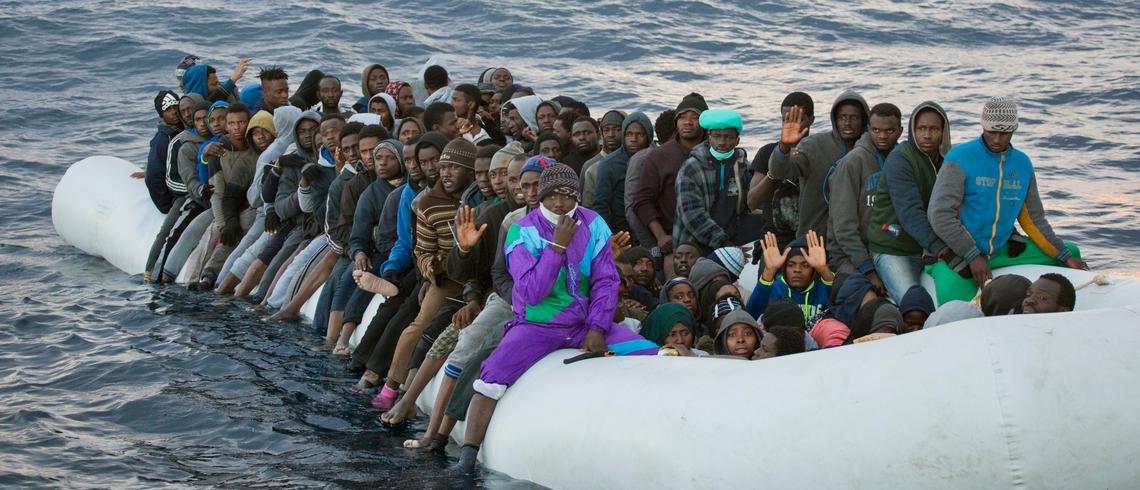
In recent years, the international landscape has been fundamentally reshaped by a dramatic, often harrowing escalation in the scale of human migration. According to data provided by the United Nations, the global population of international migrants reached an estimated 272 million in 2020, a stark increase from 220 million in 2010. While statistics often act as cold indicators of geopolitical flux, the figures behind this migration surge represent profound humanitarian tragedies unfolding across continents. This sustained increase is driven by a convergence of catastrophic events, most notably the protracted Syrian civil war, which precipitated one of the largest refugee movements since the Second World War.
However, Syria is merely the epicenter of a broader, more systemic disintegration of stability. Across the globe, economic instability, deeply rooted political oppression, and the inexorable acceleration of climate-induced environmental degradation have turned millions of people into perpetual transients, desperate to secure basic survival in an increasingly inhospitable global climate. In the context of Liberia, a nation that has historically experienced the crushing weight of civil conflict and the subsequent displacement of its own citizenry, this global crisis resonates with a particular, poignant urgency. We understand, perhaps better than most, that migration is not merely a choice, but often a final, desperate act of defiance against a future devoid of promise.
The journey to a new country—often undertaken via the Sahara Desert or across the turbulent waters of the Mediterranean—is characterized by extreme peril. Migrants are frequently forced to entrust their lives to networks of human traffickers who view human beings as commodities to be exploited, discarded, or held for ransom. They travel through unfamiliar, hostile territories, often in the company of strangers, with no guarantee of safety. The physical risks, including robbery, physical assault, kidnapping, and the grim reality of loss of life, are constant companions.
Beyond these physical dangers, the psychological toll is immense. To migrate is to excise oneself from the fabric of one’s culture, identity, and support systems. It is an emotional severing that leaves scars long after the physical journey has ended. Millions persist in this endeavor, fueled by a singular, powerful emotion: hope.
They hope to secure the education, healthcare, and stability for their families that their home nations, currently mired in stagnation or violence, have failed to provide. The human cost of this migration is staggering, measured in the thousands of lives lost to shipwrecks, dehydration, and the brutality of detention centers. Even for those who reach their intended destination, the journey is rarely the end of the struggle. Many face a hostile reception marked by systemic discrimination, institutional poverty, and the perpetual terror of deportation.
They often find themselves relegated to the margins of society, working in exploitative conditions or residing in overcrowded, substandard housing, all while lacking the legal protections granted to citizens. The international community, led by institutions such as the United Nations, the European Union, and the African Union, bears a collective responsibility to address this humanitarian emergency with more than just rhetoric. We must advocate for the creation of safe, legal corridors for migration, ensuring that the movement of people is regulated not by criminal syndicates, but by policies rooted in human rights and dignity. Furthermore, there is an urgent need to provide social and economic support structures that allow migrants to integrate meaningfully and contribute to their new societies.
Most critically, the global powers must pivot toward addressing the root causes of displacement. For Liberia and its West African neighbors, this means prioritizing regional stability, investing in sustainable infrastructure, and confronting the climate-driven desertification that is forcing rural populations to abandon their ancestral lands. The complexity of the global migration crisis cannot be overstated. It is a multifaceted phenomenon where the lines between economic migration and forced displacement frequently blur.
When the World Bank notes that over 700 million people exist on less than $1.90 per day, it is describing a world where millions are effectively coerced into mobility by the absence of local economic opportunity. Similarly, the UNHCR reports that over 82 million people have been forcibly displaced due to conflict and persecution—a number that surpasses the total population of many individual nations. These people represent a hemorrhage of human capital.
In countries of origin, the departure of the young, the skilled, and the ambitious—the so-called brain drain—depletes the local capacity for recovery and development. This loss creates a feedback loop: as the brightest leave, the institutions of the home country weaken further, triggering more migration. Conversely, in the countries of destination, the arrival of large numbers of people often sparks xenophobic political rhetoric. This polarization frequently obscures the reality that immigration can, if managed ethically and efficiently, provide vital labor and innovation to aging or stagnant economies.
The challenges are clear, but the solutions remain stubbornly elusive. We must move beyond the current paradigm of securitization—where borders are viewed strictly as defensive walls—and toward a model of managed, humane, and sustainable migration. Policymakers must acknowledge that the global migration crisis is not a transient emergency but a permanent fixture of our interconnected world. We require policies that recognize the humanity of the migrant, the responsibility of the host country, and the systemic failures that make such perilous journeys necessary in the first place.
Whether in the Mediterranean, the Darien Gap, or the transit routes of the Sahel, the message remains the same: the status quo is untenable. A comprehensive, rights-based approach to global mobility is the only path toward reconciling the natural human desire for a better life with the geopolitical realities of our time. Without this, the cost will continue to be paid in the currency of human lives, and the international community will continue to fail its most vulnerable members.