
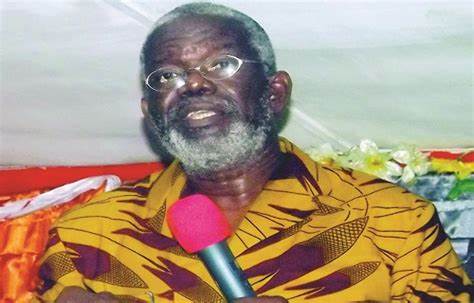
The passing of Senator Prince Yormie Johnson on November 28, 2024, has not merely left a vacant seat in the Liberian Senate; it has dismantled the cornerstone of Nimba County’s political architecture. For nearly two decades, Senator Johnson—widely referred to as PYJ—functioned as the ultimate political broker, a kingmaker whose endorsement determined the trajectory of national leadership. As the second-largest voting bloc in Liberia, Nimba remains the crown jewel of electoral contests, and with its primary architect gone, the county stands at a perilous, yet transformative, crossroads. The upcoming senatorial by-election is not simply a race to fill a seat; it is a referendum on the legacy of a warlord-turned-statesman and a test of whether Nimba’s political identity will remain monolithic or splinter into competing factions.
The void left by PYJ has triggered a political vacuum characterized by deep-seated resentment toward the ruling Unity Party (UP) and a flurry of maneuvering among aspirants hoping to inherit his formidable grassroots base. At the heart of this tension lies the narrative of betrayal. Many Nimbaians perceive the death of the Senator as the final act of a long-running political tragedy, one where the UP leadership—President Joseph Boakai and Vice President Jeremiah Koung—marginalized the very man who delivered their margin of victory in 2023. The controversial signing of the War Crimes Court (WCC) resolution remains a particularly radioactive issue.
To the international community and human rights activists, the WCC is a mechanism for justice. To the average constituent in Nimba, however, the resolution was viewed as a direct attack on PYJ, a man they championed as a hero despite his polarizing wartime record. The perception that the UP government instrumentalized the court to neutralize its political benefactors has fostered a climate of deep suspicion. Furthermore, the perceived cold shoulder from the Executive Mansion, where PYJ alleged that his recommendations for appointments were ignored and his communications left unreturned, has fueled a narrative of ingratitude.
Even Vice President Jeremiah Koung, once viewed as PYJ’s political protégé and designated successor, finds himself in a precarious position. Leaked internal communications have revealed a growing rift between the two, suggesting that Koung’s ascent to the vice presidency may have signaled a departure from the Movement for Democracy and Reconstruction (MDR) party line. For the aspirants seeking to fill the vacant seat, the central challenge is navigating this toxic mix of grief, tribal loyalty, and anti-establishment fervor. The field of candidates reflects the complexity of the county’s current political psyche.
Garrison Yealu, a former Representative and head of the Governance Commission, has emerged as a high-stakes contender. As a Gio, Yealu commands a demographic advantage in a county where tribal affiliation remains a potent, if unspoken, determinant of electoral success. His potential alignment with the Coalition for Democratic Change (CDC) offers him a structural advantage, as the CDC is keen to weaponize the betrayal narrative against the Boakai administration. By positioning himself as the inheritor of the mantle that the UP allegedly discarded, Yealu could consolidate the anti-incumbent sentiment that is currently sweeping through the districts of Nimba.
However, the CDC label is a double-edged sword; while it grants access to resources and a loyal opposition base, it also subjects Yealu to the baggage of the previous administration’s performance record. Conversely, Samuel Gongben Kogar presents a more complex profile. A sitting lawmaker with the People’s Unification Party (PUP), Kogar occupies the delicate middle ground. As a first cousin of the late Senator, he carries the weight of the Johnson name, yet his recent political moves—including his role in the legislative attempt to unseat Speaker Fonati Koffa—have invited scrutiny.
Kogar enjoys the rare advantage of possessing a dual-ethnic appeal; his paternal Gio lineage and maternal Mano roots allow him to bridge the divide that has historically fractured Nimba politics. Should the Unity Party consolidate its support behind him, Kogar could leverage the state apparatus to gain an edge. However, his proximity to the ruling party is his greatest vulnerability. In a political climate defined by the rhetoric of betrayal, the challenge of justifying his closeness to the UP to the aggrieved supporters of the late Senator will be the defining struggle of his campaign.
The candidacy of Edith Gongloe adds a layer of intellectual and gender-conscious complexity to the race. A prominent figure known for her advocacy and firm stance in political affairs, Gongloe appeals to a demographic that is increasingly disillusioned with the status quo. Her Mano heritage provides a necessary counter-balance in the tribal calculus of the county, and she could benefit significantly if the Gio vote becomes overly fragmented by the candidacy of several strong male rivals. Nevertheless, her political profile suffers from a persistent narrative of absence; critics often argue that her base of support is more theoretical than practical, as her extended periods of time in the United States have created a perception of distance from the day-to-day realities of her constituents.
To succeed, Gongloe must pivot from a policy-centric campaign to a grassroots mobilization effort that proves she is more than just a candidate for a single election cycle. Beyond these top-tier contenders, the field includes figures like Roland Duo and Taa Wongbe, each bringing unique regional strengths to the contest. Roland Duo remains a stalwart in District 9, while Taa Wongbe’s reported backing by political powerbroker Musa Bility introduces a factor of significant financial and organizational influence. Then there are the persistent voices like Selekpoh Armstrong Gobac and the remnants of the old guard like Thomas S.
Grupee, who highlight the ongoing splintering of the political class. The strategic implications of this by-election extend far beyond the borders of Nimba. With the national landscape preparing for the 2029 general elections, the winner of this seat will gain a platform that is essential for negotiating future alliances. The Senate serves as a chamber of national influence, and whoever emerges from the rubble of the PYJ era will have to prove that they can represent the county’s interests without being subsumed by the partisan squabbles of Monrovia.
Public sentiment, currently mourning the loss of a political titan, is fickle. The candidates who rely solely on the reflected glory of the past will likely struggle to capture the imaginations of the youth, who represent an increasingly significant portion of the electorate. Issues such as sustainable economic development, access to quality education, and the modernization of local infrastructure must transition from campaign slogans to actionable commitments. The candidate who can reconcile the legacy of the past with the urgent needs of the future will be the one who secures the support of the Nimbian people.
In conclusion, the Battle for Nimba is a high-stakes chess match played against a backdrop of deep emotional turbulence. The Unity Party faces an uphill battle to prove that its governance does not equate to the betrayal of the county, while the opposition sees a golden opportunity to reclaim a vital stronghold. For the voters of Nimba, the task is equally daunting: to decide whether they will cling to the identity forged during the years of Prince Y. Johnson’s dominance or embrace a new, albeit uncertain, chapter of political representation.
The result of this election will inevitably serve as a bellwether for the health of Liberian democracy and the durability of its evolving political alliances.
