
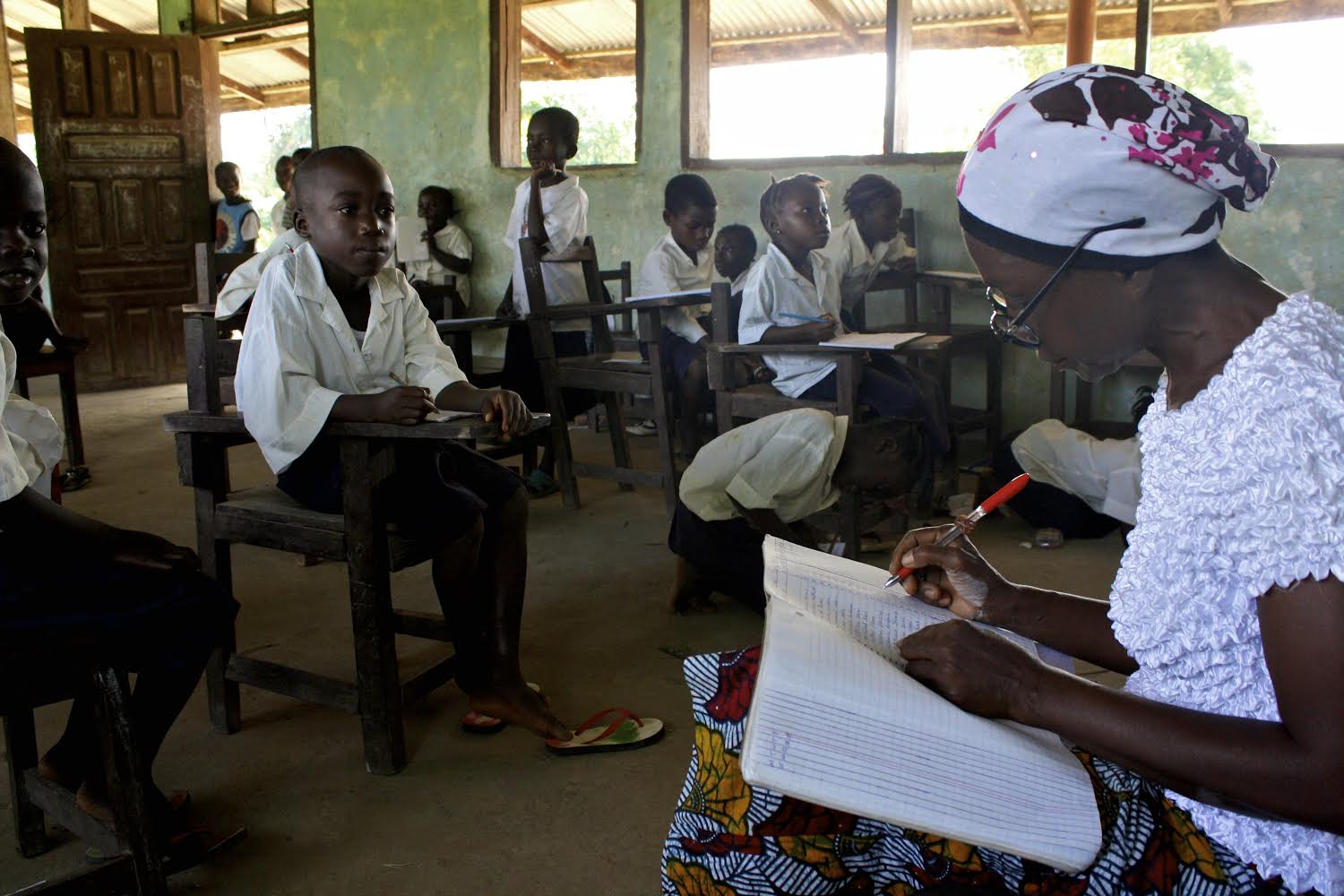
Title: The Crucible of Learning: Reforming Teacher Training and Support in the Liberian Educational Landscape. Introduction: Teachers are the foundational pillars of any burgeoning society, acting as the primary architects of a nation’s intellectual and socio-economic future. In the context of Liberia, a nation striving to transcend the scars of a protracted civil war and decades of institutional fragility, the role of the educator takes on existential importance. They are the essential conduits through which academic, social, and emotional development must flow to cultivate a productive citizenry.
Yet, despite the rhetorical commitment to 'education for all,' a stark chasm exists between policy aspirations and the daily reality faced by thousands of instructors. This report serves as an investigative analysis into the systemic deficiencies permeating teacher training and support within Liberia, arguing that until we prioritize the human capital—the teachers themselves—any attempts at educational reform will remain superficial and largely ineffective. The crisis of education in Liberia is not merely one of infrastructure or curriculum; it is a crisis of pedagogy and professional investment. The Current State of Teacher Training and Support: The educational apparatus in Liberia operates through a hybrid, yet often disconnected, model of pre-service and in-service training.
Pre-service training is theoretically anchored in institutions such as the William V.S. Tubman Teachers College at the University of Liberia and various regional teacher education institutions. Ideally, these entities should serve as the training grounds for the next generation of pedagogical experts.
However, these institutions are often hamstrung by outdated curricula, a lack of modern didactic technology, and faculty who are themselves separated from current global educational best practices. In-service training, meanwhile, is intended to provide the bridge between theory and practice, managed primarily by the Ministry of Education (MoE) alongside various international NGOs and donor partners. These programs are frequently delivered as sporadic, short-term workshops that suffer from the 'one-size-fits-all' syndrome, failing to account for the specific geographic, cultural, and socio-economic nuances of Liberian classrooms. Historical and Regional Context: To understand the current stagnation, one must contextualize the Liberian education system against the backdrop of the fourteen-year civil conflict.
During the war years, schools were shuttered, buildings were destroyed, and the 'teaching corps' was decimated. The post-war reconstruction phase focused heavily on the physical rehabilitation of school structures, often prioritizing quantity of enrollment over the quality of instruction. This 'quantity-first' approach led to an influx of volunteer and uncertified teachers to meet the massive demand for education, a demographic that still heavily influences our workforce today. Regional comparisons further highlight this disparity; while neighboring West African nations have made strides in digitizing teacher monitoring and streamlining certification, Liberia has struggled to maintain a comprehensive, national database of qualified personnel.
This has resulted in the phenomenon of the 'ghost teacher'—individuals on the payroll who do not teach—which siphons vital resources away from those who are actively working in the trenches of the classroom. The Reality of the Classroom Experience: The data is sobering. A 2018 UNICEF report identified that a mere 12% of teachers in Liberia possess formal pedagogical certification. This means that nearly nine out of every ten children in a Liberian classroom are being taught by individuals who lack the basic training in classroom management, child psychology, or subject-specific instruction.
This is not a failure of character on the part of the teachers, but a systemic failure of support. Teachers are often left to navigate overcrowded classrooms—frequently exceeding 60 or 70 students—with little to no teaching materials, no access to electricity or the internet, and a curriculum that is often disconnected from the realities of the modern labor market. These working conditions are exacerbated by chronic under-compensation. When teachers, who are responsible for the intellectual growth of the next generation, live at or below the poverty line, the profession ceases to be an aspirational career and becomes a survival mechanism.
This leads to high turnover rates, as the most qualified individuals eventually migrate to NGOs, the corporate sector, or the diaspora, leaving the public school system in a state of perpetual attrition. Economic and Social Implications: The long-term consequences of this systemic neglect are profound. The 2016 Ministry of Education report, highlighting dropout rates of over 40% in primary and junior high schools, is an indicator of a failure to engage students. When teachers lack the skills to make lessons relevant or the support to manage classrooms effectively, students lose motivation.
This cycle contributes to a pervasive lack of critical thinking skills in the workforce, which in turn stifles national innovation and economic competitiveness. By failing to invest in the quality of the 'human resource' in our schools, Liberia is effectively devaluing its own future potential, ensuring that the next generation remains locked in the same patterns of economic dependency that have characterized the post-conflict era. Strategic Recommendations: Addressing this crisis requires a holistic, multi-pronged approach that moves beyond simple policy rhetoric. First, we must undertake a fundamental overhaul of pre-service teacher education.
The curriculum must be modernized to include digital literacy and inclusive education techniques that cater to children with different learning abilities. This requires a partnership between the Ministry of Education and academic institutions to ensure that training is aligned with the actual needs of schools. Second, in-service training must be professionalized. Rather than sporadic workshops, we need a permanent, regionalized system of continuous professional development.
This should involve 'communities of practice' where teachers share successful strategies. This must be complemented by the institutionalization of robust mentoring and coaching programs, where veteran educators provide real-time guidance to newer entrants. Third, the government must prioritize the 'Teacher Wage Bill' with a view toward a living wage. Professionalizing the occupation means acknowledging that teaching is a specialized skill that warrants competitive remuneration.
Finally, we must invest in school-level support mechanisms, such as adequate provision of teaching aids and school grants that enable headmasters to foster a culture of professional growth rather than just administrative compliance. Conclusion: The path forward for Liberia’s education sector is neither quick nor easy, but it is necessary. Teachers are not just employees of the state; they are the guardians of our democratic future and the catalysts for our economic development. By professionalizing the recruitment, training, and support of our teachers, the Liberian government and its stakeholders can transform schools from mere holding centers into vibrant hubs of learning.
It is time to shift the narrative from one of scarcity to one of investment, ensuring that every child in Liberia has the benefit of an educated, supported, and motivated instructor. Without such a commitment, the foundational instability in our education system will continue to be a barrier to our national progress.



