
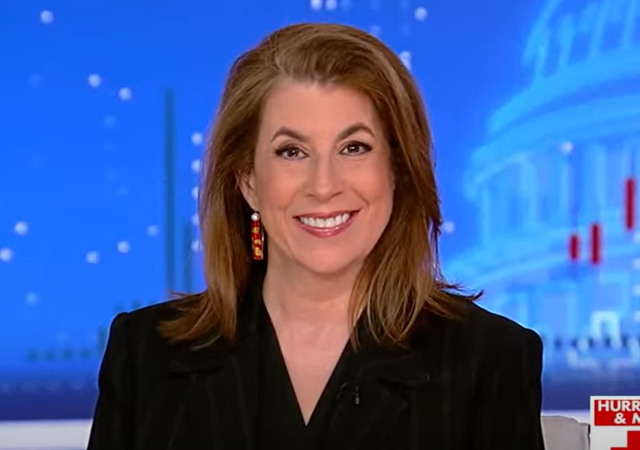
In the labyrinthine corridors of Washington D.C., transparency is often the first casualty of political convenience. Recently, State Department Spokeswoman Tammy Bruce found herself at the center of a burgeoning controversy, asserting with resolute clarity that there is no official “list” currently being maintained by the administration.
Yet, for seasoned political analysts and observers of democratic norms, this denial has served only to deepen, rather than dissipate, the surrounding fog of skepticism. By framing the administration’s activities as a neutral “review process” necessitated by recent executive orders, Bruce has inadvertently triggered a wave of concern among civil liberties advocates, constitutional scholars, and international observers who see in these words the echoes of historical obfuscation. For a nation like Liberia, which looks to the United States as a foundational model for its own constitutional democracy, the erosion of government transparency in Washington carries profound implications for global governance standards. The tension between the administration’s claims of administrative necessity and the public’s right to oversight highlights a recurring theme in modern statecraft: the use of bureaucratic terminology to mask substantive policy shifts.
When a spokesperson denies the existence of a “list” while simultaneously confirming the existence of a systematic, executive-ordered “review,” the discrepancy is rarely accidental. It is a calculated semantic distinction, designed to insulate the administration from immediate legal vulnerability while providing sufficient operational flexibility to target specific sectors, organizations, or individuals under the guise of national security or regulatory reform. This phenomenon is not merely an American concern; it is a blueprint that often influences political theaters worldwide, including in West Africa, where executive authority frequently tests the boundaries of judicial and legislative restraint. To understand the gravity of the current situation, one must look back at the precedent set during the first Trump administration.
The travel ban of 2017 remains the quintessential case study in the weaponization of executive orders. When President Trump issued Executive Order 13769 on January 27, 2017—famously dubbed the “Muslim Ban”—it sparked an immediate and seismic legal backlash. The ensuing firestorm, characterized by mass protests at major airports and a barrage of litigation from civil rights groups, demonstrated that the American judiciary was, at that juncture, willing to act as a potent check on presidential overreach. The legal battle that followed, culminating in the nationwide temporary restraining order issued by Judge James Robart of the U.
S. District Court for the Western District of Washington, serves as a grim reminder of how quickly the executive branch can alienate the public and the courts. The subsequent modification of the order, through Executive Order 13780 and ultimately Proclamation 9645, was a masterclass in reactionary policy-making, where the government sought to appease the judiciary by making superficial changes while retaining the core intent of the policy. For the current administration, the lessons of this era appear to have been absorbed—not as a warning to avoid discriminatory policies, but as a technical guide on how to survive legal challenges.
By rebranding “bans” as “reviews” and denying the existence of “lists,” the current administration may be attempting to avoid the explicit constitutional pitfalls that tripped up their predecessors. However, this strategy is inherently fragile. If evidence eventually surfaces that these “reviews” result in the disparate treatment of protected groups, the administration will inevitably face a reckoning under the Due Process Clause of the Fifth Amendment and the Equal Protection Clause of the Fourteenth Amendment. Legal scholars point to landmark cases like Hamdi v.
Rumsfeld (2004), which established that even in times of national crisis, the government cannot strip citizens or legal residents of their fundamental due process rights. The specter of such litigation is not merely academic. In the current climate of heightened political polarization, information access is a battlefield. Freedom of Information Act (FOIA) requests are being prepared by various oversight groups, aiming to peel back the layers of the administration’s bureaucratic facade.
History has shown that when the government attempts to hide behind vague terminology, FOIA litigation has been the most effective tool for uncovering the truth. The administration’s recent push for regulatory reform and the reinstatement of “Schedule F” for civil service positions further complicates this picture. By potentially enabling the president to fire career civil servants at will, the administration risks replacing institutional memory and professional expertise with political sycophants. This structural shift is essentially an attempt to insulate the presidency from internal dissent and external accountability.
When you combine the potential for arbitrary personnel firing with an opaque, list-driven review process, you get a recipe for the systematic dismantling of administrative safeguards. This is a development of significant concern for emerging democracies. In Liberia, where the strengthening of civil service integrity is a vital component of the ongoing fight against corruption and the promotion of good governance, the U.S.
model serves as an important barometer. If the U.S. civil service is hollowed out and executive power becomes unfettered by traditional bureaucratic or legal constraints, the message sent to the global stage is that democratic institutions are optional rather than foundational.
The resilience of the American system is currently being tested by a recurring strategy: the use of executive power to bypass congressional oversight. This trend forces the judiciary into the uncomfortable role of being the final arbiter of national policy, a position that strains the separation of powers. While the judiciary has historically risen to this challenge, there is a limit to its capacity to act as a permanent firewall against executive overreach. Ultimately, the stability of a democracy depends on the interplay between a vigilant press, a robust judiciary, and a legislative branch that is willing to defend its constitutional prerogatives.
The current situation involving the “no list” statement is not just about a list; it is about the honesty of the government in its communications with the governed. As the administration continues to navigate these legal and political waters, the public is left to wonder if the path forward leads to greater transparency or into a deeper, more controlled silence. For the citizens of Liberia and the global community, this drama in Washington is a reminder that the health of a democracy is never guaranteed; it must be fought for through constant vigilance, demanding clarity where there is obfuscation, and accountability where there is arrogance.



