
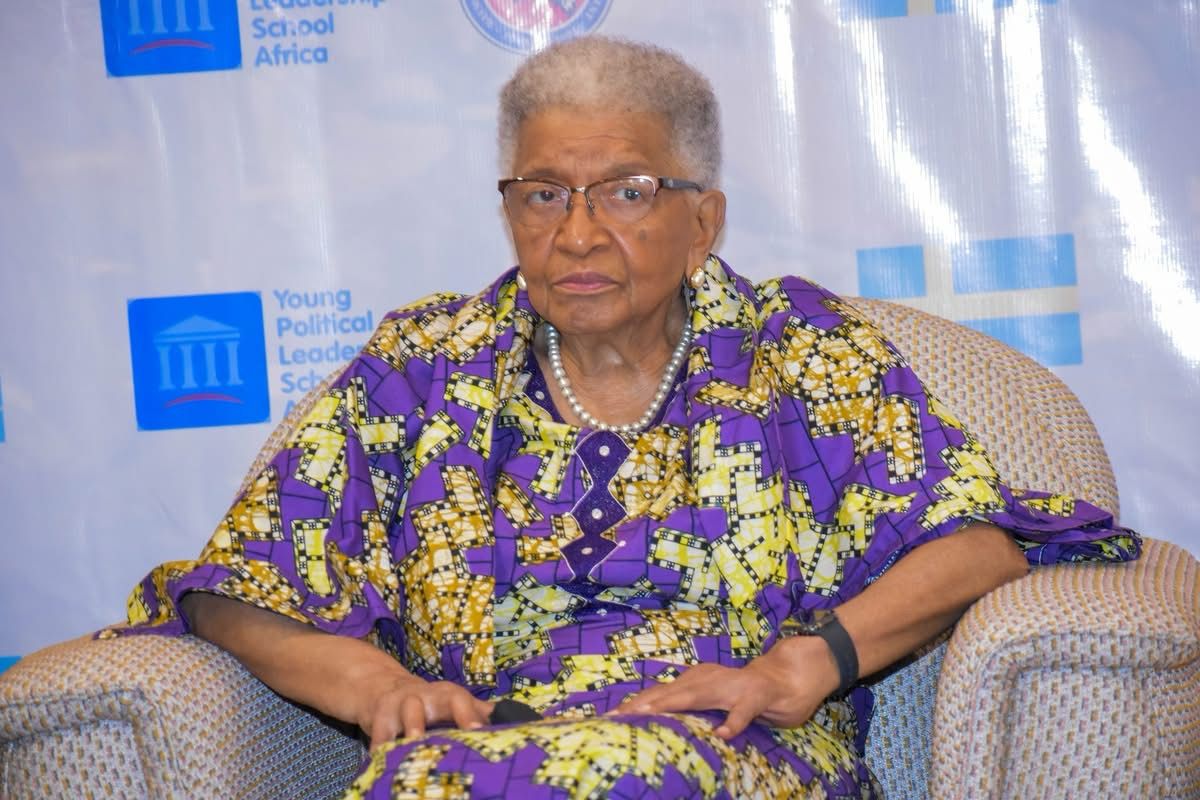
In the corridors of power in Monrovia, where history is rarely a mere background setting, the recent intervention by former President Ellen Johnson Sirleaf has sent tremors through the political foundations of President Joseph Nyuma Boakai’s administration. For a nation that has spent the better part of the last two decades painstakingly rebuilding from the wreckage of a brutal civil conflict, the sudden, sharp, and public rebuke delivered by Africa’s first elected female head of state is far more than a routine critique. It serves as a stark signal that the fragile consensus which has held the Liberian elite together since the post-war transition is beginning to fracture under the weight of governance fatigue and mounting public disillusionment. Sirleaf’s decision to put Boakai’s feet to the fire reflects a growing, palpable unease within Liberia’s political class, signaling that the current administration’s grip on the levers of power is being scrutinized not only by the public but by the very architects of the current democratic order.
The intervention comes at a critical juncture. Liberia faces a convergence of crises: a sluggish economic recovery, a burgeoning security environment that threatens to undo the gains of the post-conflict era, and a public that is increasingly impatient with the slow pace of developmental change. When Sirleaf speaks, the political architecture of the nation vibrates. Her critique, which focuses heavily on the erosion of institutional integrity, calls into question the fundamental functioning of the state—specifically the conduct of national security personnel and the perceived ambiguity of Supreme Court rulings.
By highlighting these issues, she is identifying what many analysts consider to be the primary stress points in Liberia’s democratic transition. The suggestion that these institutions are failing to act with impartial authority strikes at the heart of the social contract. If the judiciary is seen as pliable and the security forces as partisan, the trust that the Liberian people place in their government quickly dissipates, creating a dangerous power vacuum that, in the history of the West African sub-region, has often been filled by instability. Sources close to the former president suggest that this public censure is likely the opening movement in a much broader, more deliberate effort to re-exert her influence over the national narrative.
Having served as a bridge between the chaos of the civil war and the nascent institutionalism of the modern Liberian state, Sirleaf perceives her role as the ultimate guardian of the nation’s democratic legacy. Yet, her intervention is met with a complex, often polarized, public response. The shadow of her own two-term presidency looms large. Critics are quick to remind the electorate of the scandals that marred her tenure, particularly the allegations of institutionalized nepotism, most notably the appointment of her sons to high-ranking positions within the Central Bank and the National Oil Company of Liberia.
These actions, which many believe undermined the democratic principles she espoused, provide a convenient cudgel for Boakai’s supporters to use against her. The resulting discourse is a clash between two different eras of Liberian leadership: the technocratic, global-facing, yet often insular elite of the Sirleaf years, and the current administration’s attempts to navigate a populism that is increasingly defined by the urgency of bread-and-butter issues. Economic indicators paint a sobering picture that complicates any political maneuvering. While the International Monetary Fund and other observers project a GDP growth rate of 5.
6% for 2025—largely buoyed by the extraction-heavy sectors of mining and an evolving agricultural market—this number remains largely abstract for the average Liberian. The paradox of growth without development is acutely visible in the streets of Monrovia and in the rural hinterlands. The poverty rate, currently stagnant and projected to decline only marginally to 33.8% by 2025, suggests that the fruits of the nation’s natural wealth are failing to trickle down to the impoverished majority.
This persistent inequality is the fuel for the current political malaise. When infrastructure projects stall and the cost of living continues to climb, the public’s tolerance for the political bickering of the elite hits a breaking point. Sirleaf’s call for accountability is, in many ways, an acknowledgment of this reality. By demanding more responsible leadership, she is positioning herself as a corrective force, attempting to steer the Boakai administration away from the path of complacency.
However, the efficacy of this call depends heavily on whether she can transcend her own past controversies to speak for a new generation of Liberians who are largely disconnected from the post-war peace-building narrative she once defined. The regional context is equally important. Liberia does not exist in a vacuum; the political winds blowing through West Africa—a region currently experiencing a series of constitutional crises and military coups—are turbulent. The erosion of institutional norms in one nation inevitably has ripple effects.
If the integrity of Liberia’s judiciary and security sectors continues to decline, the nation risks losing its hard-won reputation as a democratic beacon in the Mano River Union. Sirleaf’s alarmism, therefore, may be a preemptive strike against the regional trend of democratic backsliding. She understands that once institutions begin to collapse, the process is notoriously difficult to reverse. The challenge for President Boakai is to articulate a path forward that addresses these systemic concerns without appearing to bow to the pressures of his predecessor or being paralyzed by internal party factions.
The legislature, often criticized for prioritizing parochial, self-interested agendas over the national good, remains a significant hurdle. Many lawmakers seem content to operate within the existing patronage networks, indifferent to the broader crises facing the country. This lack of legislative will, combined with the executive branch’s struggle to assert firm, consistent control, creates an environment where instability can thrive. Moving forward, the relationship between Sirleaf and Boakai will likely serve as a barometer for the health of Liberia’s democracy.
If the current administration chooses to view her critique as an existential threat to be silenced, the result will almost certainly be further polarization and the continued alienation of a public that is already on the verge of systemic fatigue. Conversely, if Boakai manages to harness this critique—viewing it as an opportunity to initiate the difficult structural reforms required to stabilize the economy and restore faith in the judiciary—he might yet redefine his administration as one of renewal rather than stagnation. The stakes could not be higher. With Liberia highly vulnerable to external shocks, including the volatile nature of global commodity markets that dictate the price of iron ore and rubber, the margin for error is razor-thin.
True stability in Liberia will require more than just the rhetoric of accountability; it will require a complete overhaul of the mechanisms by which power is distributed and checked. Sirleaf has sounded the alarm, but whether the political class chooses to listen, or continues to treat the warning as merely another skirmish in the ongoing battle for the soul of the state, remains to be seen. In the coming months, the actions of the national security agencies, the verdicts of the Supreme Court, and the legislative priorities of the Boakai administration will prove whether Liberia is genuinely committed to the difficult work of governance or if it is destined to continue drifting into the shadows of uncertainty.



