
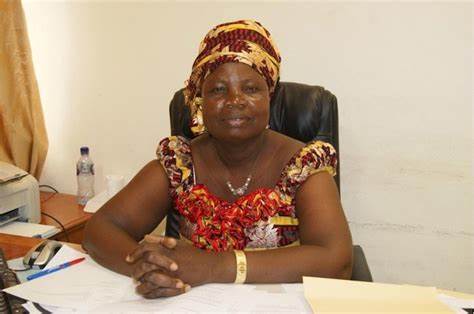
The sudden and tragic demise of Madam Marlene Wogbeh, the Director of Budget and Finance at the National Elections Commission (NEC), has sent shockwaves through the corridors of power in Monrovia, casting a long and unsettling shadow over Liberia’s fragile democratic experiment. On January 25, 2025, Wogbeh lost her life in a vehicular accident on the Bong-Nimba highway. While traffic fatalities are unfortunately not uncommon on Liberia’s challenging road networks, the specific timing of this tragedy—occurring merely eight days after she was reportedly apprehended attempting to surreptitiously remove sensitive financial documentation from the NEC headquarters—has ignited a firestorm of speculation, public distrust, and urgent calls for a transparent, independent investigation. For many observers, this incident is not merely a localized road tragedy; it is a focal point of intensifying anxieties regarding the current trajectory of the Boakai administration and the structural integrity of the institutions upon which Liberian democracy rests.
The narrative surrounding Wogbeh’s death is complicated by the nature of her final journey. At the time of the collision, she was reportedly en route to a church convention, a detail that provides a layer of human poignancy to an otherwise starkly political mystery. However, in an era of heightened political repression and deep-seated institutional rot, the public has learned to view such high-profile coincidences with a profound lens of suspicion. When an official linked to potentially incriminating financial records meets a sudden end during a period of administrative scrutiny, the absence of clear communication from authorities creates a vacuum rapidly filled by conspiratorial dread.
The underlying instability of the current political environment cannot be overstated. Since the inauguration of President Joseph Boakai, the administration has faced mounting accusations of fostering authoritarian tendencies, characterized by an increasingly heavy-handed approach to dissent. Reports of crackdowns on peaceful protests, the alleged deployment of live ammunition against unarmed citizens, and a general tightening of the democratic space have contributed to a palpable sense of malaise. As of 2023, Liberia’s political stability score languished at 42.
65%, a figure that, given recent developments, many analysts fear has since deteriorated. The incident involving Wogbeh must be analyzed within this broader context of institutional vulnerability. The NEC, an entity that serves as the final arbiter of the people's will, is currently in a state of crisis. The allegations of document smuggling suggest that the commission is not merely suffering from a lapse in protocol, but perhaps from a deeper, more systemic effort to obfuscate financial trails.
This situation is further compounded by the recent suspension of the NEC Chairperson, Madam Browne-Lansanah, for violations of election law. With the head of the institution compromised and a key financial officer deceased under suspicious circumstances, the integrity of the NEC—and by extension, the legitimacy of future electoral processes—is under a cloud of unprecedented doubt. The chilling effect of these events on the civil service cannot be ignored. When high-ranking officials handling sensitive data are either caught in malfeasance or perish in mysterious accidents, a message is effectively broadcast to the entire bureaucracy: silence is a survival strategy, while scrutiny is a liability.
This culture of fear is mirrored in the reported physical assaults on opposition figures, including the troubling allegations surrounding the brutalization of Representative Luther Sandy Collins by police officers during his attempt to access a budget hearing. Such acts of intimidation signify a retreat from the constitutional norms of the post-war era, moving Liberia toward a regime where physical force is the primary arbiter of legislative and administrative conflict. Furthermore, the limited flow of information concerning Wogbeh’s death highlights a critical weakness in Liberia’s Fourth Estate. The haste with which some quarters moved to categorize the event solely as an unavoidable accident, while neglecting the prerequisite of a forensic inquiry, raises alarming questions about the state of press freedom.
A truly resilient democracy demands that high-profile deaths involving public officials be subject to rigorous, unencumbered investigative journalism. However, the prevailing climate of harassment, threats, and occasional physical violence against reporters has clearly eroded the ability of the media to serve as a watchdog. When the truth is treated as a state secret, accountability becomes impossible. The governance crisis extends beyond the NEC.
The Boakai administration’s tenure has been marked by a series of controversies that undermine the rule of law, most notably the highly contentious extrajudicial extradition of a foreign national to Guinea. Coupled with allegations of a $2 million payoff involving the Guinean junta, these events depict a government that appears increasingly willing to sacrifice due process for the sake of geopolitical expediency or personal enrichment. When the state prioritizes clandestine deals over its legal and moral obligations, the social contract is shattered, and the resulting public cynicism becomes the dominant feature of the political landscape. International partners, particularly the United States, find themselves in an increasingly difficult position.
With over four billion dollars invested in the stabilization and democratization of Liberia over the past two decades, the U.S. has a profound interest in ensuring these gains are not squandered. The ongoing erosion of these institutions has led to renewed calls for the application of Global Magnitsky sanctions against high-ranking officials suspected of corruption and human rights abuses.
Additionally, the potential review of Liberia’s eligibility under the Millennium Challenge Corporation (MCC) Compact serves as a stark economic warning that the international community is watching with growing concern. Liberia currently stands at a perilous crossroads. The death of Marlene Wogbeh serves as a grim metaphor for the fragility of the nation’s democratic institutions in the face of mounting pressures. If this tragedy is treated merely as a footnote in history, and if the unanswered questions regarding the NEC document smuggling remain buried, the damage to public trust may be irreparable.
The true test of Liberia’s democracy lies not in the rhetoric of its leaders, but in the institutional response to such crises. Is there the political will to launch a transparent, independent, and internationalized investigation into the events leading to Wogbeh’s death? Will there be an accounting for the alleged efforts to compromise NEC financial records? These questions remain the litmus test for the Boakai administration.
As the country navigates this precarious period, the role of domestic and international stakeholders remains critical. To prevent a complete backsliding into the authoritarian cycles of the past, the protection of democratic institutions, the uncompromising respect for human rights, and the absolute defense of press freedom must become the non-negotiable priorities of the state. Rebuilding trust in government requires more than promises; it requires the courage to uncover the truth, even when that truth is uncomfortable for those in power. If Liberia is to salvage its democratic future, it must move away from the shadows of suspicion and into the light of absolute accountability.
Without such a shift, the legacy of this administration may well be defined by the crises it failed to resolve, the questions it refused to answer, and the democratic pillars it allowed to collapse under the weight of political convenience and institutional neglect.
