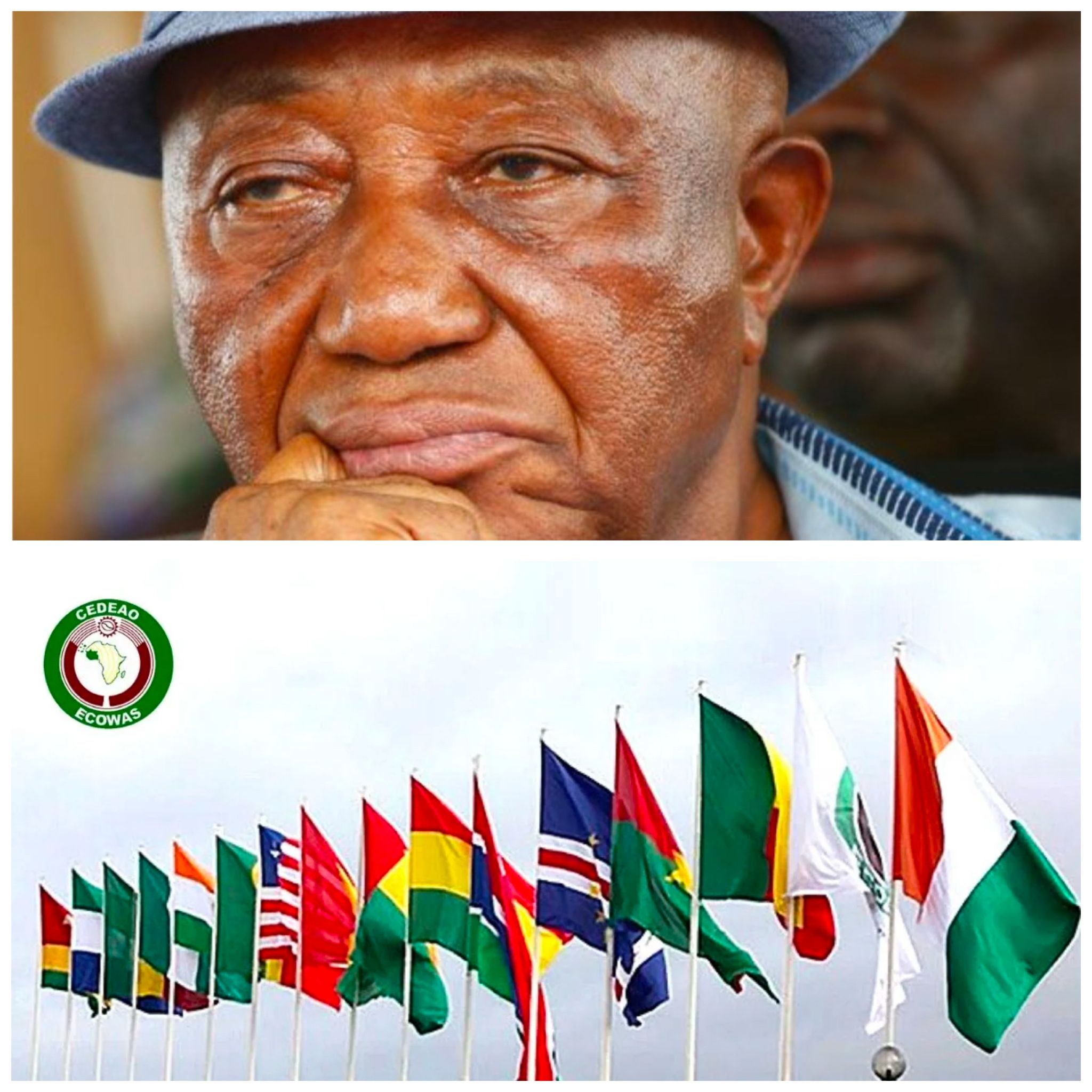
The Republic of Liberia, a nation that has fought tooth and nail to secure its hard-won democracy, currently stands at a precarious political crossroads. The ongoing legislative impasse, which has effectively crippled the House of Representatives for months, has transcended domestic political maneuvering to become a source of profound international concern. As the Supreme Court of Liberia deliberates on the Bill of Information filed by the Minority Bloc—a critical juncture in this constitutional struggle—the Economic Community of West African States (ECOWAS) has issued a direct, unequivocal mandate: President Joseph Boakai and all relevant political stakeholders must respect and adhere to the eventual ruling of the Supreme Court. This regional intervention is not merely a diplomatic suggestion; it is a stark indicator of the severity of the crisis and a worrying signal that Liberia’s internal mechanisms for dispute resolution are faltering under the weight of partisan polarization.
For months, the Boakai administration has faced intense criticism, with observers and political analysts accusing the executive branch of silently enabling—and occasionally actively emboldening—the lawlessness exhibited by the self-proclaimed 'Majority Bloc' in the House of Representatives. This faction has sought, through methods that critics and legal experts argue are fundamentally unconstitutional, to force a change in the leadership of the House. By failing to take a decisive stand for the rule of law early in this conflict, the government's perceived inaction has been interpreted by many as tacit approval of these extralegal maneuvers. This stance raises alarm bells regarding the administration’s stated commitment to democratic norms.
When the executive branch stays neutral in the face of a blatant legislative power grab, it effectively abdicates its responsibility as the final arbiter of constitutional integrity. This perceived bias has fueled public distrust, suggesting that the administration is prioritizing short-term political consolidation over the long-term stability of Liberia’s democratic institutions. The intervention by ECOWAS serves as a pivotal turning point in this protracted drama. The regional bloc, acting in accordance with the protocols established to maintain peace and stability in West Africa, has signaled that Liberia’s political instability has become a regional liability.
The demand for all parties to respect the judicial process is a direct indictment of the executive branch's handling of the crisis. If the rule of law were truly the cornerstone of the current administration’s governance, one might argue that the President would have utilized his office to facilitate a constitutional resolution months ago. Instead, the delay has allowed the legislative process to grind to a halt, affecting everything from national budgeting to the ratification of essential development agreements. The implicit criticism in the ECOWAS statement underscores a sobering reality: Liberia’s leadership can no longer treat this crisis as a mere 'political game.'
The days of characterizing the struggle for the Speakership as a mundane intramural conflict are long gone. The regional body's active involvement indicates that the crisis has scaled beyond an internal matter to a point where it risks undermining Liberia’s fragile standing in the eyes of the international community and global investors. Regional peace in West Africa is built on the foundation of national stability; when one member state falters, the stability of the entire union is potentially compromised. ECOWAS’s specific demand for adherence to the Supreme Court’s ruling, coupled with a call for a transparent, time-bound roadmap to resolve the legislative deadlock, delivers a sharp message to the Executive Mansion.
It emphasizes that the international community is monitoring the situation with clinical precision, and Liberia cannot afford to let political favoritism supersede its fundamental commitment to constitutional governance. This situation also invites a broader reflection on the history of the Liberian Legislature. Historically, the House of Representatives has struggled to balance its independence against the often-overbearing influence of the Executive. Following the scars of the civil war and the subsequent efforts to build a resilient democratic culture, the expectation of the Liberian electorate is that their representatives will operate within the confines of the Constitution.
The attempt by the Majority Bloc to circumvent established procedure to remove Speaker J. Fonati Koffa suggests a troubling resurgence of 'might makes right' politics—a relic of the past that Liberia has spent decades trying to bury. Furthermore, the economic implications of this impasse are catastrophic. Governance in Liberia is already a complex, capital-intensive endeavor.
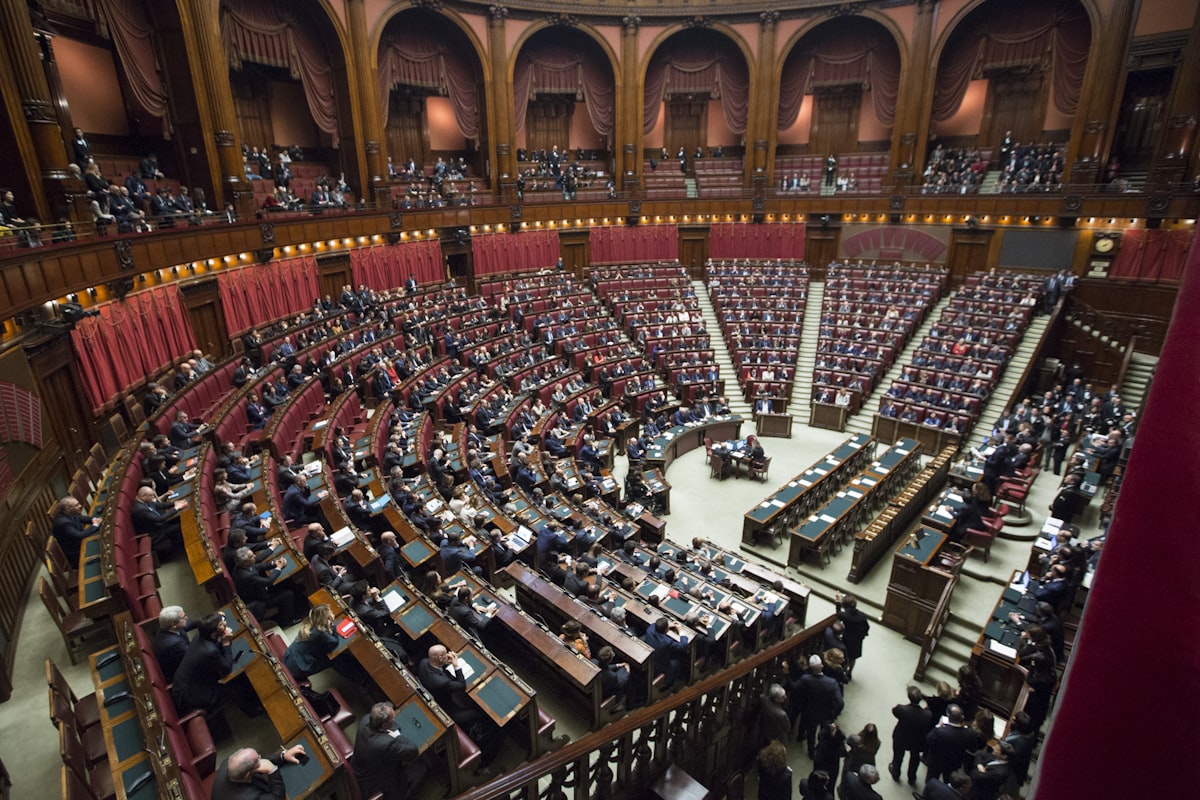
With the legislative branch paralyzed, the passage of vital legislation—including the annual national budget and various oversight functions—has been halted. This paralysis risks triggering a cascade of negative economic indicators, potentially deterring foreign direct investment and cooling the confidence of international partners who provide necessary development assistance. In an era where Liberia is striving to diversify its economy and alleviate poverty, a months-long administrative standstill is a luxury the country simply cannot afford. The need for international support to restore order and sanity to the halls of the Capitol Building further emphasizes the gravity of the situation.
It suggests, quite bluntly, that if the nation’s internal leadership is incapable of navigating a constitutional crisis without descending into chaos, external actors may feel compelled to exert more direct, and perhaps more uncomfortable, pressure to ensure that the rule of law is maintained. The question that remains at the heart of this national anxiety is whether President Boakai and his administration will finally step up to uphold the judiciary’s authority or whether they will continue to flirt with the erosion of democratic standards through continued inaction or biased intervention. The Supreme Court stands as the final pillar of institutional integrity in Liberia. Should the political class ignore the Court’s eventual ruling, the nation will be plunged into an unprecedented constitutional crisis that could threaten the very foundations of the Republic.
The international community, with ECOWAS at the forefront, is watching to see if Liberia’s leaders possess the maturity to subordinate their personal and party interests to the health of the state. As the march term of the Supreme Court proceeds, the eyes of the nation are fixed upon the Justices. The ruling will not merely settle a dispute over a leadership position; it will serve as a litmus test for whether Liberia’s democracy is governed by the rule of law or by the fleeting whims of the powerful. For the sake of the Liberian people, and for the preservation of the democratic experiment, it is imperative that the verdict of the Court is respected, implemented, and upheld.
The cost of continued division is far too high, and the risks of failure are far too great. Now is the time for statesmanship, for the restoration of order, and for an unwavering commitment to the constitutional principles that define the Liberian nation.