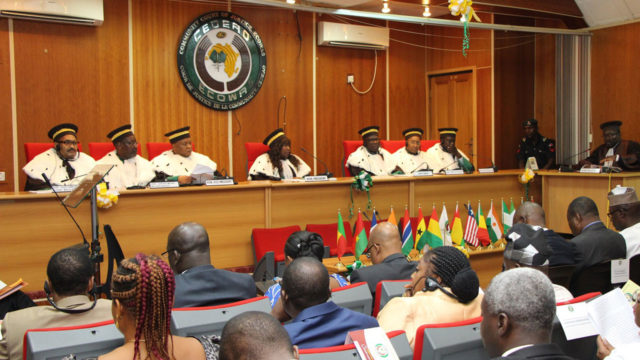
Title: Forging a United Economic Destiny: Liberia's Strategic Embrace of West African Integration
Subtitle: Beyond Borders: Unpacking Liberia's Role in ECOWAS and the Quest for Regional Prosperity
Regional integration initiatives across West Africa, spearheaded by the Economic Community of West African States (ECOWAS), represent a pivotal strategy for unlocking economic growth and fostering sustainable development for Liberia and its neighbors. Established on May 28, 1975, with the signing of the Treaty of Lagos, ECOWAS initially comprised 15 member states, a number that has remained constant, encompassing a vast and dynamic population exceeding 385 million people. This ambitious undertaking was born out of a shared recognition that the post-colonial economies of West Africa, often fragmented and reliant on external markets, could achieve greater resilience and prosperity through collective action, trade liberalization, and the harmonization of economic policies. Liberia, a nation with a complex history and a strategic location, has been an active participant in this continental project, recognizing its potential to revitalize its economy and strengthen its regional standing.
The foundational aims of ECOWAS are ambitious and far-reaching: to foster economic cooperation, promote economic integration, and ultimately create a single, unified market for goods, services, capital, and labor. This vision is underpinned by a commitment to promoting sustainable development, poverty reduction, and enhancing the living standards of the people of West Africa. The journey towards this goal has been marked by various milestones, including the establishment of a free trade area, the implementation of common external tariffs, and the promotion of free movement of people. A significant, albeit still developing, component of this integration agenda is the planned introduction of a single currency, the eco. Launched in principle in 2020, the eco's full implementation is targeted for 2027. This bold initiative seeks to streamline regional trade, reduce transaction costs, eliminate currency exchange rate volatility, and diminish the region's dependence on external currencies like the US dollar and the Euro, thereby enhancing monetary sovereignty and fostering greater economic stability.
Liberia's engagement with these regional aspirations predates its full embrace of ECOWAS's more recent economic blueprints. Historically, Liberia has navigated its foreign policy and economic strategy with a keen eye on its immediate neighbors. The establishment of a customs union with Sierra Leone and Guinea in 2017, as part of the Mano River Union framework, was a tangible step demonstrating this commitment to deeper economic ties. This initiative, building on decades of cooperation within the Mano River Union, aimed to simplify cross-border trade and create a more cohesive economic bloc within Liberia's immediate vicinity. Beyond this, Liberia has consistently signed and ratified numerous regional trade agreements, each designed to incrementally reduce tariffs, dismantle non-tariff barriers, and foster a more predictable and conducive environment for economic exchange and cooperation across West Africa.
The potential impact of sustained and deepened regional integration on Liberia's business environment is undeniably profound. A more integrated West Africa promises to unlock new avenues for trade and investment, creating fertile ground for Liberian businesses to expand their reach beyond national borders. This expansion can lead to increased economies of scale, greater efficiency, and enhanced competitiveness. For sectors where Liberia has a comparative advantage, such as agriculture or nascent manufacturing, access to the larger ECOWAS market could spur significant growth, drive innovation, and, crucially, generate much-needed employment opportunities for a young and growing population. Furthermore, the harmonization of standards and regulations, a key objective of regional integration, can reduce the complexities and costs of doing business, making Liberia a more attractive destination for both domestic and foreign investment. However, this optimistic outlook is tempered by significant challenges. Increased competition from more established industries in neighboring countries could pose a threat to nascent Liberian businesses if not managed carefully. The imperative to harmonize a wide array of regulations, from product safety standards to business registration processes, requires substantial technical capacity and political will, which can be scarce.
Despite the overarching goals, empirical data reveals that intra-regional trade in West Africa, while showing some growth, remains comparatively low. In 2019, it accounted for only about 14% of the region's total trade. This stark figure underscores the immense untapped potential for increased trade and investment flows that effective regional integration initiatives can unleash. The barriers to realizing this potential are manifold and deeply entrenched. Foremost among these are persistent infrastructure deficits. Inadequate road networks, unreliable energy supplies, and underdeveloped port facilities dramatically increase the cost and time associated with moving goods across borders. Compounding these physical barriers are the ubiquitous non-tariff barriers (NTBs) – cumbersome customs procedures, arbitrary inspections, restrictive import/export licensing, and outright corruption – which often prove more obstructive than formal tariffs. These NTBs disproportionately affect small and medium-sized enterprises (SMEs), which form the backbone of many West African economies, including Liberia's.
Liberia's journey within ECOWAS is a microcosm of the broader regional integration narrative. The organization, through its various protocols and programs, strives to create an environment where member states can collectively address common challenges and leverage shared opportunities. The World Bank has indeed noted the positive correlation between Liberia's participation in ECOWAS and a rise in regional trade and investment, albeit from a low base. For instance, in 2019, Liberia's exports to fellow ECOWAS nations reached approximately $106 million, with key destinations including Ghana, Nigeria, and Sierra Leone. Imports from the region were higher, totaling $145 million, predominantly sourced from Cote d'Ivoire and Nigeria. These figures, while indicative of engagement, also highlight trade imbalances that require strategic attention. The aspiration for ECOWAS to become a truly borderless market, where goods and services flow freely, is still a work in progress, hampered by national interests and implementation gaps.
The socio-economic implications of successful regional integration for Liberia are immense. Beyond the direct economic benefits of increased trade and investment, integration can foster greater political stability and security cooperation. Shared economic interests can create stronger incentives for peaceful coexistence and collaborative problem-solving. For ordinary Liberians, this could translate into more job opportunities, greater access to a wider variety of goods and services at potentially lower prices, and improved infrastructure that benefits local communities. The free movement of people, another ECOWAS objective, can facilitate labor mobility, knowledge transfer, and cultural exchange, enriching the social fabric of the nation.
However, the path to realizing these benefits is fraught with obstacles. Liberia, like many of its ECOWAS counterparts, grapples with critical challenges that impede its ability to fully capitalize on regional integration. Poor infrastructure remains a primary constraint, significantly increasing the cost of doing business and hindering the movement of goods and people. Bureaucratic hurdles and corruption at various levels of government can stifle economic activity and deter investment, both domestic and foreign. The capacity of Liberian institutions to effectively implement and enforce regional agreements, harmonize standards, and attract investment also requires continuous strengthening. The proposed single currency, the eco, while a noble objective, presents its own set of challenges, including the need for member states to meet stringent macroeconomic convergence criteria, which requires fiscal discipline and coordinated monetary policies.
Therefore, for institutions like the Chamber of Commerce and policymakers in Liberia, a thorough and nuanced analysis of the country's role in regional integration initiatives is not merely an academic exercise but a strategic imperative. This analysis must go beyond identifying broad benefits and challenges; it must delve into the specifics of how Liberian businesses, particularly SMEs, can be supported to navigate the complexities of regional markets. It involves advocating for the removal of non-tariff barriers, investing in critical infrastructure, promoting good governance, and building institutional capacity. It also means fostering a business environment that is competitive, transparent, and attractive to both local and international investors. Liberia's success in leveraging regional integration for its economic transformation hinges on its ability to strategically engage with ECOWAS, proactively address internal challenges, and forge strong partnerships with its regional neighbors. The ultimate goal is to move from being a recipient of integration benefits to an active driver of regional prosperity, ensuring that the promise of a united West African economic destiny becomes a tangible reality for all Liberians.