
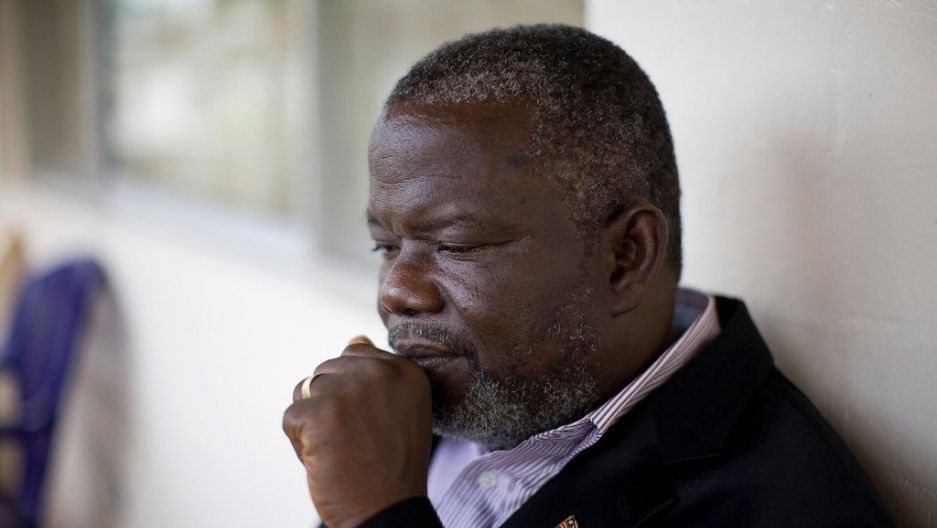
The death of Prince Yormie Johnson (PYJ) on November 28, 2024, at the age of 72, serves as a seismic punctuation mark at the end of a long, brutal, and deeply polarizing chapter in Liberian history. For over three decades, Johnson—a man whose biography is etched into the very fabric of the country’s post-colonial trauma—navigated the treacherous currents of military rebellion, regional warlordism, and, eventually, electoral politics. His transition from the battlefield commander who oversaw the torture and execution of President Samuel K. Doe in 1990 to the self-styled 'Godfather of Nimba' and a serial kingmaker in the Liberian Senate created a political paradox that defined the nation’s post-war identity.
Yet, his final year was defined not by the accumulation of power, but by the rapid, systematic disintegration of his influence and the looming specter of a justice process he had spent a lifetime successfully evading. The story of PYJ’s final chapter is one of an encroaching twilight, marked by the convergence of legal accountability, political abandonment, and personal isolation. Born in Tappita, Nimba County, in 1952, Johnson’s rise was as meteoric as it was bloody. As a leader of the Independent National Patriotic Front of Liberia (INPFL), he became one of the most recognizable and feared faces of the First Liberian Civil War.
However, it was his post-conflict pivot into democratic politics that proved his most enduring tactical achievement. By mobilizing the formidable voting bloc of Nimba County, Johnson positioned himself as the essential gatekeeper for any aspiring Liberian president. From 2005 through 2023, he acted as a kingmaker, lending his support to successive administrations while insulating himself from the repercussions of his past through legislative immunity and shrewd alliances. The 2023 presidential election was the final exhibition of this political art form.
By backing Joseph Boakai and the Unity Party (UP) and securing the vice-presidential slot for his protégé, Jeremiah Koung, Johnson appeared to have once again secured his survival and relevance. Yet, this final political marriage was doomed from its inception. The administration he helped midwife would soon become the instrument of his greatest existential threat. In early 2024, the political landscape shifted beneath his feet with unprecedented speed.
President Boakai, responding to both domestic calls for transitional justice and intense international pressure, moved decisively to fulfill a campaign promise that PYJ had long considered a bluff: the establishment of a Special War Crimes Court for Liberia. On May 2, 2024, the formal signing of the executive order for this tribunal signaled the end of the impunity that had protected Johnson for years. For a man who had famously characterized the calls for a war crimes court as a distraction or a threat to national peace, the reality of a state-sanctioned judicial body was a profound psychological and strategic blow. The tribunal was specifically designed to investigate the atrocities of the civil wars—crimes for which Johnson had been repeatedly named as a primary perpetrator by the Truth and Reconciliation Commission (TRC).
The TRC, which documented his involvement in systemic murder, torture, and extortion, had long provided a roadmap for his potential prosecution. Suddenly, the immunity of the Senate chamber began to feel more like a cage than a shield. As the tribunal moved toward realization, Johnson’s political environment began to sour, mirroring the legal tightening of the noose. His most significant betrayal came from within his own house.
Vice President Jeremiah Koung, long viewed as the political heir to the Johnson legacy in Nimba, began a calculated and public distancing from the MDR party. Koung’s explicit declaration of his status as a 'full-fledged' Unity Party member effectively rendered the informal power-sharing agreement between Boakai and Johnson obsolete. For PYJ, this was not merely a political divorce; it was a total abandonment by the political establishment he had helped build. The isolation was compounded by a growing sense of frustration and bitterness.
In his final months, Johnson engaged in a public war of words with the executive branch, criticizing administrative corruption and the dismissal of his allies, while lamenting that his access to President Boakai had been severed. The refusal of the President to take his calls—following reports of Boakai’s engagement with international war crimes advocates like Allan White—left Johnson in a state of political purgatory. He found himself relegated to the sidelines, forced to plot by-election strategies against the very government he had championed less than a year prior. Furthermore, the persistent weight of U.
S. sanctions imposed in 2021 regarding his involvement in 'pay-for-play' schemes left him increasingly alienated from the international community and domestic political financiers who feared the optics of proximity to him. This environment of heightened stress cannot be ignored when analyzing his final months. The combined pressures of looming judicial proceedings, the erosion of his regional authority, and the public humiliation of being sidelined by his former allies created an environment of unrelenting anxiety.
Whether one views the timing of his death as a tragic coincidence or the result of a long, grinding deterioration, it is clear that Johnson died while his world was shrinking. The man who had once commanded entire regions of the country found himself at 72 largely isolated, his calls going unanswered by the halls of power, and his freedom increasingly contingent on legal hurdles that were rapidly falling away. His death on November 28, 2024, shortly after his last public appearance in Togo, provides a somber finale to a life that had become the antithesis of the 'new Liberia' that the current administration is attempting to construct. For the victims of the civil wars, his passing denies them the closure of seeing him answer for his crimes in a courtroom.
For his supporters, it marks the loss of a populist icon who represented a distinct, albeit controversial, form of ethnic and regional identity politics. For the historian, PYJ’s death is the definitive closing of the warlord era. It signifies that the political mechanisms of the past—where rebels could trade violence for parliamentary seats and amnesty—are finally failing. As Liberia continues its difficult journey toward establishing a functional War Crimes Court, the absence of Prince Yormie Johnson ensures that the prosecution will focus on a broader systemic analysis of the conflict, rather than being centered solely on his individual defense.
Ultimately, the story of PYJ is a warning about the volatility of power built on foundations of violence. He survived the battlefield to become a kingmaker, but he could not survive the maturation of the state. He sought to outrun his past, but in the end, it caught up to him in the form of a legal process he could not manipulate and a political system that had grown out of his need. His legacy remains a deeply divisive one: a mixture of terror and political tenacity that will continue to challenge the collective conscience of Liberia for generations to come.
The era of the warlord in Liberian politics did not end with the disarmament of 2003; it ended only when the legal and political structures of the nation finally developed the resilience to deny individuals like Johnson the impunity they once demanded as a birthright. His death marks a transition, not just for his family or his county, but for a nation attempting to finally close the book on its darkest chapters.
