
Efficient public expenditure management (PEM) stands as the bedrock of fiscal sovereignty and national development, particularly for a post-conflict nation like Liberia, where the scars of civil war continue to shape the contours of economic governance. The ability of the Liberian state to effectively manage its public coffers is not merely a technical exercise in accounting; it is a fundamental prerequisite for sustaining peace, fostering equitable economic growth, and rebuilding the shattered trust between the citizenry and their government. For Insights Liberia, analyzing the trajectory of these reforms offers a vital window into the country’s progress toward institutional maturity. The evolution of Liberia's Public Financial Management (PFM) landscape has been characterized by significant legislative milestones, yet it remains hindered by deep-seated structural bottlenecks that necessitate a rigorous and critical evaluation.
In recent years, the government has made commendable progress, most notably with the adoption of the 2016 PFM Act. This legislation serves as the cornerstone of the nation’s fiscal discipline, designed to anchor transparency and accountability in the movement of state resources. By providing a modern legal framework for budget preparation, execution, and reporting, the Act sought to move Liberia away from the opaque and often discretionary fiscal practices that defined the country’s pre-conflict and immediate post-war years. Complementing this, institutions such as the Ministry of Finance and Development Planning (MFDP) and the General Auditing Commission (GAC) have been strengthened to act as the primary watchdogs of the national treasury.
The GAC, in particular, has emerged as a symbol of the struggle for accountability, often braving the political heat of systemic audits that expose the bleeding of state funds. However, institutional strength is not merely about the existence of offices; it is about the operational capacity and political independence of those who man them. While the PFM Act provides the rulebook, the actual 'game' of fiscal governance in Liberia continues to be plagued by persistent challenges that threaten to erode the gains made since the cessation of hostilities in 2003. One of the most glaring weaknesses lies in the budget formulation and execution processes.
The Liberian fiscal cycle often falls victim to a disconnect between ambitious policy rhetoric and the harsh realities of revenue generation. Budgeting is frequently hampered by poor planning, leading to a perennial cycle where supplementary budgets become the norm rather than the exception. This lack of fiscal predictability creates uncertainty for service providers and investors alike, effectively stalling development projects that are essential for poverty reduction. Furthermore, corruption remains a pervasive shadow over the expenditure process.
Even with robust policies in place, the ‘leakage’ of funds through procurement irregularities and inflated payrolls—often referred to as 'ghost workers'—continues to rob the public sector of the resources needed for essential services like healthcare and education. The institutional journey, while proactive, has often been reliant on international life-support. The launch of the multi-donor funded Integration Public Financial Management Reforms Project (IPFMRP) in 2012 marked a significant shift toward external technical assistance. This initiative was designed to professionalize the Liberian financial bureaucracy and align it with international standards.
Following its closure in 2016, the need for a specialized management outfit became apparent, yet the transition has been fraught with staffing constraints. The Reform Coordinating Unit (RCU), the engine room of these efforts, remains chronically undersized. Managing the complexities of a national PFM reform agenda with a handful of specialists is akin to navigating a ship through a storm with a skeleton crew. This under-resourcing limits the RCU’s ability to conduct rigorous oversight, leaving the government to rely heavily on intermittent assessments, such as the Public Expenditure and Financial Accountability (PEFA) framework, to gauge its performance.
These assessments are vital diagnostic tools, but they cannot replace the day-to-day, granular monitoring required to prevent fiscal slippage. Furthermore, the regional context is crucial. Liberia’s recent history of knowledge sharing with neighbors like Sierra Leone—a nation that shares similar post-conflict recovery trajectories—demonstrates a growing maturity in foreign policy regarding fiscal management. By comparing notes on donor intervention matrices and attempting to avoid the duplication of funding, Liberia is beginning to assert more agency over its development assistance.
Yet, a missing piece in this governance architecture is the Thematic Technical Working Group level. Without these specialized internal forums, the ability to track the granular objectives of the Public Expenditure Management Reform Strategy (PEMRS) is severely blunted. Monitoring is not just about producing reports for donors; it is about the government’s own internal feedback loop. Currently, the lack of robust internal monitoring and evaluation (M&E) mechanisms means that when a project fails or a budget line is overspent, there is often no clear mechanism for mid-course correction.
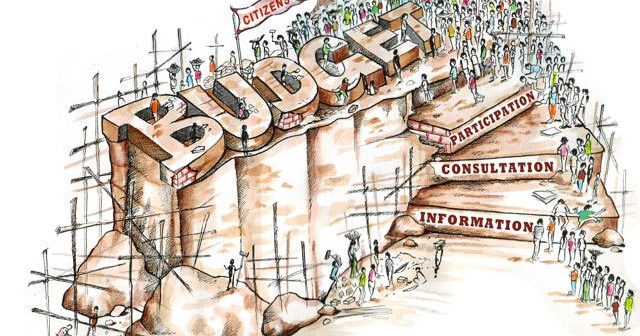
This failure is compounded by a systemic deficit in public participation. The Liberian public, while increasingly vocal, remains largely excluded from the formal PFM cycle. Accountability, in its most democratic form, requires the citizen to be a partner, not merely an observer. When taxpayers are kept in the dark about how their money is allocated or why certain projects fail, the social contract weakens.
Improving transparency is therefore not just an administrative duty; it is a civic imperative. Strengthening the MFDP and GAC must involve more than just training or hardware; it requires a genuine commitment to empowering these institutions to hold even the most senior officials accountable. If the government is to translate its commitments into tangible prosperity, it must prioritize the formal integration of civil society into the budget oversight process. This would involve holding town halls, making budget documents more accessible in plain, digestible language, and institutionalizing a feedback mechanism where citizens can report irregularities in public spending.
Moreover, the economic implications are profound. Liberia remains a nation where the cost of public service delivery is disproportionately high due to inefficiencies. Every dollar lost to poor procurement or ineffective spending is a dollar taken from the rural school, the district clinic, or the crumbling road infrastructure that prevents farmers from accessing markets. If Liberia is to move from ‘post-conflict recovery’ to ‘sustainable, middle-income growth,’ the PFM system must move from being a tool for compliance to a tool for strategic investment.
The road ahead requires a dual-track strategy: deepening the internal technical capacity of the RCU and the MFDP while simultaneously opening the windows of the ministry to the public. As the country looks toward future fiscal cycles, the integration of technology, the hardening of procurement laws, and the insulation of the GAC from political pressure must remain the top priorities. The progress of the last decade has been substantial, but the sustainability of that progress hinges on the government’s ability to bridge the gap between policies drafted in air-conditioned offices and the realities of governance on the ground. Liberia stands at a crossroad where it must decide whether it will continue to lean on external project managers or if it will finally cultivate the indigenous, robust, and transparent financial stewardship necessary to reclaim its fiscal sovereignty.
