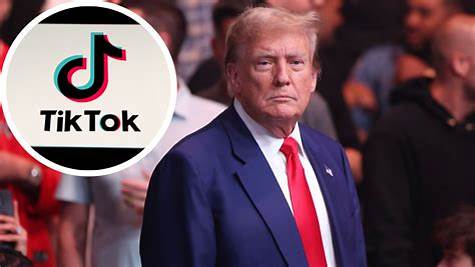
President-elect Donald J. Trump has ignited a firestorm of political speculation by formally requesting that the United States Supreme Court delay the looming deadline for the potential TikTok ban. This move, which marks a dramatic departure from his previous executive efforts to deplatform the app during his first term, positions the incoming administration at the very center of a complex nexus involving national security, constitutional law, and the burgeoning power of digital influence in modern political campaigns. For observers in Liberia and across the global south, where the regulation of social media platforms often mirrors Western policy shifts, this development serves as a critical case study in how technology can be leveraged as both a tool of political mobilization and an instrument of geopolitical leverage.
When Donald Trump first ascended to the presidency in 2016, his communication strategy relied heavily on Twitter, a platform that eventually became the heartbeat of his policy announcements. However, the 2024 election cycle revealed a tectonic shift in voter engagement. TikTok, with its algorithmic precision and massive reach among younger demographics, became an indispensable vehicle for the Trump campaign. By pivoting from a staunch opponent of the ByteDance-owned entity to a potential mediator, Trump is effectively acknowledging that in the contemporary digital landscape, the ability to control, regulate, or negotiate with these platforms is far more valuable than the simple act of banning them.
The request for a delay, filed as the January 19 deadline approaches, is framed not as a reversal of policy, but as a tactical pause meant to allow for a 'political resolution.' This specific phrasing is significant. It signals a move away from purely adversarial, court-ordered divestment toward a transactional, diplomatic approach that is classic of Trump’s ‘Art of the Deal’ philosophy. From the perspective of Liberian political analysts, who have watched how the regulation of digital spaces impacts democracy, this shift is profound.
In Liberia, where the digital divide is narrowing and social media is increasingly shaping the discourse of legislative and executive elections, the debate over who controls the infrastructure of public communication—and by extension, the data harvested from millions of users—is not just an American issue; it is a fundamental pillar of national sovereignty. The Supreme Court filing describes the current legal struggle as an 'unprecedented, novel, and challenging tension between free-speech rights and concerns regarding foreign policy.' This tension is felt acutely in emerging democracies where the thin line between monitoring extremist content and state censorship is often navigated with far less institutional protection than in the United States. Trump’s filing is careful to state that he takes no stance on the 'fundamental merits' of the issue.
This neutrality is a masterstroke of political pragmatism. It keeps his options open, preventing him from being boxed into a legislative corner by his previous executive orders, while simultaneously placing the weight of the federal government behind his office rather than the current administration’s enforcement deadline. By positioning himself as the ultimate broker, Trump intends to force a situation where TikTok’s survival is contingent upon his administration’s approval, thereby granting him leverage over the platform’s operations, data handling, and algorithmic transparency. This strategy reflects a broader trend of ‘technological nationalism,’ a concept where major powers seek to control the digital platforms that influence their domestic affairs.
For developing nations, this poses a dilemma: as the U.S. shifts toward a model of managed interaction with foreign tech giants, countries like Liberia must consider their own regulatory frameworks. Should the state facilitate a marketplace for ideas, or should it restrict platforms that are deemed national security risks?
Trump’s move suggests that he prefers the former, provided the platform is amenable to alignment with his administration’s strategic goals. The implications for the U.S. economy are equally staggering.
TikTok is not merely a social media app; it is a commercial ecosystem supporting thousands of small businesses and creators. A ban would have caused significant economic disruption, potentially alienating the very demographic—young, digital-native voters—that Trump successfully courted during the 2024 campaign. By opting to seek a delay, he protects this economic engine, signaling to the business community that his administration will prioritize market stability and growth over ideologically driven bans. This approach is highly relevant to Liberian trade and digital policy.
As Liberia continues to attract foreign investment in telecommunications and infrastructure, the model of 'negotiated compliance'—whereby foreign firms operate within strict, government-defined parameters—is likely to become more attractive to policymakers than outright exclusion. Should the Supreme Court grant the delay, the immediate fallout would be a period of intense, back-channel negotiations. We might expect the Trump administration to push for a structural separation of TikTok’s American operations, perhaps insisting on domestic hosting of data or even the inclusion of American stakeholders on its board. This would set a new global standard for how platforms are treated, effectively creating a ‘security-first’ model for foreign-owned software.
The legal battle, however, remains volatile. If the court denies the request, the administration faces the immediate crisis of enforcing a massive shutdown of a service with over 170 million U.S. users.
Conversely, if the delay is granted, the political theater will move from the courtroom to the White House, where the potential for backroom deals will create a new form of digital power brokering. In the context of global geopolitics, this is a clear signal to China and other tech-exporting nations that the rules of the game are shifting. It is no longer about whether a platform is foreign; it is about whether that platform is willing to integrate into the ‘America First’ policy paradigm. For readers in Liberia, this saga should be viewed as a reminder that the digital platforms we use every day are not just neutral tools.
They are geopolitical pawns in a high-stakes game. As the U.S. pivots toward a negotiated future for TikTok, international stakeholders should take note: the era of unchecked global digital platforms is waning, replaced by an era where national security and domestic political priorities dictate the terms of digital engagement.
The resolution of this case will set a precedent that will echo far beyond the borders of the United States, informing how nations across the globe approach the complex, often contradictory, relationship between technology, national security, and the democratic right to speech.