
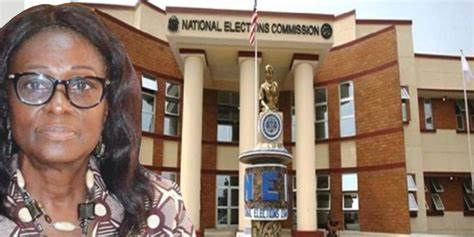
President Joseph Nyuma Boakai's recent decision to suspend Madam Davidetta Browne-Lansanah, the Chairperson of the National Elections Commission (NEC), has ignited a fierce and consequential constitutional debate that transcends mere administrative personnel management. This high-stakes standoff pits the expansive nature of executive authority against the established sanctity of tenured positions within the Liberian civil service, threatening to fundamentally reshape the balance of power in the governance of the Liberian State. As the dust settles on the immediate tactical move, the nation remains gripped by profound questions regarding the long-term stability of its democratic institutions. The suspension, justified by the Executive Mansion on the grounds of disrupting public order and maintaining national stability, has thrust Liberia into uncharted legal waters.
At the core of this controversy lies the volatile tension between the President's expansive constitutional powers—largely derived from Article 56(a)—and the legislative intent behind tenure laws, which were specifically crafted by the National Legislature to act as a firebreak against the encroaching tide of partisan political interference. The National Elections Commission, as the arbiter of Liberia’s democratic process, holds a position of singular importance. Its independence is not a luxury but a fundamental prerequisite for the credibility of electoral outcomes and, by extension, the legitimacy of the Liberian government itself. By targeting its leadership, the Executive branch has effectively challenged the very architecture of institutional checks and balances that were laboriously constructed following years of civil conflict and subsequent democratic fragility.
President Boakai's action draws its stated legitimacy from Articles 50 and 56(a) of the Liberian Constitution, which grant the President the authority to appoint and remove officials of his administration. However, this constitutional mandate collides head-on with deliberate legislative efforts to insulate critical positions—particularly those within the NEC—from the whims of political transitions. For decades, the Liberian Senate has consistently emphasized the necessity of respecting these tenure laws, viewing them as the primary safeguard for ensuring continuity, professionalism, and institutional memory. This legislative posture reflects a bipartisan commitment to creating a buffer against the 'winner-take-all' political culture that has historically plagued Liberian governance.
When an administration seeks to bypass these protections, it risks eroding the public's trust in the neutrality of state institutions. The legal landscape surrounding this issue is fraught with recent, landmark precedents that complicate the President's position. On April 24, 2024, the Supreme Court of Liberia issued a pivotal ruling, explicitly affirming the validity of tenure laws. In that case, the Court ordered President Boakai to withdraw several nominations that had been made to replace incumbents in protected, tenured positions.
Chief Justice Sie-A-Nyene Yuoh, in a decisive opinion, noted that 'there is no showing that the Act passed by the Legislature providing tenure violates the power granted the President of the Republic of Liberia under Article 56(a) of the Constitution.' This ruling was a significant blow to the Executive’s interpretation of its own powers, reinforcing the principle that while the President oversees the state, he is not exempt from the statutory limitations passed by the Legislature. The judiciary’s stance effectively treated tenure as a form of legally binding contract. Jurisprudence in Liberia has increasingly held that tenured positions create a contractual relationship between the officeholder and the State, suggesting that any arbitrary removal could entitle the official to damages for their unexpired term.
Yet, the legal terrain remains nuanced and somewhat contradictory. In a separate, high-profile case involving the Environmental Protection Agency (EPA), the Supreme Court declined to extend identical tenure protections to its Executive Director, underscoring that the judiciary is navigating a delicate balancing act rather than establishing a blanket rule. This inconsistency has emboldened the Executive branch to continue probing the limits of its power, creating a climate of uncertainty for civil servants across the board. The potential implications of this struggle extend far beyond the offices of the NEC.
If the Executive can successfully bypass tenure laws through the mechanism of 'suspension' under the guise of public order, it effectively nullifies the legal protections granted to a myriad of independent commissions—including the Governance Commission, the Liberia Telecommunications Authority, and others. This trend threatens to return Liberia to a system of patronage, where the security of one's position is tied entirely to political loyalty rather than merit or professional performance. From an international perspective, the eyes of the global community remain fixed on this developing crisis. The independence of electoral management bodies is a cornerstone of democratic integrity, a metric often monitored by regional blocs like ECOWAS and international development partners.
Liberia’s ability to navigate this constitutional impasse will serve as a bellwether for the health of its democracy. International observers generally advocate for the insulation of election officials, recognizing that when the person managing the ballot is subject to the direct control of the executive, the potential for manipulation increases exponentially. Should Madam Browne-Lansanah seek judicial review—which appears highly likely—the resulting legal battle would delve into the technicalities of statutory language versus constitutional intent. A court challenge would likely scrutinize whether 'suspension' is merely a procedural loophole for removal, and whether the President has exceeded the bounds of administrative oversight.
This case serves as a clarion call for the Liberian Legislature to move toward greater statutory clarity. The current ambiguity has allowed for inconsistent interpretations, leaving the judiciary to define the limits of the executive branch in real-time. To prevent future conflicts, lawmakers may need to draft more explicit provisions that define the exact thresholds for the removal of tenured officials, such as clear evidence of corruption or gross professional misconduct, rather than vague references to public order. In the long term, this crisis may trigger a broader national conversation regarding necessary constitutional amendments.
While the 1986 Constitution provides a framework for government, the modern needs of a stable, democratic Liberia require clearer delineations of power. Striking the right balance between the President’s prerogative to execute his policy agenda and the need for independent, non-partisan oversight of state agencies is the central challenge of the Boakai administration. As the nation watches the resolution of this conflict, the precedent set will echo through the corridors of power for years to come. Whether this leads to a strengthening of the rule of law or a consolidation of executive dominance will depend on the resolve of the Supreme Court and the vigilance of the Liberian public.
Ultimately, the stability of the Liberian State relies on the collective commitment to respect the guardrails established by our laws. If these guardrails are weakened or removed, the fragile peace and democratic consolidation achieved over the last two decades will face an existential threat. The path forward requires a return to constitutional decorum, where every branch of government operates within its clearly defined boundaries, ensuring that no individual or institution is above the law.
