
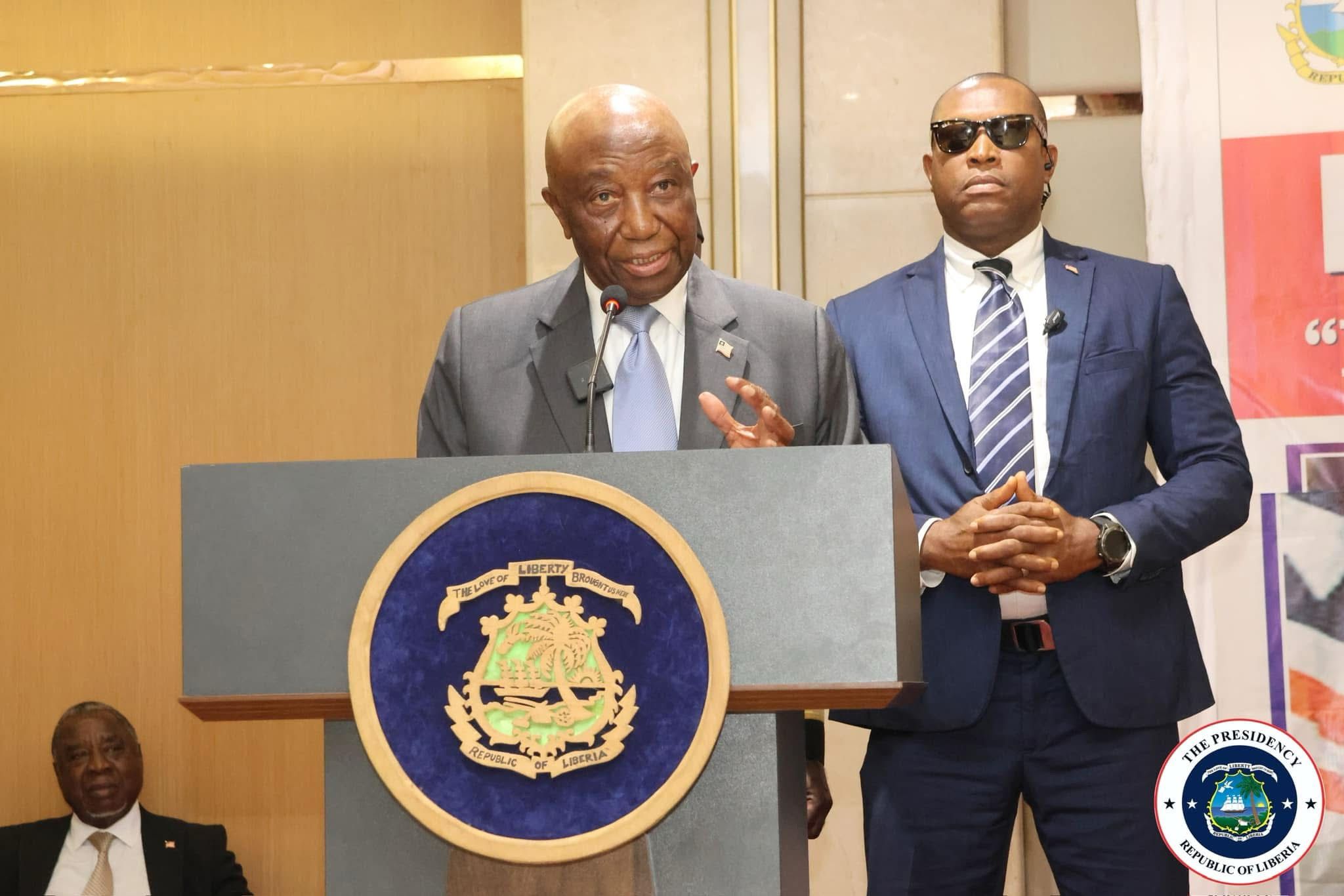
President Joseph Boakai's recent comments mocking Liberians residing in the United States, particularly those grappling with the precarious reality of potential deportation, represent a profound and alarming departure from the diplomatic tact expected of a head of state. At a time when Liberia is navigating a fragile socio-political landscape, the President’s decision to adopt a dismissive tone toward the diaspora—a demographic that has historically served as the country’s economic and social backbone—is not merely a faux pas; it is a strategic error that threatens the stability of the nation’s most reliable lifeline. This incident is symptomatic of a growing, concerning disconnect between the executive mansion in Monrovia and the sprawling, influential Liberian community abroad, a community that has arguably been the single most significant factor in Liberia's post-war recovery. To understand the gravity of these remarks, one must look beyond the immediate insult and evaluate the historical context of the Liberian diaspora.
For decades, particularly during the brutal years of civil war that devastated the nation’s infrastructure and social cohesion, the diaspora served as an external stabilizer. When the formal economy crumbled, it was the informal influx of remittances from the United States, Europe, and neighboring African nations that prevented a total humanitarian catastrophe. Today, these remittances remain an economic pillar, with annual inflows estimated at US$800 million. This figure is not merely a statistic; it is a macro-economic force that often dwarfs the national budget, providing the primary source of income for thousands of households, funding tuition for students who would otherwise be out of school, and fueling the small-scale entrepreneurship that keeps the Liberian markets alive.
By mocking the very people who facilitate these massive capital inflows, President Boakai has inadvertently signaled a lack of appreciation for the sacrifice required to sustain such financial support. The diaspora does not send money home from a place of luxury; they do so while navigating the complexities of immigration systems, often working multiple jobs in foreign lands to bridge the fiscal gaps created by domestic policy failures in Monrovia. The President’s rhetoric, therefore, feels like a betrayal to many who saw him as a symbol of 'rescue'—a promise that he would usher in a new era of inclusivity and national healing. Throughout his long political career and his recent presidential campaign, Boakai positioned himself as a statesman of integrity, relying heavily on the backing of a diaspora that hungered for a return to normalcy and competent governance.
Many Liberians abroad were among his most vocal supporters, contributing to his campaign coffers and leveraging their political networks to lobby for his election. To now witness the same leader who courted them with promises of unity casting them as targets for derision is, for many, a bitter realization of broken faith. This is further complicated by the acute anxiety currently permeating the Liberian community in the United States. Many are facing the expiration of temporary protective statuses or navigating the complexities of the U.
S. immigration system during a particularly turbulent period of policy shifting. Instead of using his platform to express empathy, provide diplomatic assurance, or at least maintain a neutral stance, the President has chosen to amplify the marginalization of his own citizens. This tone-deaf approach is not just emotionally hurtful; it is economically reckless.
Liberia, a nation still struggling to attract meaningful foreign direct investment (FDI), relies heavily on the 'diaspora dividend'—the willingness of returning citizens to bring back not just capital, but institutional knowledge, technical expertise, and western-trained professional networks. When a government alienates its diaspora, it effectively shuts the door on a primary source of human capital that is desperately needed to modernize the Liberian civil service, improve healthcare delivery, and reform the education sector. Historically, Liberian leaders have struggled with the 'us versus them' narrative regarding the diaspora. There has long been a lingering, often unspoken resentment toward those who fled the country during the war, suggesting a lack of patriotism.
However, modern nation-building requires moving past these regressive sentiments. Globalizing nations like Ghana, Nigeria, and even Rwanda have actively structured their developmental agendas around their diasporas, creating incentives for return, facilitating seamless remittance transfers, and ensuring that those living abroad have a seat at the table of national discourse. President Boakai’s recent performance stands in stark contrast to these best practices. By mocking the diaspora, he risks emboldening anti-diaspora sentiments among his local support base, creating a toxic atmosphere that discourages the very cooperation necessary for Liberia's long-term sustainability.
The economic implications are clear: if the diaspora feels disrespected or unsafe, the motivation to keep funds flowing into the country may wane. Furthermore, the political fallout could be severe. The diaspora is not merely a collection of donors; they are a highly organized, politically active lobby that exerts significant influence on U.S.
policy toward Liberia. By alienating this base, the Boakai administration is creating a vacuum of goodwill that will make it significantly harder to negotiate aid packages, trade deals, or humanitarian protections with international partners. This is not just a personal lapse in judgment by the President; it is a failure of statecraft. A leader’s role is to act as a bridge-builder, especially when dealing with segments of the population that feel disconnected from the homeland.
Instead of mocking, the President should be facilitating a robust, respectful, and transparent dialogue. The administration would be better served by establishing a formal policy framework that treats the diaspora as a vital constituency, creating a 'Diaspora Desk' with real authority, and working to address the legal anxieties of those in the U.S. through proactive diplomatic engagement rather than dismissive commentary.
To move forward, a sincere and public apology is not merely requested; it is required. But an apology is only the beginning. The government must move beyond the rhetoric of 'nation-building' and demonstrate, through policy and action, that it views the diaspora not as an easy target for political theater, but as an essential partner. This means creating a climate where returning home is not just an emotional dream, but a practical, viable option for those who wish to invest their skills back into the soil of their birth.
The stakes for Liberia are far too high for this kind of political maneuvering. With a struggling economy, high unemployment, and the ongoing challenge of providing basic services to the citizenry, the government needs all the help it can get. Alienating the one group that has consistently proven its commitment to Liberia’s survival is a strategy that only leads to further isolation and developmental stagnation. President Boakai stands at a crossroads: he can continue down this path of populist mockery, which will only deepen the divide and weaken his administration’s legitimacy, or he can pivot toward a strategy of inclusive leadership that honors the global Liberian family.
The future of the country depends on the latter. True leadership is not about belittling those who have faced hardship, but about elevating them and integrating their contributions into the broader tapestry of national progress. The diaspora is watching, and their response will ultimately dictate the extent to which they continue to shoulder the burden of Liberia’s development. The President would do well to remember that a nation is defined not just by those who remain within its borders, but by the strength and unity of its people, wherever they may be.
