
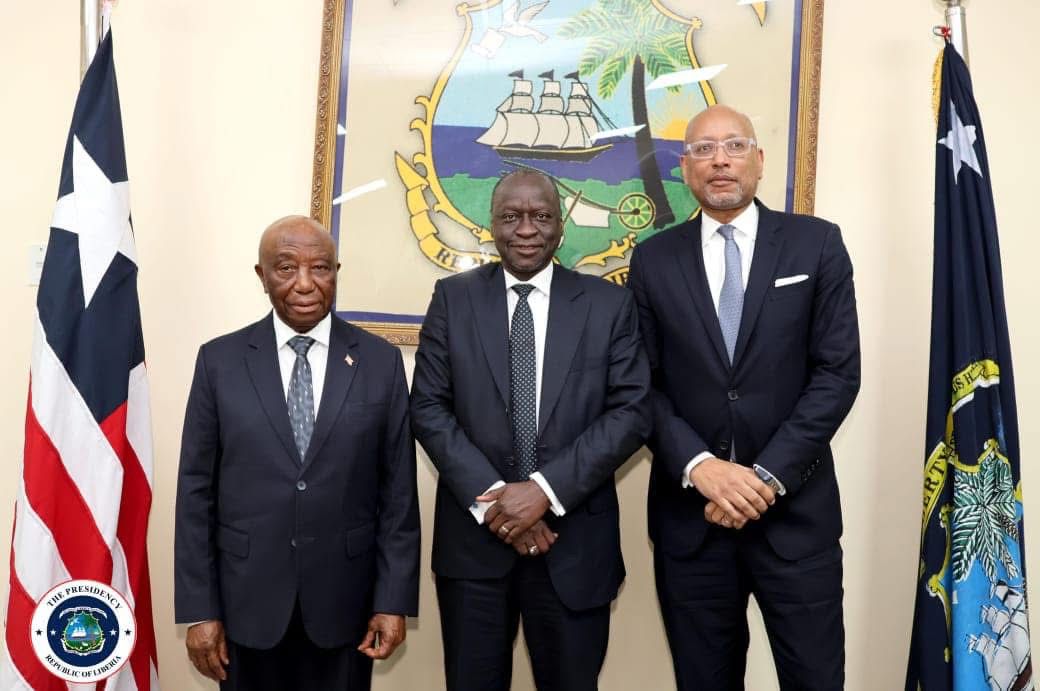
President Joseph Nyuma Boakai's recent high-level meeting with a delegation from the World Bank serves as a pivotal inflection point in Liberia’s contemporary economic trajectory. As the nation grapples with systemic infrastructural deficits, the renewed focus on the energy sector is not merely a policy preference; it is a structural necessity for survival and growth. This meeting represents more than a routine diplomatic engagement; it underscores an urgent calibration of the relationship between Monrovia and international financial institutions (IFIs). While the administration's stated commitment to elevating the energy sector is laudable, the complexity of Liberia’s socioeconomic landscape requires a forensic examination of the implications, potential pitfalls, and the institutional realities underpinning this renewed strategic pivot.
Liberia’s historical relationship with the World Bank has been characterized by both dependency and periodic reform, and this latest engagement occurs against a backdrop of deep-seated skepticism regarding the actualization of donor-funded projects. The energy sector remains the country's most significant bottleneck. With electrification rates currently languishing at approximately 33%, the national economy is stifled by exorbitant power costs, intermittent supply, and a reliance on imported petroleum products that drain foreign exchange reserves. When President Boakai identifies energy as a cornerstone for development, he is speaking to an existential hurdle that has prevented the industrialization of Liberia since the end of the civil wars.
The integration of Liberia into the World Bank and African Development Bank’s 'Mission 300'—an ambitious continental initiative to supply electricity to 300 million Africans by 2030—is undeniably a potential game-changer. However, historical precedents in Liberia, such as the struggles of the Liberia Electricity Corporation (LEC) to manage grid expansion, suggest that technical capital alone is insufficient. The success of Mission 300 hinges on radical institutional reform within the energy sector, specifically addressing transmission losses, tariff structures, and the combatting of systemic electricity theft that undermines the financial viability of utility providers. Furthermore, the President’s diplomatic appreciation for the World Bank’s support is a necessary political gesture, yet it invites critical questions regarding national sovereignty.
Over-reliance on external aid has historically allowed successive Liberian governments to delay painful but necessary fiscal reforms. As the administration moves forward, the primary concern must be ensuring that these collaborative frameworks are not merely vehicles for debt accumulation but are instead engines of sustainable domestic capacity. The newly announced National Development Country Partnership Framework, intended to bolster the private sector, provides a blueprint for this transition. However, the private sector in Liberia has long been obstructed by a complex web of bureaucratic hurdles, inconsistent tax enforcement, and a weak judiciary.
For this framework to succeed, the government must move beyond the rhetoric of 'ease of doing business' and implement tangible, measurable reforms that protect property rights and simplify the legal landscape for local and foreign investors. At the heart of this strategy lies the 'Agriculture, Roads, Rule of Law, Education, Sanitation, and Tourism' (ARREST) Agenda, which the Boakai administration has positioned as the central pillar of its governance philosophy. This framework is conceptually robust, aiming to address the multi-faceted nature of poverty and underdevelopment. Yet, the history of national development planning in Liberia is littered with failed initiatives that collapsed due to fragmented implementation, lack of inter-ministerial coordination, and the misappropriation of funds.
The success of the ARREST Agenda will require unprecedented levels of transparency. The government’s proposed budget of US$8.4 billion for the expanded ARREST Agenda for Inclusive Development (AAID) is an staggering figure for an economy the size of Liberia’s. This scale of investment necessitates rigorous oversight mechanisms.
Questions regarding the feasibility of this budget are not merely academic; they reflect the realities of a national economy that often struggles to meet domestic revenue targets. While the Liberia Revenue Authority (LRA) has shown promise in exceeding recent targets, the gap between national ambition and the actual liquidity available for development projects remains profound. The World Bank’s recent approval of $40 million for the Resilient and Inclusive Growth Development Policy Financing provides essential fiscal breathing room, yet this capital must be scrutinized. It is not enough to secure loans; the efficacy of these funds is measured by the creation of jobs, the stability of the macro-fiscal environment, and the actual delivery of infrastructure.
Central to this debate is the issue of governance. Infrastructure investments, no matter how substantial, are often hollowed out by corruption and the lack of human capacity to maintain these assets over the long term. The 'human element'—the training of engineers, technicians, and administrators—is frequently overlooked in the excitement of signing infrastructure deals. Without significant investment in technical and vocational education, the country will continue to rely on expensive expatriate consultants, further draining the potential economic benefits from the local economy.
Moreover, the regional context cannot be ignored. As part of the Mano River Union, Liberia’s energy and development prospects are inherently tied to those of its neighbors, particularly Sierra Leone, Guinea, and Côte d’Ivoire. Regional power pools, such as the CLSG (Côte d’Ivoire, Liberia, Sierra Leone, and Guinea) interconnection project, are vital. The government must ensure that its national energy strategy is not siloed but is instead fully integrated into these regional grids.
This shift could lower energy costs significantly and provide the stability needed for a manufacturing sector to emerge. Furthermore, the imperative of climate resilience is non-negotiable. As a coastal nation with significant reliance on agriculture, Liberia is acutely vulnerable to the shifting climate. The ARREST Agenda must ensure that infrastructure—such as roads and energy grids—is built to withstand the increasing frequency of extreme weather events.
Failing to integrate climate adaptation into these new development projects would be a catastrophic investment error, potentially saddling future generations with high-maintenance, low-resilience infrastructure. Ultimately, the true test of President Boakai’s engagement with the World Bank will not be the high-level photography or the press statements of mutual cooperation. It will be the tangible improvement in the quality of life for the ordinary citizen in rural areas, who currently lacks the most basic access to electricity, clean water, and all-weather roads. Governance in Liberia is a balancing act of satisfying international financiers while meeting the desperate, immediate needs of a disenfranchised population.
The risk of the ARREST Agenda is that it becomes a technocratic exercise divorced from the lived realities of the Liberian people. The administration must ensure that the benefits of this development are distributed equitably, reaching marginalized and physically challenged citizens, and that the rule of law is applied uniformly across the political and social spectrum. Corruption remains a phantom that haunts every development initiative in this country; until it is systematically addressed through robust auditing, independent investigations, and an uncompromising stance on fiscal accountability, any influx of capital will only serve to benefit the few at the expense of the many. In conclusion, the partnership with the World Bank is a necessary step, but it is only a start.
The road to genuine prosperity for Liberia requires more than capital; it requires a transformative change in the relationship between the state and its citizens, a commitment to local economic empowerment, and a departure from the cycle of debt-fueled development. The government now has the resources and the framework; it is the implementation that will define the legacy of the Boakai presidency.
