
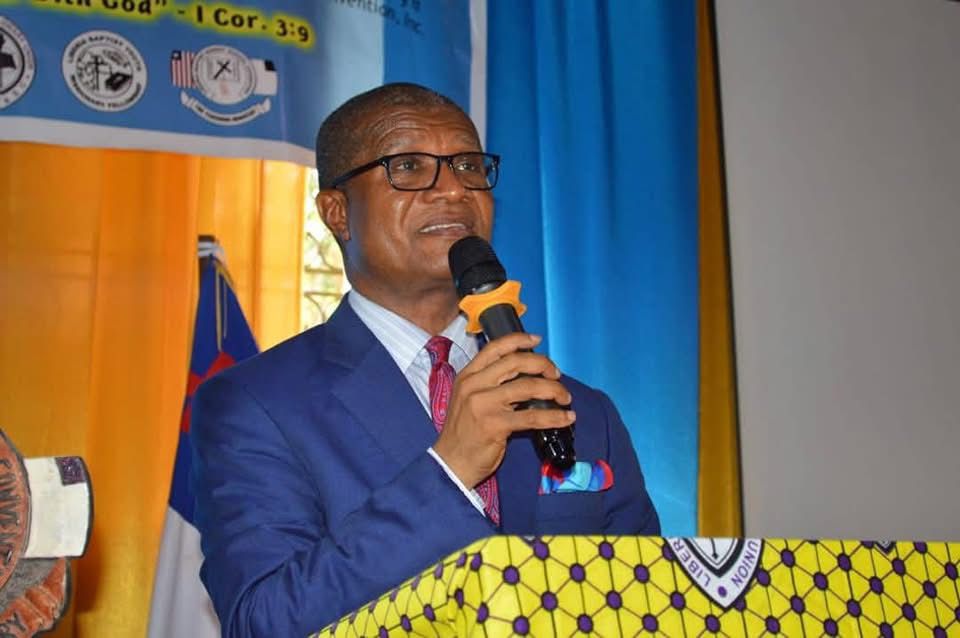
The reelection of Rev. Dr. Samuel Reeves as President of the Liberia Council of Churches (LCC) serves as a poignant, if deeply contentious, milestone in the contemporary history of Liberia’s civil society. For many observers, this development does not merely signal a continuation of administrative policy; it represents a profound regression, a strategic retreat from the historic role the LCC once occupied as the nation’s moral and spiritual anchor.
In an era where Liberia finds itself grappling with systemic corruption, a fragile peace, and a deepening crisis of institutional integrity, the decision to maintain the status quo within the Council suggests that the leadership of the church is increasingly comfortable in the corridors of political influence rather than standing on the prophetic fringes where real change is often forged. By any measure, the reelection of Dr. Reeves raises uncomfortable questions about the future trajectory of the church in a nation where religious influence has traditionally acted as a vital check on governmental overreach. The LCC, established in 1982, emerged as a transformative force during the tumultuous years of the civil war.
It was the LCC that provided shelter, mediated between warring factions, and demanded accountability from autocrats when other institutions had been decimated or co-opted. Today, however, that legacy feels like a distant memory, replaced by a climate where the pulpit and the political podium have become, for all intents and purposes, dangerously intertwined. Dr. Reeves, whose tenure has been shrouded in controversy since his initial ascension to the presidency, returns to the helm amid growing public skepticism and internal dissent that threatens the very unity of the Council.
His political resume, characterized by his 2017 bid as the Vice Standard Bearer for the Movement for Economic Empowerment (MOVEE), serves as a permanent point of friction. While he nominally stepped away from active partisan politics, critics argue that the institutional habits formed during that campaign continue to bleed into his stewardship of the LCC. The expectation that a church leader should transcend partisanship is not merely an idealistic hope; it is a fundamental requirement for the credibility of an organization that claims to represent the collective conscience of a nation. When a leader of the LCC is perpetually viewed through the prism of political ambition, the neutrality of the entire Council is compromised.
This is not a matter of historical grievances being revived; it is a living, breathing reality that informs how the Liberian public—and the political class—interacts with the church today. The political climate in Liberia has historically rewarded proximity to the executive branch, and many fear the LCC has fallen into this transactional trap. The Council’s recent decision to bestow honors upon figures like House Speaker Richard Koon is illustrative of this shifting paradigm. For a body meant to advocate for the poor and demand integrity, associating so closely with political power brokers who are themselves the subjects of intense public scrutiny feels like a betrayal of the Council’s founding mandate.
Critics argue that these gestures of institutional validation serve to shield officials from the moral accountability they deserve, effectively bestowing a "spiritual" seal of approval upon status-quo politics. The silence of the LCC in the face of widespread electoral violence, blatant judicial irregularities, and persistent allegations of high-level corruption is perhaps the most damning indictment of its current leadership. Where the LCC once thundered against the injustices of the Doe or Taylor regimes, it now appears content to murmur from the margins, prioritizing institutional preservation over prophetic witness. This quietism is not merely a failure of leadership; it is a failure of purpose.
A cleric recently remarked, capturing the pervasive disillusionment, that a compromised pulpit is ultimately no better than a corrupt parliament, and indeed, many ordinary Liberians are finding it increasingly difficult to discern where the interests of the political elite end and the mandate of the church begins. This confusion has led to a significant erosion of the church's social capital. If the LCC is viewed as a wing of the political establishment, it loses its ability to mediate during times of national crisis. The historical context of the church in Liberia is rooted in its role as a bridge-builder, but bridges require a firm foundation in both neutrality and morality.
When the leadership of the church appears to navigate the political landscape with the same maneuvering as a seasoned politician, the trust of the citizenry inevitably withers. The crisis facing the LCC is structural and, perhaps, ontological. It is not simply about Dr. Reeves as an individual; it is about the slow, agonizing erosion of the church’s prophetic identity in a political era that favors expediency over conviction.
We are witnessing the normalization of a church that speaks in the language of consensus rather than truth. In a nation still scarred by years of conflict and defined by its quest for democratic maturity, the stakes could not be higher. There is no constitutional barrier to clergy engaging in political life, but there is an ethical, ecclesiastical boundary that, when crossed, risks turning the church into just another interest group vying for position. As Dr.
Reeves begins his second term, the broader question remains: what kind of institution will the LCC choose to be? Will it return to its roots as a vigilant guardian of justice, or will it continue to drift toward a comfortable, but ultimately hollow, relationship with the corridors of power? The recent "no confidence" motions and legal threats brought by various church leaders and aggrieved members against the leadership signify that the grassroots of the Liberian church are deeply unsettled. The friction between the rank-and-file clergy and the central LCC leadership is palpable, reflecting a broader division within Liberian society itself.
This conflict is emblematic of the struggles faced by many institutions in post-conflict states, where the temptation to be "at the table" often leads to being "on the menu." The LCC’s future relevance depends entirely on its ability to divorce itself from the allure of political patronage. True religious authority in Liberia has historically been derived from the ability to speak uncomfortable truths to those in power, regardless of the political cost. By choosing to honor political figures while remaining silent on the systemic suffering of the Liberian people, the Council is signaling a drift toward a hollowed-out version of Christianity—one that provides benedictions for the powerful while failing to provide a voice for the voiceless.
The international and regional implications of this decline are also significant. As other nations in the West African sub-region look to Liberia as a barometer for democratic and civil society stability, a weakened and compromised Council of Churches sends a concerning signal. It suggests that the "moral check" on governance is failing, leaving the door open for further democratic backsliding. The path forward is arduous.
For the LCC to recover its moral compass, it must undergo a process of radical introspection. This involves not only a change in tone but a fundamental shift in how it engages with the Liberian state. It must re-establish a clear, principled distance from political actors and return to its role as an independent arbiter of justice. The current malaise is a symptom of a deeper crisis: the loss of a prophetic vision that once served as the light for a nation navigating the darkest chapters of its history.
In the final analysis, the reelection of Dr. Reeves serves as a stark reminder of the challenges that remain. Liberia is a country in search of moral clarity, and for decades, the Council of Churches was the primary source of that clarity. That the Council now finds itself embroiled in such intense, public, and damaging debate is a tragedy.
Unless there is a decisive pivot back toward its original, uncompromising role as the conscience of the nation, the LCC risks becoming a relic of a time when the church actually stood for something more than the maintenance of its own influence. The people of Liberia deserve an institution that is not afraid to challenge power, to demand accountability, and to represent the best of their collective spirit, rather than the political ambitions of its individual leaders.
