
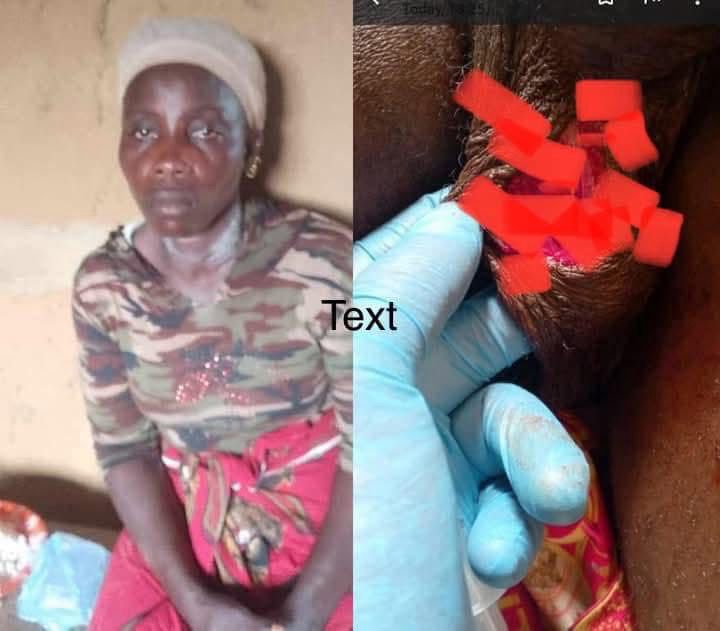
The incident involving 46-year-old Patricia Wesseh in Grand Kru County, which occurred on February 16, 2025, has sent shockwaves through the local community and ignited a necessary, albeit uncomfortable, national conversation regarding the shifting landscape of Gender-Based Violence (GBV) in Liberia. Charged with aggravated assault and attempted murder after allegedly using a sharp object to commit a horrific act of violence against her partner’s genitalia, Wesseh’s case represents a rare but critical inversion of the traditional victim-perpetrator paradigm that has dominated Liberian sociological and legal discourse for decades. In a nation where statistics are overwhelmingly skewed toward female victimhood, this case forces stakeholders to confront the reality that domestic violence, while statistically gendered, is fundamentally a crisis of human behavior, power dynamics, and societal breakdown that does not respect the boundaries of gender. Liberia has long struggled with a pervasive culture of violence.
Emerging from two brutal civil wars that decimated social structures and normalized aggression as a means of dispute resolution, the country has fought an uphill battle to implement the Domestic Violence Act of 2019. Despite these legal milestones, the reality on the ground—particularly in rural, underdeveloped counties like Grand Kru—often remains disconnected from the progressive rhetoric emanating from Monrovia. Wesseh’s admission that jealousy, fueled by her partner’s multi-day absence, served as the catalyst for her actions, provides a window into the toxic undercurrents of possession and control that characterize many intimate relationships in the region. This incident is not merely an isolated criminal act; it is a symptom of the deeper, unresolved emotional and economic anxieties that permeate rural households.
When we analyze the gendered data, the context becomes clearer. According to 2023 reports, women accounted for 93% of the 3,204 recorded cases of Sexual and Gender-Based Violence (SGBV). Because these figures are so high, national policies, NGO interventions, and legal support systems have been exclusively tailored to protect women. While this focus is historically and socially justified, the Wesseh case highlights a gap in our national infrastructure: the lack of support mechanisms for male victims.
Men who suffer from domestic abuse in Liberia are often silenced by a deeply ingrained cultural expectation of masculinity, which views physical weakness or victimization as a stain on one’s social standing. By failing to create safe channels for men to report abuse, society inadvertently traps them in cycles of violence that, as seen in this case, can reach lethal levels of retaliation. The role of the Liberia National Police in this matter deserves close scrutiny. Their decision to move forward with charges of aggravated assault and attempted murder is a standard, yet essential, application of the rule of law.
It reflects a growing recognition that violence, regardless of the gender of the perpetrator, must be treated with the gravity it deserves. Statistics from Afrobarometer suggest that approximately 89% of Liberians view the police as serious about GBV, yet the effectiveness of this response is often hampered by geography. In Grand Kru, the distance between rural settlements and centralized justice systems can turn a victim’s journey for help into an odyssey. When violence occurs in such isolated settings, community mediation—often led by traditional or religious leaders—frequently supersedes formal legal processes.
This is where the danger lies; these informal systems may prioritize social cohesion over justice, leaving perpetrators of both genders to act with impunity. Furthermore, the persistent acceptance of violence as a disciplinary tool remains a stubborn barrier to progress. The fact that 44% of Liberians surveyed still believe physical force can be justified in a marriage signifies that we are fighting a multi-generational battle against the normalization of harm. This sentiment is not limited to men; it is a shared cultural ethos that transcends gender lines, suggesting that the problem is not necessarily one group of people, but a systemic failure to teach non-violent conflict resolution.
As we look at the legacy of the 2020 national emergency declaration on rape by then-President George Weah, we see that legislative action, while vital, is only the first step. The 2020 Demographic and Health Survey, which found that 60% of women aged 15-49 had experienced physical violence, paints a grim picture of a society where the home is far from a sanctuary. The underreporting rate is equally alarming. With only 42% of victims seeking help, we must ask ourselves: what prevents the other 58% from coming forward?
The answer lies in the persistent social stigma. The 63% of Liberians who admit that victims face shame or criticism if they speak out highlights a cultural climate that protects the reputation of the household at the expense of the safety of the individual. Patricia Wesseh’s case is a jarring reminder that gender is not a binary shield against accountability. Moving forward, the conversation must expand.
It is not enough to focus solely on women’s rights, as vital as they are; we must promote a broader framework of human rights that emphasizes the sanctity of the physical body regardless of the perpetrator’s sex. This requires a two-pronged approach. First, law enforcement and judicial authorities must be equipped to handle the complexities of reverse-gender violence without defaulting to bias. Second, community-based education programs—such as the UN-supported men’s engagement initiatives—must be expanded to address not just the prevention of violence against women, but the fundamental need for emotional intelligence, anger management, and healthy communication skills for all citizens.
We need to deconstruct the myths of 'disciplinary' violence that still resonate with nearly half the population. Economic stressors in Grand Kru and other rural areas contribute heavily to these domestic explosions. When there is no path for economic mobility, and when traditional roles are being redefined by the realities of modern life, the resulting instability can lead to violence. Addressing GBV in Liberia, therefore, must also be an economic conversation.
We must look at how poverty, lack of access to reproductive health services, and educational gaps contribute to the volatile environments where these crimes occur. The case of Patricia Wesseh will inevitably move through the Liberian judicial system, but its impact should last far longer than the trial. It should serve as a wake-up call for policy makers, NGOs, and the public to rethink our approach to domestic safety. If we continue to treat GBV only as a 'women’s issue,' we fail to capture the full spectrum of violence that threatens the stability of our families and communities.
The path toward a safer Liberia is through transparency, the rejection of violent social norms, and an unwavering commitment to the rule of law, applied equitably to all. Only by shedding these outdated societal expectations can we hope to see a future where conflict is resolved through dialogue rather than the blade, and where the sanctity of life is upheld as the highest standard of our national character.
