
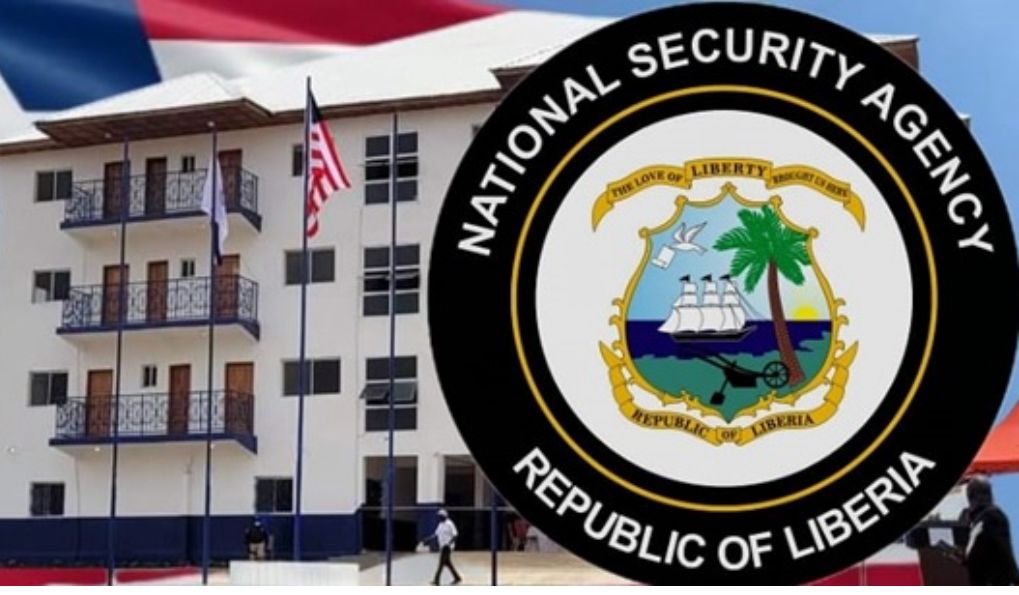
As the July 17 protest date looms, the political atmosphere in Monrovia has grown increasingly volatile, characterized by a palpable sense of unease. At the epicenter of this brewing storm is the National Security Agency (NSA), the country’s primary intelligence arm, which is reportedly finalizing a comprehensive strategy to undermine, delegitimize, and ultimately dismantle the protest before it gains a foothold in the capital. According to multiple credible sources within the security apparatus, the agency is operating under the direction of high-ranking officials, with Marc A. Amblard reportedly spearheading the tactical planning.
While the public face of the protest—prominent organizers such as Morlu—remains a primary target of state scrutiny, the NSA’s operational strategy has shifted focus toward the granular level of mobilization. The agency’s intelligence gathering is currently concentrated on influential community leaders residing in marginalized urban centers, specifically the densely populated slums of West Point and New Kru Town. The goal is simple yet chilling: to identify, tail, and conduct preemptive arrests of those who serve as the connective tissue between the protest leadership and the masses. This method of surgical disruption is designed to decapitate the organizational structure at the grassroots level, effectively inducing a state of paralysis through calculated fear and intimidation.
The NSA’s reliance on these tactics is not merely an isolated response to a singular event; rather, it reflects a deeply entrenched historical trend in Liberian politics. Since the post-war transition, the state’s security apparatus has frequently been weaponized to navigate the friction between governance and public dissent. By targeting community mobilizers—individuals who command significant moral and social authority in informal settlements—the security forces aim to fracture the collective will of the protest before it manifests on the streets. These actions serve as a tactical deterrent, signaling to any potential participant that the price of dissent is likely to be a night in detention or worse.
Furthermore, the manipulation of the legal system remains a potent instrument of control. In Liberia’s judicial sphere, the line between criminal justice and political persecution is often blurred. Protest organizers are frequently subjected to a ‘revolving door’ of spurious, obscure charges—such as ‘incitement,’ ‘public disturbance,’ or ‘violating city ordinances.’ These charges are rarely intended to lead to a conviction in a court of law; instead, they serve as a procedural snare, tying organizers up in protracted, expensive, and emotionally draining legal proceedings.
By ensuring that dissenters are preoccupied with legal defense, the state effectively neuters their ability to engage in civil activism. This practice echoes the darkest periods of Liberia’s political history, demonstrating that while the nation has embraced democratic rituals, the infrastructure of authoritarian control remains intact and operational. The choice to focus on West Point and New Kru Town is particularly significant. Historically, these areas have served as the vanguard of social activism and political grievances due to the acute levels of poverty, lack of basic services, and systemic neglect residents face.
By aggressively policing these neighborhoods under the guise of ‘national security,’ the NSA is not merely suppressing a protest; it is asserting state dominance over the most vulnerable segments of the population. This pattern of state suppression is inherently counterproductive, as it transforms the NSA from a public security asset into a symbol of political oppression. Public skepticism regarding the agency’s true mandate has reached a boiling point. The citizenry increasingly views the NSA not as a shield against genuine external or internal threats, but as a private security force for the ruling establishment.
This perception is bolstered by the staggering financial resources funneled into the agency’s coffers, even as essential public services collapse. The budgetary trajectory of the NSA is a testament to the current administration’s priorities. In 2024, the agency was allocated an official budget of US$9.4 million, yet it managed to overspend by an additional $1.
5 million—an indicator of the ‘off-the-books’ nature of its most sensitive operations. The situation is set to escalate significantly in 2025, with an allocated budget of a staggering $14.98 million. This represents a 119% surge in the ‘special operations intelligence’ line item, a massive increase that signifies a broader, country-wide trend of militarizing intelligence spending across all security sectors.
These figures are especially egregious when contrasted with the country’s actual security needs. According to the 2024 Global Terrorism Index, Liberia remains firmly in the ‘No Impact Zone,’ scoring a zero for terrorist threats. Despite this near-total absence of existential danger, the government continues to treat political dissent as an act of insurgency. The fiscal irresponsibility is further compounded by the prevalence of off-budget expenditures.
In 2024, the Liberian government spent an estimated $13.3 million outside of established budgetary transparency protocols, a clear violation of public financial management laws. Much of this funding is cloaked in the opaque nomenclature of ‘covert operations,’ ‘miscellaneous expenses,’ and ‘intelligence-gathering.’ This lack of oversight allows for the misuse of public funds to finance political surveillance, all while the state fails to address the rampant insecurity that plagues the average citizen.
The disconnect between government rhetoric and the lived reality of Liberians is stark. While the NSA invests millions in tracking protesters, the Gallup 2024 Global Law and Order Index lists Liberia as the most unsafe country in Africa for the second consecutive year, with a score of 50—a figure that should serve as a wake-up call to any functional government. The security threats index, which accounts for crime, social volatility, and institutional distrust, sat at a concerning 6.5 in 2024.
Public sentiment is even more damning: only 30% of Liberians feel safe walking through their own neighborhoods after sunset, and nearly half of the population has reported being a victim of theft or physical assault within the last twelve months. For the average Liberian, the state’s ‘security’ apparatus is not a protector, but a source of further precarity. When corruption is institutionalized within law enforcement, the police and intelligence services lose their legitimacy in the eyes of the public. Instead of fostering community trust or focusing on crime prevention, these agencies have prioritized the policing of thought, speech, and assembly.
This environment creates a dangerous feedback loop: as the state suppresses legitimate grievances, the underlying causes of those grievances—economic hardship, lack of infrastructure, and political exclusion—continue to fester, inevitably leading to more frequent and intense calls for protest. The NSA’s alleged strategy to disrupt the July 17 demonstration is a short-term gamble that carries long-term consequences. By silencing the voices of those who occupy the margins, the agency is inadvertently validating the protesters' claims of state tyranny. As the date approaches, the international community, civil society organizations, and ordinary citizens are watching closely.
The government must realize that intelligence spending and preemptive arrests cannot replace genuine governance. If the state continues to prioritize the suppression of its own people over their safety and well-being, the resulting instability will not be the fault of the protesters, but a direct consequence of a government that has lost its connection to the aspirations of its citizens.
