
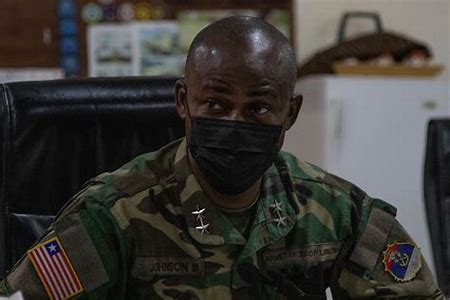
The allegations surrounding the detention and treatment of Thomas Eldridge by the Liberian National Security Agency (NSA) have sent a seismic shock through the nation’s political landscape, casting a dark shadow over the administration of President Joseph Nyuma Boakai. For a nation that has struggled to transition from a history of civil conflict to a stable, constitutional democracy, these reports are not merely alarming; they represent a potential existential threat to the integrity of the Liberian state. The details emerging from the accounts of those who allegedly faced the NSA's interrogation methods—specifically claims of waterboarding, brutal physical beatings, and the horrific confinement of detainees in a makeshift snake pit—have invoked the darkest memories of Liberia’s past. These accounts describe a pattern of behavior that is incompatible with the principles of a modern, democratic republic, raising fundamental questions about the direction of the Boakai government and the weaponization of its primary intelligence apparatus.
Central to the controversy is the allegation that these extreme measures were employed not for legitimate national security objectives, but as a coercive instrument to extract false testimonies directed against the Speaker of the House of Representatives, Fonati Koffa. If substantiated, this suggests a calculated attempt to manipulate the legislative branch through extrajudicial intimidation, a move that fundamentally undermines the doctrine of separation of powers and the sanctity of the rule of law. The politicization of the security sector is a dangerous hallmark of autocratic regimes. When a state agency traditionally charged with protecting the nation turns its focus toward the political rivals of the ruling administration, it signals an institutional failure that demands immediate and rigorous scrutiny.
The implications extend far beyond the immediate suffering of individual victims; they strike at the heart of the democratic contract between the Liberian government and its people. As a member of the international community, Liberia is bound by a web of legal obligations that explicitly forbid the use of torture under any circumstances. As a signatory to the United Nations Convention Against Torture (UNCAT), the Republic of Liberia has committed itself to a absolute prohibition. Article 2 of the Convention is unequivocal: 'No exceptional circumstances whatsoever, whether a state of war or a threat of war, internal political instability or any other public emergency, may be invoked as a justification of torture.'
The NSA, as an arm of the executive branch, operates under the authority of the President. Therefore, any failure to adhere to these international standards reflects directly upon the administration's commitment to human rights and the international treaties it has pledged to uphold. Furthermore, the International Covenant on Civil and Political Rights (ICCPR), to which Liberia is also a party, reinforces these protections in Article 7, ensuring that no person shall be subjected to torture or to cruel, inhuman, or degrading treatment or punishment. By ignoring these mandates, the state risks not only its international standing but also the legitimacy of its own internal security mechanisms.
Domestically, the Liberian Constitution provides the ultimate bulwark against such practices. Article 21(e) explicitly states that no person shall be subjected to torture or other form of inhuman or degrading treatment. This constitutional guarantee is not a suggestion; it is the supreme law of the land. When the NSA—an agency established to defend the Constitution—is accused of violating it, the state enters a period of severe constitutional crisis.
The use of torture serves as a corrosive agent that destroys the rule of law. When security forces are permitted to operate in the shadows, outside the constraints of judicial oversight and legal procedure, a culture of impunity inevitably takes root. This impunity does not remain localized; it spreads throughout the bureaucracy, discouraging independent thought, suppressing political dissent, and fostering an environment of fear where the rights of the individual are constantly subordinated to the whims of the state. The targeting of individuals associated with political opposition figures represents a direct assault on the democratic process.
In any functioning democracy, the existence of a robust, vocal, and free political opposition is essential. When individuals involved in political life are subjected to the threat of physical harm, the entire democratic arena suffers. This 'chilling effect' discourages ordinary citizens from engaging in political discourse, supporting opposition parties, or holding their elected representatives accountable for fear of being identified as enemies of the state. The result is a hollowed-out democracy where the illusion of participation masks a reality of state-sponsored suppression.
The loss of public trust in government institutions is an almost inevitable byproduct of such revelations. Public institutions derive their authority from the consent of the governed, and that consent is contingent upon the belief that the state will act as a fair arbiter and protector of its citizens. When the state begins to use the tools of terror against its own people, the breach of trust is profound and often irreparable. If the citizenry cannot rely on the NSA to protect them, they will inevitably retreat from the state, leading to social fragmentation and the erosion of national unity.
Furthermore, the international consequences of these allegations should not be underestimated. Liberia, which relies on international partnerships and foreign investment to drive its development, is highly vulnerable to the fallout of human rights violations. Persistent reports of torture can lead to the implementation of targeted sanctions, the withdrawal of diplomatic support, and a decline in international development assistance. Global partners, including the United States and the European Union, are increasingly linking aid and investment to human rights performance and democratic standards.
For Liberia, the path to prosperity is inextricably linked to its reputation as a stable, rules-based state. To mitigate the damage caused by these reports, the Liberian government must move beyond official denials and engage in a transparent, independent, and comprehensive investigation. This investigation must be spearheaded by a body that operates independently of the security apparatus currently under suspicion. A mere internal review by the NSA or the Executive Branch will be insufficient to restore public confidence or address the gravity of the allegations.
The mandate of such an inquiry should be clear: to determine the truth of the allegations involving Thomas Eldridge, to identify those who authorized such methods, and to expose the chain of command that allowed such systemic failures to occur. If evidence of wrongdoing is found, there must be swift and decisive accountability. Those responsible for the planning, approval, and execution of such abuses must face the full force of the judicial system. Only through this process can the state signal that it is committed to purging the remnants of past authoritarian practices and embracing a future where the rule of law is the ultimate authority.
The path forward is difficult but necessary. President Boakai stands at a crucial juncture in his administration. He can choose to distance his government from these practices and uphold the democratic values he once advocated for, or he can allow the stain of these allegations to define his legacy. The international community, the Liberian civil society, and the victims of these alleged abuses are watching closely.
The era of impunity must end if Liberia is to truly advance as a nation. Silence, or the failure to act, will be interpreted as a tacit endorsement of these actions. History has shown that nations that fail to protect their citizens from state-sanctioned torture rarely find stability or prosperity. It is, therefore, in the interest of the state—and in the best interest of every Liberian—that this matter be resolved with the gravity and transparency that justice demands.
Ultimately, the survival of the Liberian democratic experiment depends on the state’s ability to remain subservient to the law. Any deviation from this principle, especially one involving the use of torture, is not just a policy error—it is an assault on the very identity of the nation. As we continue to monitor this evolving situation, Insights Liberia calls for a sustained focus on this issue until accountability is achieved. Justice for Thomas Eldridge and for all who have suffered at the hands of those who are meant to serve and protect is the only path toward the restoration of integrity in our national security apparatus.
