
Liberia, Africa’s oldest republic, is a nation defined by a paradox: a history of proud independence dating back to 1847, contrasted against the harrowing shadow of a fourteen-year civil war that decimated its socio-political fabric. The conflict, which spanned from 1989 to 2003, was characterized by extreme brutality, displacement, and the total collapse of state institutions. When the Accra Comprehensive Peace Agreement was signed in 2003, the nation was left with a grim legacy of destruction, psychological trauma, and deep-seated societal division that continues to permeate contemporary Liberian life. National reconciliation has remained the elusive centerpiece of the country’s post-war agenda.
While significant strides have been made to transition from a war-torn state to a fledgling democracy, the path to genuine healing remains fraught with systemic obstacles. As we analyze the trajectory of reconciliation in Liberia, it is imperative to move beyond mere rhetoric and critically examine the mechanisms, failures, and imperatives that define the nation’s journey toward stability. The war was not merely a military confrontation; it was a total breakdown of trust between the state and its citizens. Understanding this requires looking back at the long-standing grievances related to land tenure, political marginalization of rural populations, and the historical dominance of the Americo-Liberian elite.
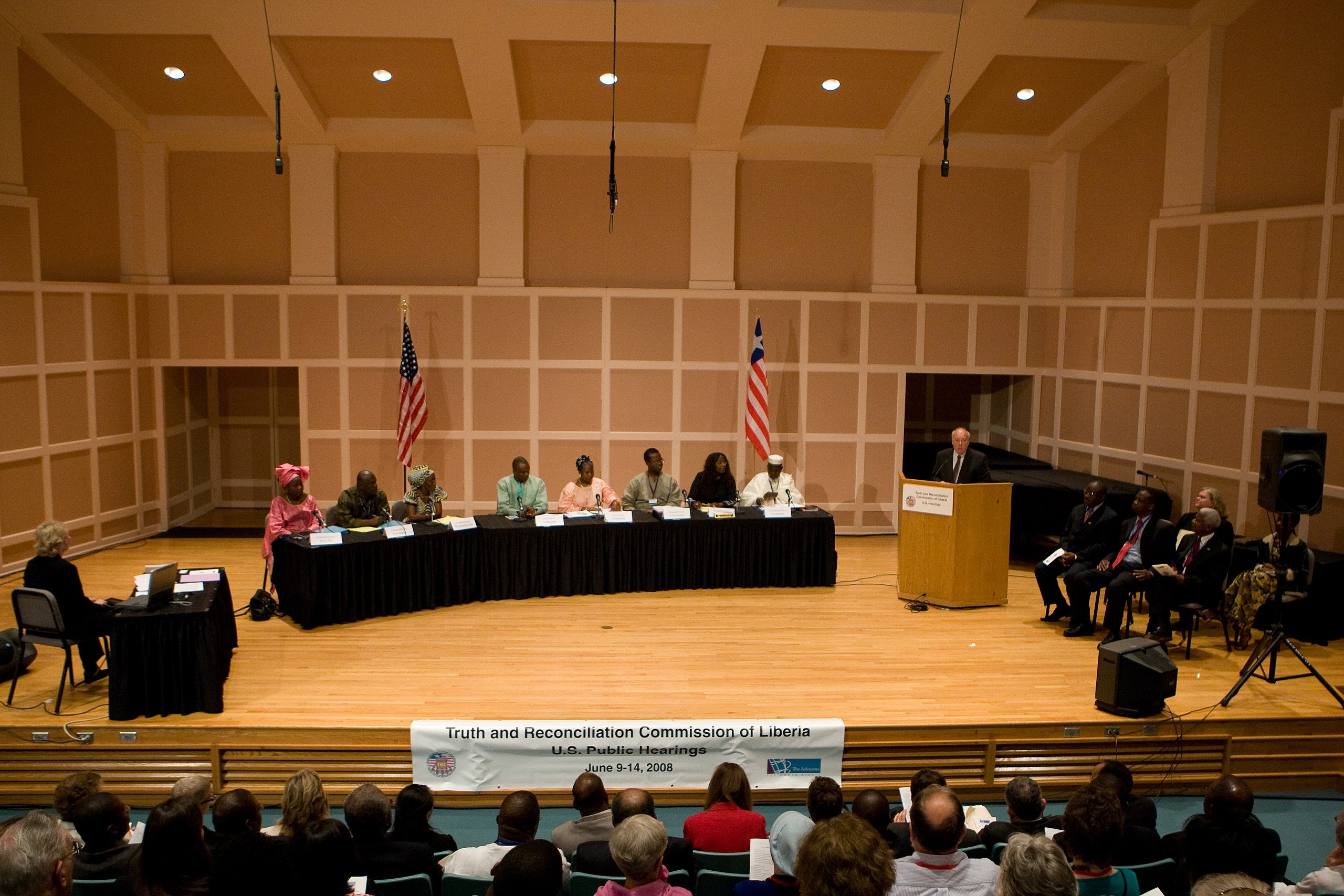
The TRC, established in 2003 and operationalized later, was envisioned as the panacea for these deep wounds. It aimed to provide a platform for victims to tell their stories, for perpetrators to seek forgiveness, and, most importantly, to document the atrocities that defined the decades of violence. Its 2009 report remains the most comprehensive diagnostic tool for Liberia’s societal malaise, yet its shelf life has been plagued by the selective application of its recommendations. Since the publication of the TRC report, Liberia has indeed seen the creation of formal frameworks.
The establishment of the Peace Building Office and the National Reconciliation Roadmap represented early government commitments to foster peace. Furthermore, the Independent National Human Rights Commission (INHRC) was tasked with the oversight of human rights standards in a post-conflict environment, while the Ministry of Gender, Children and Social Protection sought to address the systemic vulnerabilities faced by those most impacted by the war. However, the efficacy of these institutions has been limited by budgetary constraints and a reliance on international donor funding. When foreign aid fluctuates, the sustainability of these peace initiatives often stalls, revealing a fragile domestic commitment.
The lack of political will has become the most formidable barrier to progress. The TRC’s core recommendation for the establishment of a War Crimes Court has been met with decades of political vacillation. While neighboring nations such as Sierra Leone saw the implementation of a Special Court to hold perpetrators accountable, Liberia remains unique in its hesitation. This inaction has fostered a culture of impunity.
Many individuals implicated in major human rights violations have, in fact, ascended to positions of political power, serving in the legislature or holding influential government roles. This reality creates a profound cognitive dissonance for the Liberian citizenry, who are told to prioritize peace and reconciliation while witnessing their tormentors enjoy political legitimacy. This state of affairs undermines the very foundation of the rule of law. Furthermore, the social and economic landscape of Liberia remains inextricably linked to the unresolved grievances of the war.
Poverty levels remain alarmingly high, with vast swathes of the youth population—many of whom were child soldiers or born in the shadow of the conflict—lacking access to quality education or viable employment. This creates a fertile ground for social tension. When young people perceive that the national resources are being captured by a small, unaccountable elite, the rhetoric of reconciliation rings hollow. The structural violence—characterized by unequal access to healthcare, land, and justice—replicates the conditions that preceded the 1989 uprising.
For true reconciliation to occur, the Liberian state must pivot toward a more holistic strategy. This is not merely about holding court hearings; it is about addressing the historical disenfranchisement of the rural indigenous population. Regional stability in West Africa is closely tied to Liberia’s peace. As a member of the Mano River Union, Liberia’s instability historically spilled over into Sierra Leone, Guinea, and Côte d’Ivoire.
Conversely, a stable, reconciled Liberia acts as a pillar of regional democracy. Thus, the international community has a vested interest in pressuring the Liberian government to act on its commitments. The way forward must begin with a renewed, sincere national dialogue that includes traditional chiefs, civil society leaders, and the diaspora. The reconciliation process must be depoliticized.
Currently, the narrative of peace is often hijacked by political actors to suit election cycles rather than to address the long-term trauma of the populace. A genuine commitment would involve the transparent prosecution of major war crimes, which would provide victims with a sense of closure that has been denied to them for over two decades. Furthermore, economic inclusivity must be prioritized. If the Liberian economy continues to be extractive and centralized, the feeling of marginalization will persist.
Investment in the agricultural sector, where the majority of rural Liberians labor, is essential for grassroots stabilization. Education, too, must be reformed to incorporate a curriculum of peace, tolerance, and historical truth, ensuring that future generations do not inherit the prejudices of the past. Moreover, the government needs to facilitate the restoration of communal lands, addressing the legacy of displacement that occurred during the war. Reconciliation is not a static event; it is a dynamic process that requires the state to be held accountable by its own people.
If the Liberian state continues to view reconciliation as an option rather than an imperative, it risks stagnating in a cycle of fragile stability. The window for addressing these wounds while survivors are still alive is rapidly closing. The international community, through organizations like the UN and the African Union, must shift from being passive observers to active facilitators of accountability. In conclusion, while Liberia has moved beyond the smoking ruins of 2003, it has yet to reach the promised land of a fully reconciled society.
The progress made is undeniable, but it is insufficient to address the systemic rot of impunity and the lingering trauma of its citizens. The transition from peace-keeping to peace-building is the most difficult stage of any post-conflict nation’s development. Liberia stands at a crossroad. It can either continue the path of selective memory and political avoidance, or it can choose the difficult, necessary path of institutional reform, restorative justice, and economic democratization.
The legacy of the civil war is a heavy burden, but with the necessary political courage, it need not be a permanent one. True peace will only be achieved when the average Liberian feels that the state is an instrument of justice rather than a shield for the powerful. Only then can the country truly say that the war is over, and the era of national healing has begun.



