
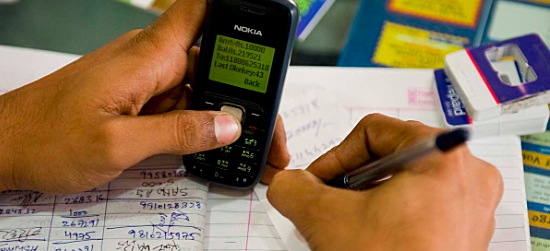
Mobile money has emerged as a transformative force in the Republic of Liberia, fundamentally altering the country’s financial landscape. As a digital financial service, it allows users to perform transfers, pay utility bills, settle merchant invoices, and conduct daily commerce through the simplicity of a mobile phone interface. This innovation has proven particularly vital in a nation where geographic barriers, infrastructure deficits, and a historical lack of banking penetration have long marginalized the rural populace. By bypassing the need for brick-and-mortar institutions, mobile money serves as a bridge, connecting the unbanked to the broader economy.
According to recent data from the Central Bank of Liberia (CBL), the surge in adoption has been staggering; the country recorded over 2 million registered mobile money accounts by the close of 2022, a monumental leap from the roughly 500,000 accounts documented in 2017. This exponential growth signals a paradigm shift in how Liberians conduct business, store value, and interact with the state. The dominance of platforms like Orange Money and MTN Mobile Money has effectively turned mobile handsets into portable wallets, providing a level of convenience previously unthinkable for those living in Liberia’s hinterlands. Financial records underscore this rapid integration: total mobile money transactions in Liberia skyrocketed to LRD 34.
5 billion—approximately USD 182 million—in 2020, up from LRD 11.5 billion (approx. USD 61 million) in 2015. While these figures are impressive, they merely scratch the surface of the sector’s potential.
To understand the gravity of this shift, one must consider Liberia's historical struggle with formal banking. Following decades of civil conflict that decimated infrastructure, the restoration of a reliable, widespread financial network has been a painstaking process. For many years, the populace relied heavily on informal saving clubs, known as 'susu' groups, or kept physical cash, which carried significant risks of theft and loss. Mobile money has provided a secure, digitizable alternative to these legacy methods.
However, the rapid expansion of these platforms has outpaced the existing regulatory framework, creating a tension between the need for innovation and the necessity of consumer protection. The Central Bank of Liberia, as the primary regulator, has attempted to mitigate risks through the issuance of the 2014 'Guidelines on Mobile Money Services' and the 2016 'Regulations Concerning Electronic Money Issuance and Services.' These documents were essential first steps, but in an era of rapid technological advancement, they are increasingly viewed as insufficient. As highlighted by the GSMA, Liberia currently faces a critical need for enhanced oversight regarding anti-money laundering (AML) protocols and robust measures to combat the financing of terrorism (CFT).
Furthermore, the lack of full interoperability—the ability for a customer on one network to transfer funds seamlessly to another—remains a significant bottleneck, fragmenting the market and inconveniencing users. Building public trust is the final, and perhaps most elusive, pillar of sustainable mobile money growth. A sobering World Bank study found that 52% of Liberian adults cited a fundamental lack of trust in financial institutions as their primary reason for remaining unbanked. This skepticism is rooted in historical instability and past experiences where depositors lost funds during economic downturns.
Consequently, even with a mobile phone in hand, many users treat mobile money as a transit point rather than a place to store wealth. Educating the public about encryption, fraud prevention, and the security of digital wallets is not merely a marketing exercise; it is a prerequisite for national financial inclusion. The technical obstacles are equally significant. While mobile phone penetration reached approximately 65.
5% by 2020, there is a clear digital divide between Monrovia’s urban centers and the distant counties of Grand Gedeh or Lofa. Infrastructure issues, such as erratic power supply for charging devices and intermittent network connectivity in rural zones, continue to hamper consistent service delivery. Furthermore, while the cost of data has dropped by over 50% in the last five years, mobile connectivity remains a luxury for the most impoverished segments of the population. The government’s role in this ecosystem has been proactive, yet it remains a work in progress.
By supporting the growth of digital finance, the government aims to enhance tax collection and reduce the costs of social welfare distribution. Yet, the policy environment must evolve to facilitate competition. When new players enter the market, they must navigate a complex licensing environment that sometimes favors established telecommunications giants. A more level playing field would encourage innovation, potentially lowering transaction fees further and pushing services into deeper, rural markets.
Socially, the impact of mobile money in Liberia cannot be overstated. By enabling small-scale entrepreneurs—particularly women, who form the backbone of the informal market economy—to access credit and manage business capital, mobile money is a powerful tool for poverty alleviation. When a market trader can receive payment via phone, they no longer need to carry large sums of cash, reducing their vulnerability to street crime. This shift also supports the government’s broader digitization agenda, moving toward a 'cashless society' that minimizes the risk of corruption and leakages in public spending.
Despite these advantages, the path forward requires a tri-partite commitment from the state, private sector operators, and the citizenry. The regulator must move toward a risk-based supervisory framework that encourages financial technology startups while enforcing strict compliance. Operators must prioritize local language support and financial literacy programs to reach the grassroots level. Finally, the consumer must be protected through comprehensive laws that outline liability in cases of fraud or system failure.
As Liberia looks toward the future, the integration of mobile money into the national development strategy is essential. It is not just about the convenience of sending money to a relative in a village; it is about building a scalable financial architecture that can withstand regional economic shocks and foster long-term prosperity. If managed with transparency and foresight, mobile money will not only serve as a utility but as a cornerstone of the Liberian economy, unlocking wealth and opportunity for millions who have spent generations on the periphery of the formal financial system. The digital revolution in Liberia is already underway; the task now is to ensure it is secure, inclusive, and fundamentally focused on the empowerment of the ordinary Liberian citizen.
