
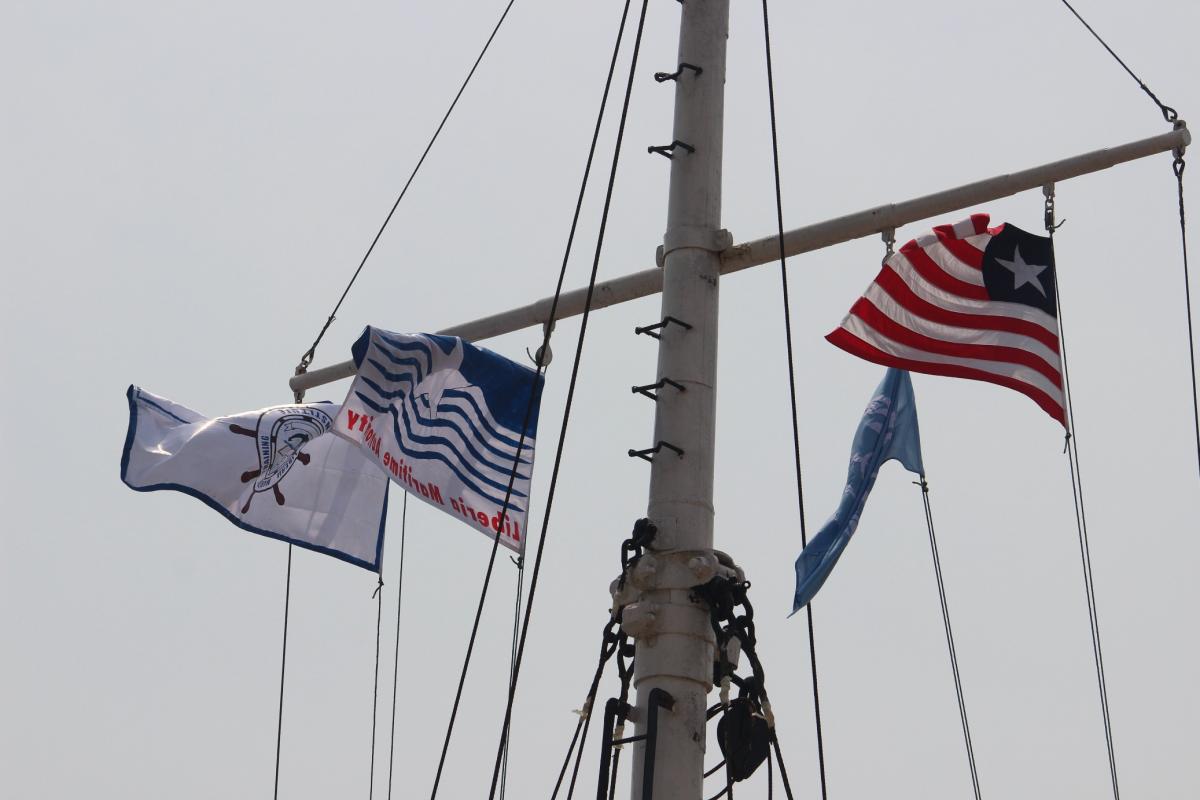
Liberia's Maritime Ambitions: Navigating Security and Economic Prospects
Liberia boasts a globally significant maritime industry, underscored by its registry ranking second worldwide in terms of registered vessels. This sector is not merely a statistic; it is a cornerstone of the nation's economy, generating substantial revenue through registration fees and a cascade of associated services. The continued prosperity and stability of this industry are inextricably linked to the safety and security of Liberia's maritime domain. This analysis delves into Liberia's maritime security landscape, examining its intricate relationships with regional neighbors and international bodies, while also dissecting the multifaceted challenges and burgeoning opportunities that lie ahead.
Liberia's history is deeply intertwined with its maritime potential. Following decades of civil conflict that devastated its infrastructure and economy, the nation has embarked on a path of recovery and rebuilding. The establishment of a robust and reputable maritime registry has been a key component of this economic revitalization strategy. By offering a favorable regulatory environment and a well-established legal framework, Liberia has attracted a vast number of international shipowners. The Liberian International Ship & Corporate Registry (LISCR) has been instrumental in managing this growth, positioning Liberia as a premier flag state. As of December 2021, the Liberian Registry proudly lists over 4,300 vessels, collectively exceeding 161 million gross tons. This not only places it second globally but also signifies a profound contribution to the national exchequer through registration fees, tonnage taxes, and other ancillary services. The industry supports thousands of Liberian jobs, from administrative roles within the LISCR to seafarer positions, port operations, and specialized maritime legal services, underscoring its vital socio-economic impact.
However, this significant maritime presence also casts a spotlight on the critical need for stringent maritime security. A primary concern, echoing across the West African coastline, is the persistent threat of piracy. The International Maritime Bureau (IMB) has consistently highlighted the Gulf of Guinea as a global hotspot for piracy and armed robbery at sea. While Liberia itself has not been a frequent target of large-scale piracy attacks, its strategic location along this vulnerable coastline means it cannot afford complacency. The nation is inherently susceptible to spillover effects and indirect impacts, such as the disruption of regional trade routes that are vital for its own economic activities. Recognizing this vulnerability, the Liberian government, in collaboration with international partners, has taken concrete steps to bolster its defenses. The adoption of the Liberia Maritime Security Strategy in 2017 provided a foundational framework, and the subsequent establishment of a dedicated maritime security unit, which has evolved into the Liberia Coast Guard, marked a significant operational advancement.
Beyond piracy, Liberia faces the insidious challenge of Illegal, Unreported, and Unregulated (IUU) fishing. This global scourge not only depletes fish stocks, threatening marine biodiversity and the sustainability of vital ecosystems, but it also deprives Liberia of significant revenue and undermines its legitimate fishing sector. Vessels engaged in IUU fishing often operate without licenses, disregard catch limits, and employ destructive fishing methods, all while avoiding customs duties and taxes. The economic implications are substantial, impacting the livelihoods of small-scale artisanal fishermen who form a crucial part of coastal communities. In response, Liberia has proactively developed national strategies to combat this menace. The adoption of the Liberian National Plan of Action to Prevent, Deter and Eliminate IUU Fishing in 2016 was a critical step, signaling a commitment to international best practices and a determination to protect its marine resources.
Effective maritime security is rarely a solitary endeavor, especially for nations with extensive coastlines and significant maritime interests. Liberia's strategic engagement with its neighboring coastal states and international organizations is therefore paramount. The nation actively participates in regional frameworks such as the Economic Community of West African States (ECOWAS) and the Gulf of Guinea Commission. These platforms facilitate information sharing, joint patrols, and coordinated responses to maritime security threats, fostering a collective security approach. Furthermore, Liberia has cultivated strong partnerships with major international maritime powers, notably the United States, through initiatives like the Africa Partnership Station and direct support from U.S. Africa Command. These collaborations provide crucial training, technical expertise, and, at times, essential equipment to enhance the capabilities of the Liberia Coast Guard and other maritime law enforcement agencies. The United States' commitment has been vital in building capacity for maritime domain awareness, search and rescue operations, and law enforcement at sea.
Liberia's deep-rooted connection with international maritime governance is further evidenced by its long-standing membership in the International Maritime Organization (IMO) since 1959. Adherence to and implementation of global conventions such as the International Convention for the Safety of Life at Sea (SOLAS) and the International Ship and Port Facility Security (ISPS) Code are not just obligations but fundamental requirements for maintaining its status as a reputable flag state and ensuring the safety of vessels flying its flag. Beyond multilateral engagement, Liberia has pursued targeted bilateral agreements to deepen cooperation. A notable example is the 2018 Memorandum of Understanding with Norway, a leading maritime nation, which established a framework for collaboration on maritime security and environmental protection. Such partnerships are invaluable for knowledge exchange and the adoption of advanced maritime management practices.
Despite these concerted efforts, Liberia's path to comprehensive maritime security is not without its hurdles. A significant and persistent challenge is the perennial lack of adequate resources and modern infrastructure. Effectively monitoring and patrolling an extensive territorial waterspan requires sophisticated surveillance technology, well-equipped vessels, and sufficient personnel. Investing in these areas is a substantial undertaking for a developing economy. Furthermore, the specter of corruption and the illicit transfer of funds within the broader maritime sector continue to pose a threat. Ensuring transparency and accountability in registration processes, port operations, and revenue collection is essential to maintaining the integrity of the Liberian registry and preventing its exploitation for illicit purposes. These issues can deter legitimate investment and tarnish the country's international reputation.
Conversely, the challenges are counterbalanced by significant opportunities. Liberia is uniquely positioned to leverage its status as the world's second-largest flag state to champion sustainable and responsible maritime practices globally. By setting high standards for environmental protection, crew welfare, and operational safety, Liberia can further solidify its reputation and attract responsible shipowners. The potential for growth extends into emerging sectors. The ongoing exploration and potential exploitation of offshore oil and gas reserves present both economic opportunities and increased maritime security demands. Moreover, the burgeoning field of offshore renewable energy, such as wind and wave power, offers new avenues for investment and development within Liberia's maritime jurisdiction. By proactively developing regulatory frameworks and security protocols for these new industries, Liberia can position itself as a leader in the blue economy.
In conclusion, Liberia's maritime industry represents a critical engine for economic growth and national development. The government's proactive engagement in establishing maritime security strategies, fostering regional cooperation, and adhering to international standards demonstrates a clear commitment to safeguarding its interests. The establishment and support of the Liberia Coast Guard, coupled with strategic international partnerships, have laid a commendable foundation. However, the persistent challenges of resource constraints, infrastructure deficits, and the ever-present risk of corruption necessitate sustained attention and investment. By embracing opportunities to promote sustainable practices, explore new economic frontiers, and relentlessly address internal vulnerabilities, Liberia can navigate the complexities of its maritime domain, securing its future as a vital player in global maritime affairs and a beacon of economic opportunity in West Africa.



