
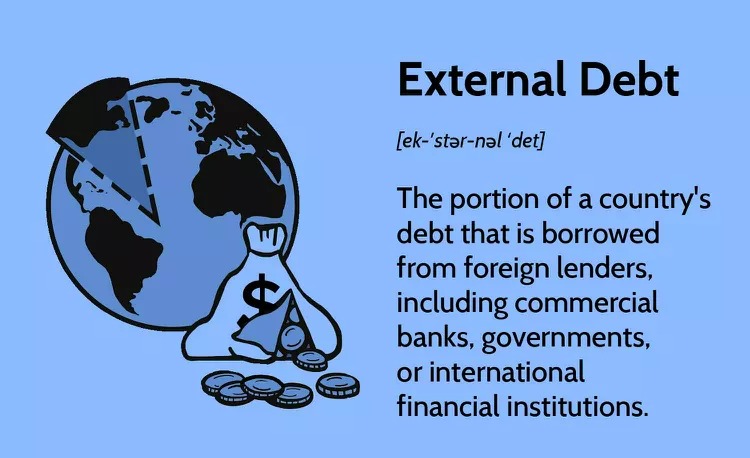
Liberia’s fiscal landscape remains dominated by a persistent and evolving external debt burden, a challenge that sits at the center of the nation’s quest for sustainable economic development. While the narrative of national growth is often framed by infrastructure aspirations and resource potential, the reality of fiscal policy is constrained by the hard mathematics of repayment obligations, interest rates, and institutional capacity. As of 2021, Liberia’s external debt stock was estimated at US$3.6 billion, representing roughly 52.
5% of GDP, a figure that serves as a sobering reminder of the country’s limited fiscal space. This debt is predominantly owed to multilateral creditors, including the World Bank and the International Monetary Fund (IMF), which while generally offering more favorable terms than commercial lenders, nonetheless demand disciplined adherence to rigid macroeconomic frameworks. The implications of this leverage are profound. High external debt creates a 'crowding out' effect, where the government’s necessity to service interest payments consumes revenues that would otherwise be directed toward infrastructure, education, and healthcare.
Furthermore, it creates a fierce competition for scarce capital, as public borrowing crowds out private sector investment—the engine of sustainable growth. The structural vulnerability is compounded by the country’s exposure to external shocks. As a small, open economy dependent on commodity exports, Liberia is hyper-sensitive to global interest rate fluctuations and volatile commodity prices. A sudden shift in the global financial climate can transform a manageable debt profile into a crisis, increasing the risk of debt distress, which would curtail the government's ability to respond to domestic socio-economic challenges.
To mitigate these risks, the Liberian government has pivoted toward a multi-faceted debt management strategy. A core component of this strategy involves prioritizing the issuance of long-term debt with concessional terms—loans characterized by lower interest rates and longer grace periods—thereby smoothing the debt service burden over time. Additionally, Liberia has engaged actively in international debt relief mechanisms, leveraging its relationships with multilateral institutions to reduce the absolute volume of its obligations. These efforts are underpinned by institutional reforms aimed at professionalizing debt oversight.
The establishment of the Debt Management Unit (DMU) within the Ministry of Finance and Development Planning (MFDP) represents a critical step toward systemic improvement. The DMU is tasked with the delicate balance of developing and executing debt strategies while providing granular reporting to the MFDP. This organizational architecture is intended to ensure that borrowing is not merely a reactive measure to fund short-term budgetary gaps, but a strategic tool aligned with the country's long-term economic objectives. Despite these structural improvements, the efficacy of Liberia's debt management remains tested by persistent headwinds.
First, there is the ongoing need to deepen institutional capacity. The DMU, while a significant milestone, is still navigating the complexities of modern public debt accounting and risk analysis; its ability to project long-term fiscal health requires continued human capital development and access to advanced analytical tools. Second, the heavy concentration of debt among a small cohort of multilateral creditors presents a 'single-point-of-failure' risk. Should the policy stances of these multilateral institutions shift, or should the terms of future financing change, Liberia’s lack of a diversified credit portfolio would leave it with few alternatives.
Third, and perhaps most importantly, is the existential challenge of reducing over-reliance on debt financing. The government must transition from a model of borrowing for survival to one of endogenous resource generation. This necessitates a radical improvement in domestic revenue mobilization, including tax base expansion and the formalization of the informal economy. Simultaneously, creating an environment that attracts foreign direct investment (FDI) into non-extractive sectors is essential for building a broader economic base that can withstand external pressures.
The recent trajectory of Liberia’s debt offers a detailed look into these struggles. Data suggests an upward trend in debt accumulation that requires a critical lens. In 2018, the external debt stood at approximately $1.15 billion, rising by 3.
53% in 2019 to $1.26 billion. By 2020, the impact of global instability was evident, with a 15.05% surge pushing the figure to $1.
45 billion. The most aggressive acceleration occurred in 2021, when external debt reached $1.84 billion, a 26.68% year-on-year increase.
This rapid accumulation of obligations—even if managed through multilateral channels—highlights the narrow margin of error policy makers face when balancing development goals with long-term solvency. Historical data from 2009 to 2022 further illustrates the volatility of Liberia’s financial position. The nation has experienced wild swings, from an all-time high of $1.68 billion in the third quarter of 2009 to a historic low of $222.
8 million in the final quarter of 2010—a period reflecting the success of post-conflict debt forgiveness initiatives. Navigating the current environment requires acknowledging that the era of massive, indiscriminate debt relief is likely over; the focus must now shift to rigorous fiscal discipline. Forecasts for the coming years suggest a moderate but steady increase in external debt, trending toward $801 million by 2025. While these projections seem controlled compared to earlier peaks, they mask the qualitative challenges of high-interest environments and the opportunity cost of servicing debt.
For Liberia to navigate this landscape successfully, the government must move beyond mere management and toward strategic debt optimization. This includes the implementation of 'transparency and accountability' protocols in public financial management to reassure creditors and domestic stakeholders alike. Every loan contracted must be scrutinized not only for its immediate impact but for its ability to generate an economic return that exceeds the cost of debt servicing. The nexus between development and debt is not inherently negative; borrowing can be a powerful engine for development if the resulting assets—whether physical infrastructure or human capital—deliver high economic multipliers.
The risk for Liberia is that it continues to borrow for operational expenses rather than transformative growth. Strengthening domestic revenue mobilization is the only viable long-term exit strategy from the debt trap. This requires a robust, digitized tax administration system, the closing of tax leakages in the extractive industries, and an aggressive stance against corruption, which remains a significant drain on potential revenue. Furthermore, Liberia must explore alternative financing models, such as Public-Private Partnerships (PPPs), which can leverage private sector efficiency and capital to deliver public goods without necessarily increasing the sovereign debt stock.
The government’s commitment to sustainable debt management is evident in the policies currently in place, yet the execution remains a complex, high-stakes endeavor. The Ministry of Finance and Development Planning is constantly adjusting to shifting global financial conditions. However, the path forward must include a more transparent public debate about the nature of our debt. Civil society, the media, and independent analysts at platforms like Insights Liberia have a duty to scrutinize these fiscal decisions.
Transparency is the bedrock of credibility in international capital markets; when a nation is open about its challenges and its roadmap for sustainability, it is better positioned to negotiate favorable terms. Ultimately, Liberia’s economic stability rests on its ability to manage its external debt while simultaneously fostering a vibrant, diversified economy. This requires a shift in mindset: moving from seeing debt as a resource to seeing it as a liability that must be strictly governed by the constraints of domestic productivity. As Liberia moves through the mid-2020s, the priority must be to curb the rate of accumulation and improve the efficiency of every dollar borrowed.
The task of securing a stable economic future is a collective responsibility, requiring a government that is both prudent in its fiscal habits and ambitious in its reform agenda. By ensuring that debt sustainability becomes a central pillar of the broader development framework, Liberia can move toward a future where it is the master of its own fiscal destiny, rather than a passenger to the vagaries of international credit markets. The data, the history, and the current challenges all point to one conclusion: the management of external debt is not merely a technical exercise for the DMU, but a foundational requirement for the long-term prosperity of the Liberian people.


