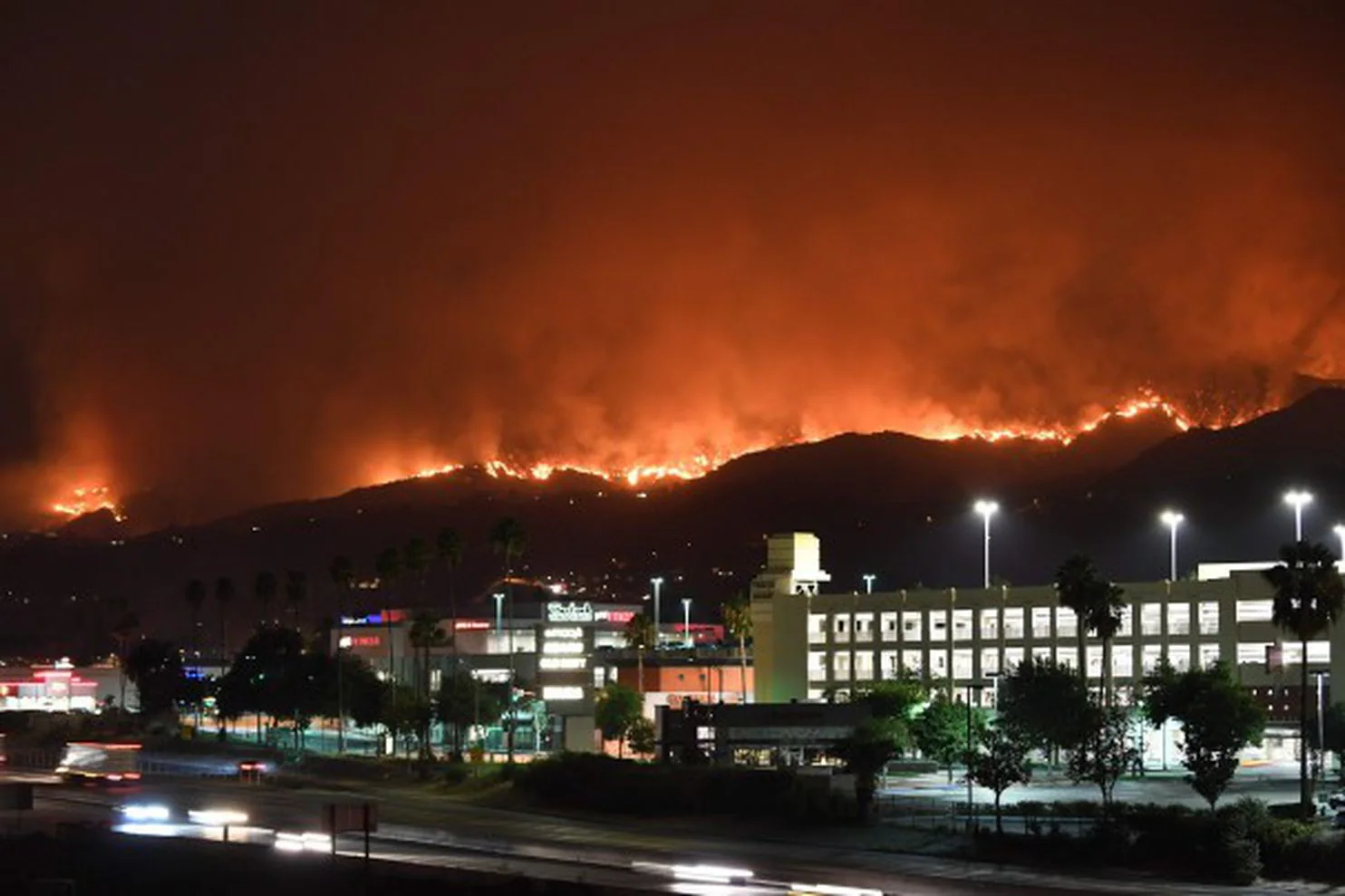
The catastrophic wildfire surge currently engulfing Los Angeles County represents a grim milestone in American disaster history, signaling a profound shift in the seasonal climate dynamics of the Western United States. As of January 11, 2025, the region finds itself in the grip of an unrelenting fire siege, with the Palisades and Eaton fires standing as the most significant threats to public safety and infrastructure. These blazes have already laid waste to over 30,000 acres, obliterated thousands of structures, and claimed the lives of at least 11 individuals, marking an early-year disaster of unprecedented ferocity. For a region historically accustomed to fire seasons peaking in the late summer and autumn, this winter inferno is not merely an anomaly; it is a violent manifestation of a climate-altered reality.
The Palisades Fire, now officially ranked as the third most destructive wildfire in Los Angeles County history, has scorched over 17,000 acres, serving as a chilling reminder of the volatility inherent in current environmental conditions. By comparison, while the 2018 Camp Fire remains the benchmark for California's worst tragedies, the current rapid escalation of property loss is prompting urgent, uncomfortable questions about the state's capacity to protect its urban-wildland interfaces. The destruction of more than 5,000 structures in such a short window underscores an inadequacy in current containment strategies and long-term planning. Initial investigations into the catalysts for this disaster point to a convergence of extreme variables.
Fierce Santa Ana winds—regularly gusting at speeds approaching 100 miles per hour—have acted as an accelerant, while years of persistent, multi-year drought have rendered the regional vegetation into kindling. This 'perfect storm' of atmospheric pressure and dried biomass, fueled further by rising average temperatures, has rendered traditional firefighting methods largely ineffective. Fire Chief Kristin Crowley has been forced to confront the harsh reality of a department stretched to its breaking point. Reporting a 55% surge in call volumes since 2010, the Los Angeles Fire Department is signaling a systemic collapse of infrastructure; the department currently requires 62 new stations simply to maintain parity with the growth of the region.
The crisis has been further compounded by reports of infrastructure failures, including dry hydrants and localized water shortages, which have severely hampered frontline efforts. These logistical failures suggest that the underlying utility infrastructure of Los Angeles is failing to meet the demands of a modern, climate-impacted era. The economic ramifications are, in a word, staggering. Financial analysts at AccuWeather have issued preliminary projections estimating that total economic losses—spanning direct property destruction, commercial disruption, and the collapse of local tourism—could range between $135 billion and $150 billion.
Such a sum represents a significant hit to the regional economy and forces a rethink of insurance risk modeling and municipal resilience funding. This disaster must be viewed through a global lens, particularly by nations grappling with similar challenges in resource-constrained environments, such as Liberia. In Liberia, where the intersection of deforestation, changing weather patterns, and the urgent need for economic development creates a volatile landscape for fire risk, the Los Angeles tragedy provides a harrowing blueprint of what happens when urban development precedes adequate public safety infrastructure. Data from 2024 indicates that approximately 30.
16% of Liberia’s population is now exposed to wildfire risk, a sharp escalation from the 9.63% seen in previous years. While the economic scale of the Los Angeles fire is vastly different from the socioeconomic profile of Liberia, the fundamental lesson remains universal: reactive firefighting is no longer a sustainable policy. The structural shortcomings seen in Los Angeles—specifically the failure of water pressure and the lag in institutional preparedness—find echoes in regional Liberian issues, such as the persistent struggle in Foya to manage forest fires.
Furthermore, the reliance on specialized investigative bodies like the ATF to analyze the origin of the Los Angeles fires mirrors the urgent need for Liberia to bolster its forensic and fire-investigative capacities. Following the recent, highly sensitive fire at the Liberian parliament building, it has become evident that fire safety is not merely a public service matter but a core component of political and institutional stability. The inability to adequately manage fire risks, whether in a high-tech metropolis or a developing administrative hub, threatens to destabilize local government and damage public trust. Urban planning and the enforcement of building codes have become critical fronts in the battle against climate-induced destruction.
Los Angeles' struggle with residential infiltration—where wildfires move seamlessly into dense suburbs—should serve as a masterclass for Liberian urban planners. As Liberia undergoes rapid urbanization, the design of new districts must integrate 'defensible space' principles and robust, localized water storage to prevent similar cascading failures. Moreover, community engagement stands as the most cost-effective tool in the mitigation toolkit. By educating the public on land management and the importance of clearing vegetation around critical infrastructure, both the state of California and the nation of Liberia can begin to flatten the curve of fire vulnerability.
The path forward is undoubtedly complex, requiring a multi-pronged approach that transcends national boundaries. We must shift our focus from rapid response to proactive mitigation, investing heavily in early warning systems, fire-hardened infrastructure, and a more rigorous approach to city planning. Furthermore, the ideological debate over climate change must be translated into material action. As Southern California experiences these 'out-of-season' fire events with greater regularity, and as West African nations deal with shifting rainfall patterns that exacerbate fire risks, it is clear that we are living in a shared era of environmental instability.
The Los Angeles fires of 2025 are not just a local crisis; they are a warning to every municipality globally that the old ways of managing environmental hazards are no longer sufficient. International cooperation on technical capacity building, sharing of satellite-based fire monitoring technologies, and collaborative research into fire-retardant building materials are essential. Without these, we risk repeating the failures seen in this winter’s catastrophe. As the embers of these fires eventually fade, the long-term impact on global risk policy will be defined by whether we choose to treat these events as outliers or as the new standard by which all future infrastructure must be measured.
The total bill for this disaster will be paid not just in billions of dollars, but in the lost stability of our climate and the forced evolution of our civil society. Insights Liberia remains committed to tracking these developments, ensuring that the hard-won lessons from the fires of Los Angeles are distilled and applied to strengthen our own resilience in the face of an uncertain, warming future. We invite our readers to consider the implications of these global trends on our domestic policy; the time for passive observation has passed, and the era of structural preparation must begin.