
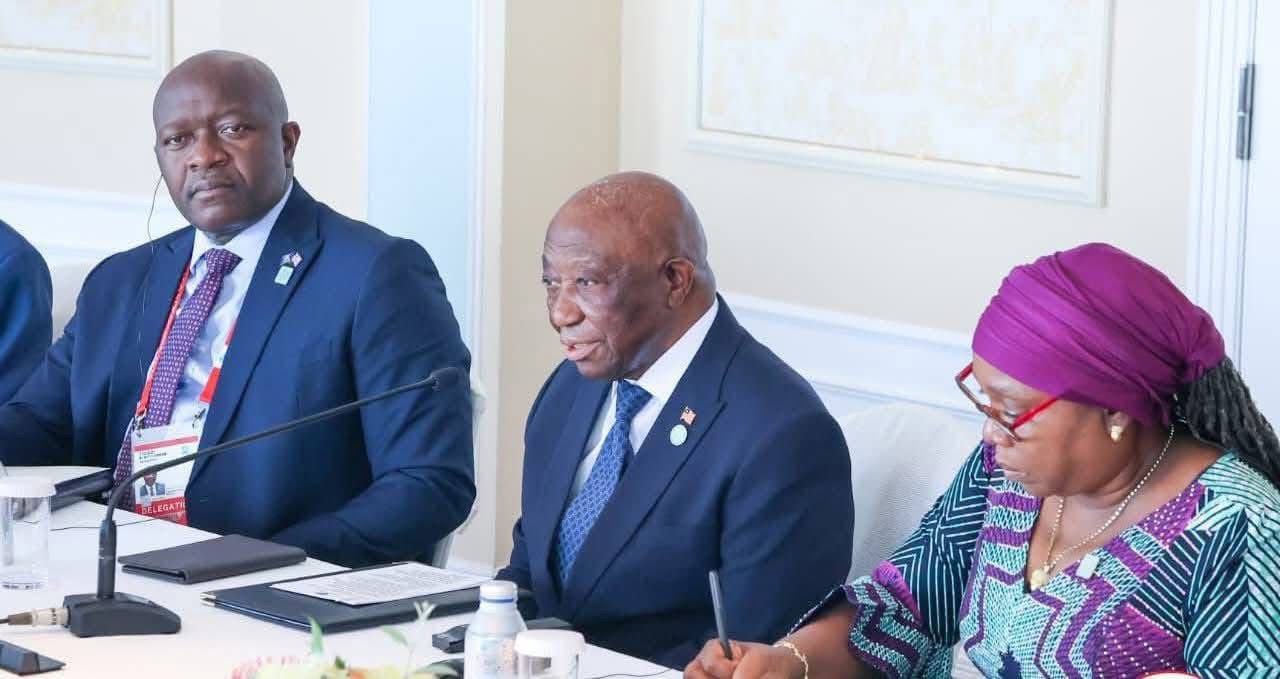
In the gilded halls of the Tokyo International Conference on African Development (TICAD 9), the Liberian delegation, spearheaded by President Joseph Boakai, Finance Minister Augustine Ngafuan, and Foreign Minister Sara Beysolow Nyanti, returned to Monrovia projecting an aura of renewed optimism. The government has heralded a raft of promises from Tokyo, framing them as a transformative breakthrough in bilateral relations. These commitments, encompassing critical infrastructure projects, agricultural advancement, and vocational training, are being presented as the engine room for the Boakai administration’s 'ARREST' agenda. Yet, beneath the diplomatic pomp and the meticulously crafted press releases, a familiar skepticism lingers—a sentiment born from decades of high-level summits that have frequently yielded more in rhetorical flourish than in tangible, ground-level progress.
As Liberia navigates its precarious economic path, the gap between the promise of Japanese investment and the harsh reality of implementation serves as a diagnostic test for the current administration’s capacity to secure and operationalize international partnerships. The pledges made at TICAD 9, which include feasibility studies for a modernized Monrovia airport corridor, the rehabilitation of port facilities, expanded scholarship quotas for Liberian students, and significant health sector investments, arrive at a pivotal moment. Under the stewardship of Japanese Prime Minister Shigeru Ishiba, Tokyo has signaled a renewed Africa drive, aiming to shift the narrative from traditional aid to private sector-led growth and climate resilience. For Liberia, the allure lies in access to a $5.
5 billion funding window specifically earmarked for African businesses and Japan’s impact investment funds. These resources are theoretically designed to bolster the private sector, yet the history of foreign direct investment in Liberia suggests that structural impediments—ranging from institutional corruption and regulatory opacity to a lack of skilled labor—have historically stifled such ambitions. The historical context of Liberia-Japan relations is marked by sporadic engagement that has rarely reached the depth of Chinese or American influence. Unlike the aggressive, project-focused approach of Chinese contractors who have rapidly reshaped the urban landscape, Japanese engagement has traditionally been characterized by methodical, often painstakingly slow, diplomatic processes.
While Japanese aid is often lauded for its quality and technical rigor, it is frequently criticized by local stakeholders for its bureaucratic inertia. Veterans of previous summits in the TICAD cycle—a process that began in 1993—point to a recurring pattern: ambitious communiqués followed by long periods of silence, where projects remain indefinitely trapped in the 'feasibility study' phase. For a nation like Liberia, which grapples with the legacies of two civil wars and persistent underdevelopment, the distinction between a feasibility study and a shovel-in-the-ground project is the difference between genuine economic progress and symbolic governance. The economic and social implications of these promises cannot be overstated.
With a youth unemployment rate that borders on the critical, the mention of 500 vocational training slots under Japan’s Africa-wide skills program is a step in the right direction, though it remains a drop in the ocean compared to the sheer scale of the demographic challenge. Furthermore, the focus on climate-resilient rice trials in Bong and Lofa counties speaks to the urgent need for food security in a country that remains heavily reliant on imported staples. As climate change threatens the agricultural output of rural heartlands, the collaboration on coastal erosion management is equally vital, given the existential threat posed to Monrovia by the rising Atlantic. However, the $72 million funding proposal currently under review in Tokyo remains a litmus test for the Boakai administration’s credibility.
For the Liberian government to avoid the pitfalls of past administrations, it must demonstrate a level of administrative efficiency that has been historically elusive. Recognizing this, Monrovia has announced the establishment of a special desk to monitor TICAD pledges—a move that suggests an awareness of the need for better project tracking. But a desk is merely a mechanism; true progress requires the political will to manage donor relations with a surgical focus on transparency and result-oriented delivery. The broader regional significance of Japan’s move in Liberia must also be viewed through the lens of shifting geopolitical alliances.
As major powers jostle for influence across the African continent, Japan is positioning itself as an alternative to the debt-trap narratives often leveled at Chinese investment, and the aid-dependency models of the West. Japan offers a 'quality infrastructure' model, emphasizing sustainability and local human capital development. For Liberia, successfully leveraging this partnership would not only provide a much-needed injection of capital but also serve as a vital signal to other international investors that the country is open for business under a stable, capable framework. Nevertheless, the risk remains that these commitments will become merely another entry in a long ledger of forgotten promises.
Investors, both Japanese and local, have historically been wary of the risks associated with the Liberian business environment. Without profound improvements in contract enforcement, electricity reliability, and ease of doing business, even the most generous Japanese funding will struggle to find a landing spot in the local economy. The Boakai administration’s emphasis on these commitments suggests they are banking on international partnerships to provide the fiscal breathing room needed to implement their national development plan. If they succeed, they could create a blueprint for how Liberia engages with foreign partners in the future.
If they fail, they will likely be remembered for having fallen into the same trap as their predecessors: prioritizing the symbolism of international diplomacy over the grit required for domestic development. The next twelve to eighteen months will be critical. If the feasibility studies transition into concrete work plans and if the scholarship programs begin to place students, the 'TICAD 9 effect' may indeed prove to be the breakthrough the government claims. But until the first stone is laid on the airport corridor or the first Japanese-funded firm opens its doors in Monrovia, the public is right to view these announcements with the caution of a weary traveler who has seen many promises paved with good intentions but few with actual concrete.
Ultimately, the success of this initiative rests on the government's ability to transcend its own institutional inertia. The foreign ministry’s optimism is understandable, but the real audit of these proceedings will not happen in the conference centers of Tokyo, but in the markets of Bong, the ports of Monrovia, and the vocational centers tasked with training a generation of Liberians. The government has set the stage; now, the more difficult work of performance begins.
