
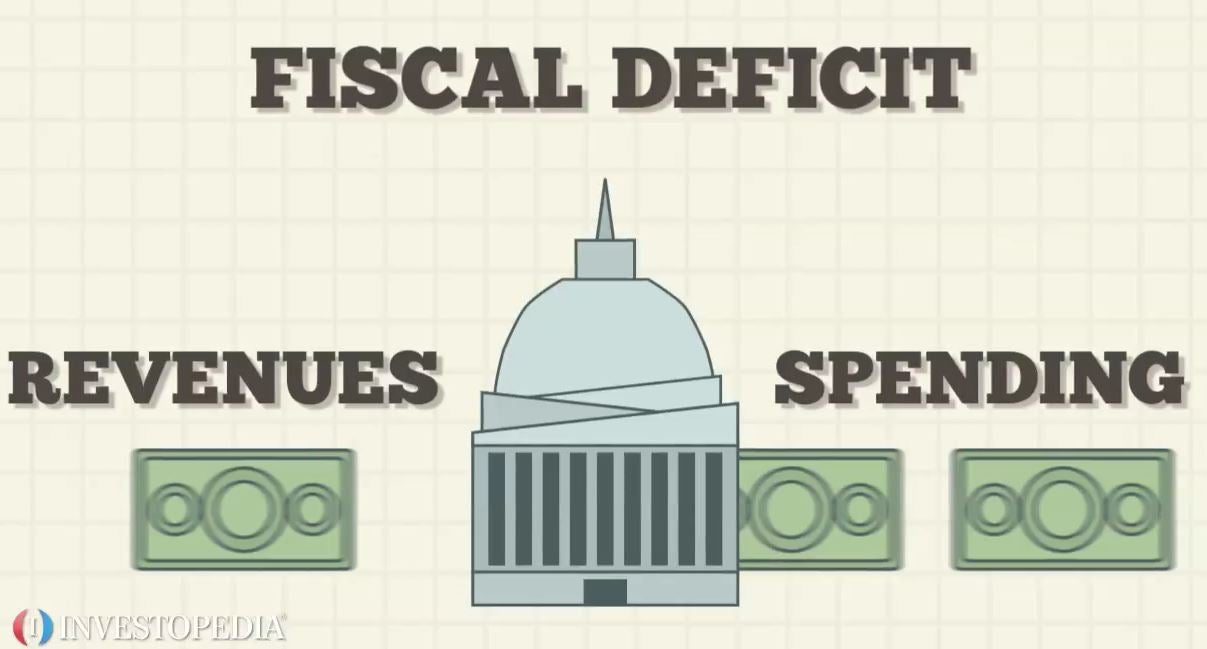
Fiscal policy serves as the bedrock of macroeconomic management, functioning as the vital mechanism through which a government wields its powers of taxation and public expenditure to shape the contours of its national economy. In the context of the Republic of Liberia, fiscal policy has evolved into a complex, often daunting challenge, characterized by chronic fiscal deficits and a burgeoning public debt portfolio that threatens the nation's fragile path toward sustainable development. As Liberia seeks to transition from its post-conflict recovery phase to a period of genuine, inclusive economic growth, the limitations of its current fiscal framework are becoming increasingly apparent, necessitating a profound re-evaluation of how the state collects its revenue and deploys its limited resources. The fiscal landscape of Liberia has been historically turbulent, shaped by deep-seated structural issues and the enduring legacy of systemic fragility.
According to data provided by the World Bank, the nation witnessed a fiscal deficit of 3.9% of GDP as recently as 2019, while the public debt-to-GDP ratio stood at a concerning 44.6%. These indicators, while seemingly abstract, translate into real-world constraints: the government consistently spends beyond its means, creating an unsustainable reliance on domestic and international borrowing.
This dependency is not merely a modern oversight but is deeply rooted in a tax system that remains heavily reliant on volatile import duties, trade-related fees, and concessions, leaving the national treasury exposed to the vagaries of global market fluctuations and domestic logistical bottlenecks. The reliance on such an unpredictable tax base creates a precarious fiscal environment where the ability to fund essential public services—education, healthcare, and infrastructure—is frequently undermined by revenue shortfalls. One of the most critical areas requiring urgent attention is the modernization of Liberia's tax regime. For decades, the administrative capacity to broaden the tax net has been hampered by an expansive informal sector that remains largely outside the reach of the Liberia Revenue Authority.
By transitioning away from the current over-reliance on volatile import duties and toward a more comprehensive, digital-enabled domestic resource mobilization strategy, the government could effectively stabilize its revenue streams. Such a reform would not only reduce the dependency on borrowing to cover budget deficits but would also create a predictable fiscal cushion, allowing for long-term strategic planning. Complementing this is the dire need for rigorous expenditure management. In many circles of governance in Monrovia, public expenditure is frequently critiqued for its lack of efficiency and the persistence of systemic waste.
The leakage of funds through procurement irregularities and inflated administrative costs remains a significant deterrent to economic stability. Implementing robust, technologically driven mechanisms for tracking and monitoring public expenditure is not just a technocratic necessity; it is a political imperative. By promoting transparency and institutionalizing accountability in government spending, the state can restore public trust and ensure that every dollar collected from the taxpayer is directed toward developmental outcomes. The broader context of Liberia's fiscal misery cannot be detached from its history.
The devastating civil conflict that spanned from 1989 to 2003 obliterated the nation's productive capacity, destroyed its physical infrastructure, and led to a profound exodus of human capital. Even years after the cessation of hostilities, the administrative systems required to manage a modern economy remain in a state of perpetual reconstruction. This historical trauma is compounded by the lingering shocks of the 2014-2016 Ebola epidemic, which decimated local markets and diverted critical government revenue toward emergency response. Furthermore, the inherent vulnerabilities of a commodity-dependent economy, such as Liberia’s reliance on the export of iron ore and rubber, mean that the country is perpetually at the mercy of global price volatility.
When international commodity prices plummet, as they have periodically in the last decade, the shock to Liberia’s national revenue is immediate and severe, exacerbating the fiscal deficit. The consequences of these deficits are far from benign. As the government continues to rely on deficit financing, the accumulation of debt exerts a crowding-out effect, where the government’s borrowing appetite drives up interest rates, thereby discouraging private sector investment and stifling economic growth. High debt servicing costs also mean that a significant portion of the annual budget is diverted away from critical investments—such as rural electrification, agricultural modernization, and human resource development—to pay interest to creditors.
This creates a vicious cycle: limited investment leads to stagnating growth, which in turn necessitates further borrowing. Moreover, the risks associated with high debt levels go beyond immediate economic stagnation; they increase the long-term risk of debt distress, potentially limiting Liberia’s access to international credit markets when it is needed most. To navigate these challenges, the path forward must be multi-pronged. First, revenue generation must be prioritized through a fairer, more expansive tax policy that captures the growth currently hidden within the informal sector while incentivizing genuine private investment.
Second, the government must adopt an uncompromising stance on fiscal discipline, cutting non-essential expenditures and optimizing public investment projects to ensure they yield a measurable return on investment. Third, debt restructuring must be handled with strategic foresight, ensuring that the government’s debt obligations are aligned with its long-term revenue-generating capacity rather than short-term political exigencies. Finally, while foreign aid has historically played a massive role in bridging Liberia’s fiscal gaps, the ultimate goal must be the reduction of this reliance in favor of sustainable, domestic resource mobilization. The regional significance of Liberia’s economic health cannot be understated.
As a member of the Mano River Union and ECOWAS, Liberia’s stability has spillover effects for the entire West African sub-region. A fiscally sound Liberia is a more reliable trade partner and a contributor to regional security. Conversely, a perpetually struggling economy risks internal social tension and instability. The transition to a resilient fiscal model is not just a matter of economic accounting; it is a fundamental pillar of national sovereignty.
The government’s ability to manage its finances effectively is the ultimate test of its social contract with the people of Liberia. Ensuring that fiscal policy serves the interests of the collective, rather than narrow elite interests, is the core challenge of the current political era. The road to reform is undoubtedly steep, requiring political courage to confront entrenched interests and administrative stamina to implement complex reforms. However, the costs of inaction—continued economic volatility, high public debt, and the persistent erosion of public welfare—are far higher.
By fostering a culture of fiscal responsibility and investing in the institutions that oversee the nation’s wealth, Liberia can eventually break the chains of its fiscal deficits and secure a future characterized by sustainable growth, stability, and shared prosperity for all its citizens.
