
The Liberian political landscape is currently navigating what legal scholars and civil society actors describe as the most precarious moment in the nation’s post-war history. At the epicenter of this volatility is the House of Representatives, where a protracted standoff concerning the leadership of Speaker J. Fonati Koffa has transcended mere internal legislative squabbling to become a systemic test of the rule of law. As noted by astute observers like Charlene Brumskine, the current paralysis is not merely a clash of personalities but a fundamental assault on the institutional integrity that underpins Liberia’s fragile democracy.
The crisis exposes a profound tension between the necessary agility of political maneuver and the rigid, non-negotiable requirements of the rule of law. To understand the gravity of this moment, one must look beyond the partisan rhetoric and analyze the Standing Rules of the 54th Legislature, which serve as the bedrock of legislative legitimacy. These rules, deriving their authority from Article 38 of the Liberian Constitution, were meticulously crafted to ensure stability, decorum, and the equitable distribution of power. They are the guardrails of democracy, yet they are currently being stress-tested by forces that appear to prioritize political expediency over constitutional fidelity.
The Standing Rules are designed to prevent the House from devolving into a theater of arbitrary power. Rule 9.1, for instance, sets an uncompromising bar for the removal of the Speaker or Deputy Speaker, requiring a two-thirds majority and a proven 'cause.' This high threshold is not a bureaucratic hurdle; it is a vital mechanism of checks and balances meant to insulate the leadership from the shifting tides of political favor and to ensure that the legislative branch remains a stable institution capable of serving the public interest.
When these rules are circumvented or ignored, the legitimacy of every action taken by the House is thrown into doubt. The events of November 21, 2024, serve as a stark case study in the dangers of ignoring these procedural requirements. The attempt to force a leadership change without regard for the established protocols of quorum, debate, and the requisite majority vote represents a departure from the rule of law that threatens the very foundation of the Republic. Rule 12.
1 mandates that a quorum—a simple majority of members—is a prerequisite for the transaction of any legislative business. Should a faction of the House proceed with critical decisions in the absence of a legal quorum, they are not merely breaking a rule; they are undermining the collective agency of the Liberian people. Furthermore, Rule 19.4 requires that significant measures, such as the removal of a Speaker, be conducted via a recorded roll call vote.
This requirement is rooted in the principles of transparency and accountability. By documenting each member's vote, the legislature ensures that representatives remain answerable to their constituents. Bypassing this process to achieve a desired outcome is a direct challenge to the democratic principle that power must be exercised openly and for defensible reasons. Beyond the mechanics of voting, the spirit of the House is maintained through Rule 22.
6, which prohibits the imputation of unworthy motives during debate. The recent climate of hostility, characterized by personal vitriol rather than substantive policy discussion, suggests a decline in the standard of legislative conduct that the Standing Rules were specifically designed to prevent. When members resort to character assassination rather than reasoned debate, the House loses its status as a deliberative body and risks becoming a tool for political retribution. As the legislature stumbles through this crisis, the role of the Supreme Court emerges as the final, and perhaps only, arbiter of constitutional order.
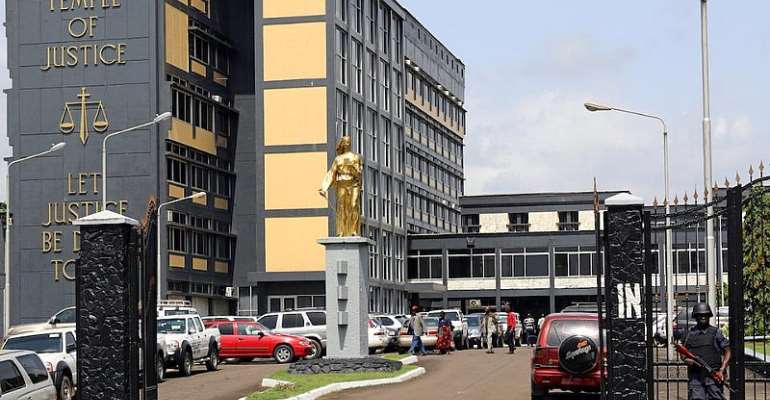
While the Standing Rules of the 54th Legislature do not explicitly reference the judiciary, Article 66 of the Liberian Constitution places the Supreme Court as the final authority on all constitutional issues. The Court’s intervention is not an act of judicial overreach; it is the fulfillment of its mandate to protect the constitutional framework that keeps the branches of government in balance. In the current conflict, the Supreme Court has the authority—and arguably the responsibility—to examine whether the House has operated within the boundaries of Rule 9.1 and Rule 12.
- If the Court determines that the removal process lacked the requisite legal quorum or the proper procedural safeguards, its ruling would serve as a crucial correction, reinforcing the principle that no institution, regardless of its legislative status, is above the fundamental law of the land. This judicial role is particularly essential for setting a precedent. If the House is allowed to establish a norm where leadership can be removed through opaque and procedurally unsound means, it will irrevocably weaken the office of the Speaker and set the stage for future cycles of instability.
The Supreme Court’s intervention would provide the necessary clarity to resolve the current impasse and prevent similar crises from paralyzing the government in the future. Drawing insights from the global theater, Liberia is not alone in grappling with these tensions. In 2023, the High Court of Kenya intervened to halt the removal of Speaker Moses Wetangula, ruling that the parliamentary process failed to meet constitutional standards of fairness and procedure. This case served as a reminder to the international community that parliamentary processes are subject to the same constitutional scrutiny as any other form of governance.
The Kenyan experience validates the assertion that the judiciary remains a critical safeguard for parliamentary democracy. Similarly, challenges in other democratic jurisdictions, such as Canada’s parliamentary discourse, highlight that the integrity of a speaker’s office is essential for the smooth functioning of a democratic state. These global examples underscore a universal truth: democracy relies on the willingness of political actors to subject their ambitions to the rule of law. When political factions prioritize the 'game' over the 'law,' they erode the trust of the citizenry.
The current standoff in Liberia is a wake-up call for all political stakeholders. It is an opportunity to recommit to the spirit of the constitution and to recognize that the strength of a nation lies not in the success of any single faction, but in the durability of its institutions. To move forward, the House must return to the procedures outlined in its own Standing Rules. This requires a transparent, roll-call-based process that honors the quorum and provides for legitimate debate.
It requires a move away from the current politics of exclusion and toward a legislative environment defined by respect and accountability. For the people of Liberia, this crisis is a litmus test of their democracy’s resilience. It asks a fundamental question: does Liberia belong to a system of laws that apply to all, or to a system of power that bends the rules to suit the moment? The future stability, peace, and development of the nation depend entirely on the answer.
A legislature that disregards its own rules eventually loses the trust of the people it serves, and a democracy without trust is merely a fragile shell. Now is the time for a restoration of decorum. It is time for the political elite to step back from the brink of total institutional breakdown and prioritize the long-term health of the state over short-term partisan victories. The eyes of the Liberian people and the international community are fixed upon the Capitol.
The message is clear: the rule of law is the only legitimate pathway to power, and the democratic process must be protected with unwavering commitment. Anything less is a betrayal of the post-war peace that so many have sacrificed to build.
