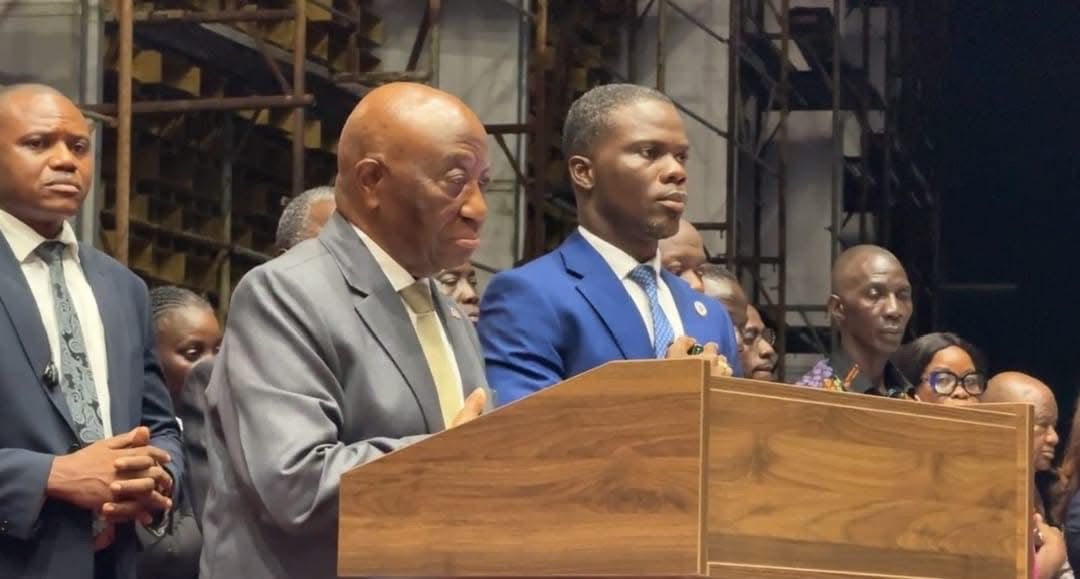
President Joseph Nyuma Boakai’s recent announcement regarding Liberia's eligibility for a Millennium Challenge Corporation (MCC) compact has sparked significant optimism across the Liberian political and economic landscape. For a nation grappling with the echoes of historical civil strife, the persistent struggle for infrastructural development, and the urgent need for structural economic reform, the possibility of securing a second compact is more than just a fiscal milestone—it is a symbolic testament to the nation’s democratic trajectory. However, as the fervor of the announcement settles, it is imperative for the Liberian public, policymakers, and private sector stakeholders to understand that eligibility is not synonymous with the automatic infusion of capital. It is, in reality, a cautious invitation into a grueling, multi-year process of negotiation, rigorous compliance, and institutional transformation.
Being declared eligible means Liberia has demonstrated measurable progress on the MCC’s stringent scorecard, which assesses governance, economic freedom, and investments in human capital. Yet, as history has shown, the gap between eligibility and the final disbursement of funds is where the true test of political will lies. The Millennium Challenge Corporation, an innovative and independent U.S.
foreign aid agency, operates on a philosophy that diverges from traditional aid. Rather than offering open-ended grants, the MCC focuses on country-led solutions to address the most binding constraints to economic growth. By passing at least 10 of the 20 indicators—including the critical “hard hurdles” such as the control of corruption and the protection of democratic rights—Liberia has signaled to the international community that its governance architecture is beginning to align with global standards of accountability. These scorecards are not merely arbitrary metrics; they are reflections of a country’s commitment to the rule of law, gender equity, and fiscal transparency.
The Boakai administration’s current focus on internal audits, asset recovery initiatives, and the establishment of anti-corruption task forces has undoubtedly bolstered the nation’s standing in Washington. However, the MCC Board of Directors remains the final arbiter, evaluating Liberia based not only on these static numbers but on the long-term feasibility of proposed projects and the host government’s demonstrated capacity to sustain them. If selected, Liberia will embark on a development journey that is expected to span several years, involving extensive stakeholder consultations, deep-dive technical analyses, and environmental and social impact assessments. This is not a project that can be rushed to meet political cycles; it is a marathon of bureaucratic precision.
Throughout this period, the nation is under a permanent microscope. Liberia must maintain, and ideally improve, its performance on the scorecard. The MCC is notoriously sensitive to political backsliding; a decline in governance indicators, a surge in corruption, or the erosion of democratic institutions can jeopardize the compact in its entirety. For a country navigating a complex post-conflict recovery, the stability of these governance metrics is paramount.
The stakes are particularly high because this would be Liberia’s second compact. The MCC maintains significantly higher standards for subsequent agreements, demanding proof that the first compact—which included the transformative rehabilitation of the Mount Coffee Hydropower Plant—was not only managed effectively but also serves as a foundation for sustainable, market-led growth. The Mount Coffee project stands as a shining example of what is possible when international investment meets local commitment. By reducing electricity costs from over $0.
50 per kWh to $0.35 per kWh, the project helped lower the barrier to entry for small and medium-sized enterprises and improved basic living standards for countless households. However, the success of the first compact also created a baseline expectation of excellence. Future projects will be scrutinized with greater intensity to ensure they yield proportional economic dividends.
For the ordinary Liberian, the promise of an MCC compact translates into a hope for better roads, more reliable energy, and improved health and education systems. Yet, citizens must maintain a posture of informed skepticism and active vigilance. Development aid, while crucial, can become a source of fiscal distortion if not coupled with rigorous domestic resource mobilization. The government’s narrative of progress must be balanced with transparent reports on how existing budgets are allocated and how the current anti-corruption measures are impacting the grassroots level.
Accountability is the oxygen of the MCC process. If the government’s efforts to reform the civil service, strengthen the judiciary, and enhance public procurement are merely performative, the MCC will eventually withdraw its support. The history of Liberia’s governance is replete with grand promises that withered under the weight of implementation failure. To maximize the benefits of this potential opportunity, the Boakai administration must address the systemic weaknesses that persist in education, health, and judicial independence—sectors where the scorecard often reveals significant fragility.
Regional significance cannot be overstated; Liberia’s ability to secure and successfully manage a second compact would position it as a democratic beacon in the West African sub-region, a space currently characterized by political volatility and the erosion of constitutional norms. By demonstrating that democratic consolidation and economic development are mutually reinforcing, Liberia can provide a model for its neighbors. Conversely, failure to maintain the standards required for the compact could signal a lack of institutional maturity, potentially cooling private investment sentiment. Furthermore, the economic implications are profound.
A compact typically directs funding into sectors that unlock private sector investment. This means moving beyond subsistence-level initiatives toward structural reforms that allow for regional trade, energy self-sufficiency, and the digitalization of the economy. The MCC’s model is designed to facilitate this, but it requires a counterpart government that is willing to accept hard truths about its own inefficiencies. The public must be involved in this process.
Civil society organizations, the press, and academia play a vital role in monitoring the development of the compact. Citizens should demand regular town halls, open access to feasibility studies, and a clear roadmap for how these potential funds will trickle down to the most marginalized communities. The government’s commitment to transparency should be measured by the ease with which information is shared with the public, not by the intensity of rhetoric. In conclusion, President Boakai’s announcement is a positive signal that Liberia is heading in the right direction, but the hard work lies ahead.
Eligibility is the prologue, not the climax of the story. The path to a second MCC compact requires a relentless pursuit of transparency, a proactive approach to economic reform, and an unwavering commitment to the democratic ideals that the MCC demands. For Liberia, this is not just about securing millions in grant funding; it is about reclaiming the nation’s integrity and proving that it can build, manage, and sustain a future that is worthy of the aspirations of its people. As we move forward, the vigilance of the Liberian people will be the ultimate safeguard of this potential investment, ensuring that the promise of progress remains a reality for all.