
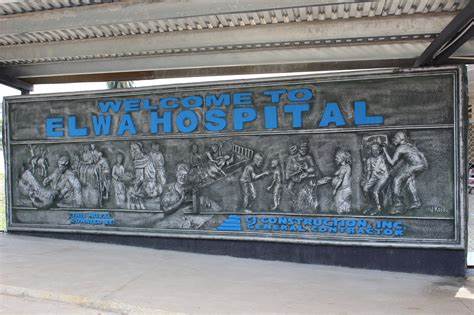
Liberia's battle against the HIV/AIDS epidemic has reached a harrowing crossroads. ELWA Hospital, an institution that has served as a beacon of medical hope in Monrovia since its founding in 1965, has sounded an urgent alarm that reverberates far beyond its campus. As of January 31, 2025, the hospital has been forced to enact a devastating halt to its critical HIV/AIDS services. This operational paralysis, stemming from the abrupt cessation of USAID funding, threatens to undo decades of painstaking progress in public health and leaves hundreds of patients in a state of medical limbo.
For a nation still grappling with the lingering ghosts of a 14-year civil war and the traumatic legacy of the 2014 Ebola outbreak, this sudden lifeline severance is more than just a logistical failure; it is a profound blow to the fragile architecture of the Liberian healthcare system. The crisis at ELWA, a pillar of the ELWA Ministries, is not merely a bureaucratic hiccup; it is a humanitarian emergency that demands immediate national and international attention. Since 2002, when ELWA integrated comprehensive HIV care into its mission, it has functioned as a primary conduit for essential services including antiretroviral therapy (ART), viral load monitoring, and preventative outreach. The loss of these services creates a vacuum that the state, already stretched to its limit, is currently ill-equipped to fill.
The ripple effects are immediate: medication shortages are reaching critical thresholds, and, perhaps most disturbingly, the total depletion of pediatric and infant HIV supplies has left the most vulnerable among us—children born with or exposed to the virus—without a path to survival. This collapse of care jeopardizes the country’s stated commitment to the National HIV and AIDS Strategic Plan (2021-2025), which aims to reduce new HIV infections to fewer than 190 per year by the end of 2025. With the diagnostic pipeline broken, the trajectory toward this goal is no longer a path of progress, but a precipice of decline. The historical context of HIV in Liberia cannot be ignored when analyzing this catastrophe.
In the early 2000s, HIV prevalence in Liberia was surging, exacerbated by the social disintegration caused by the civil conflict. Through a massive, donor-dependent mobilization involving the United States President’s Emergency Plan for AIDS Relief (PEPFAR) and various international NGOs, Liberia managed to pull back from the brink. The prevalence rate in the general population dropped from approximately 2.1% in 2013 to 1.
1% by 2020. This progress was not an accident of geography; it was the result of a deliberate, sustained partnership between local institutions like ELWA and global donors. However, this history also reveals the structural Achilles' heel of Liberia’s health sector: a paralyzing dependence on foreign aid. When USAID and other international partners shift funding priorities or experience administrative delays, the institutions that rely on them become suddenly, catastrophically vulnerable.
The ELWA case is a stark illustration of the dangers inherent in a model where a hospital’s ability to provide life-saving medication is tethered to the fluctuating budgetary cycles of a foreign government thousands of miles away. The social and gendered implications of this disruption are equally alarming. Data consistently indicates that women and girls in Liberia bear a disproportionate burden of the epidemic. Prevalence among young women aged 15-24 remains three times higher than their male counterparts.
This gender disparity is rooted in deep-seated socioeconomic factors, including limited access to education, economic marginalization, and entrenched gender-based violence. When HIV services are suspended, the burden of managing health crises often falls back on these same women, who may be forced to forgo treatment to care for their families or move to more distant, expensive providers. Furthermore, the interruption of mother-to-child transmission prevention programs creates an immediate danger of vertical transmission, potentially condemning a new generation to a preventable infection. The regional significance of this crisis cannot be understated.
As the Mano River Union bloc continues to work toward integrated health security, the collapse of a key facility like ELWA undermines regional stability. Health is a bedrock of human security, and when a cornerstone of the national response fails, it signals a systemic instability that can discourage private investment, affect workforce productivity, and strain the already limited capacity of the Ministry of Health. The situation is further complicated by the acute shortage of HIV test kits. Without the ability to diagnose, the disease remains hidden, spreading silently through communities.
Moreover, the inability to properly screen blood for transfusions creates a secondary risk to the general public, potentially turning a viral epidemic into a broader medical crisis that affects trauma victims, surgical patients, and expectant mothers regardless of their HIV status. Despite the overwhelming darkness of this moment, a sliver of light remains in the form of the healthcare workers themselves. The staff at ELWA, alongside personnel from FHI 360, have continued to work in a volunteer capacity, maintaining a baseline of care despite having no budget to support their efforts. This dedication is a testament to the character of the Liberian medical community, but it is not a sustainable solution.
Resilience, while a noble trait, is a poor substitute for structural funding and systemic support. The National AIDS Control Program (NACP) and the Liberian Ministry of Health are currently in dialogue to address this funding gap, but as of now, there is no set timeline for the restoration of the U.S. PEPFAR support that has been the lifeblood of these programs.
This delay is inexcusable for those who have run out of pills. Moving forward, the conversation must shift from reactionary measures to long-term sustainability. The reliance on external funding has created a fragile equilibrium that can be shattered by a single policy pivot from a donor nation. Liberia must urgently explore locally-driven solutions, including increased domestic resource mobilization and public-private partnerships that do not depend solely on international benevolence.
The government must treat health funding not as an optional expenditure, but as a core component of national sovereignty and security. The international community, meanwhile, has an ethical obligation to ensure that transitions in funding do not lead to the loss of human life. A phased withdrawal of aid, combined with aggressive capacity-building for local institutions, would have been a more humane and effective approach. Instead, patients at ELWA are left waiting for a miracle that should be provided through sound policy.
The goal of ending the HIV epidemic by 2030, a promise made by nations across the globe, remains a distant mirage if individual countries cannot guarantee the basic continuity of antiretroviral treatment for their citizens. The ELWA Hospital crisis is a siren call for a total reevaluation of how health aid is delivered in the developing world. Without deep, structural reform, the progress made over the last twenty years is at risk of being completely erased, leaving the most vulnerable in our society to pay the highest price for administrative failure.