
The passage of the 2025 National Budget in Liberia has emerged not merely as a routine legislative exercise, but as a defining flashpoint in the nation’s post-war democratic trajectory. As the country grapples with the complexities of economic recovery and governance reform, the $880 million fiscal plan has been ensnared in a web of procedural chaos, institutional rivalry, and constitutional ambiguity. This year’s budget cycle stands as a stark departure from established norms, leaving observers and citizens alike questioning the legitimacy of the process and the resilience of Liberia’s separation of powers. At the heart of this turmoil is a deep-seated leadership crisis within the House of Representatives, where a faction of lawmakers—the so-called 'Majority Bloc'—has engaged in a protracted attempt to unseat Speaker J.
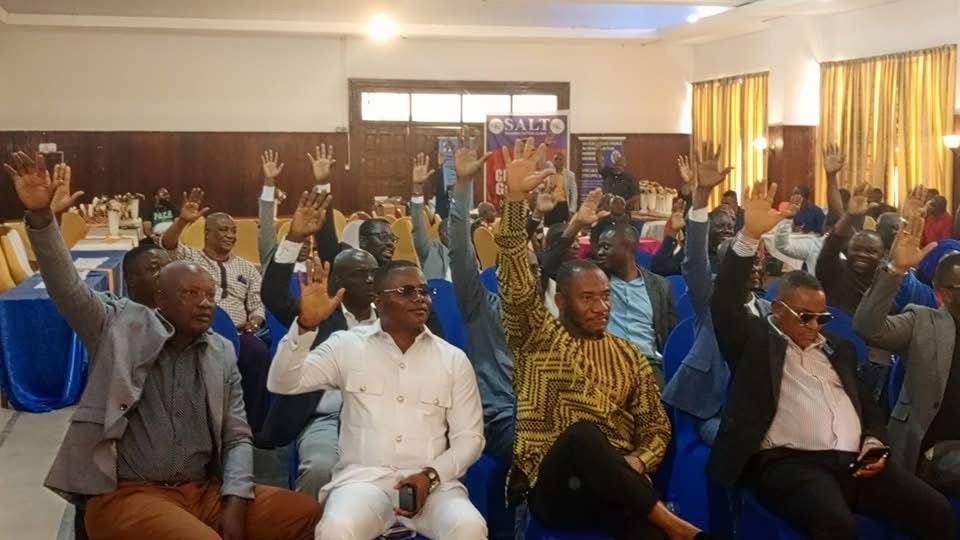
Fonati Koffa. By operating outside the formal legislative chamber and convening parallel sessions, this group has challenged the traditional hierarchy of the House. Their efforts, fueled by allegations of corruption, conflict of interest, and administrative mismanagement against Speaker Koffa, have effectively paralyzed the lower house. The election of Representative Richard Nagbe Koon as a rival Speaker by this bloc represents a seismic shift that threatens to destabilize the legislative branch.
The political friction is not merely a contest for power; it reflects a broader struggle over the governance direction of President Joseph Nyuma Boakai’s administration, which took office with promises of transparency and accountability. The submission of the 2025 Draft National Budget on November 18, 2024, served as the catalyst that brought these simmering tensions to a boil. When the Executive Branch, headed by President Boakai, chose to present the $851 million draft budget—which was later adjusted to $880 million—to the Majority Bloc via the Office of the Chief Clerk rather than through the formal office of the Speaker, it effectively signaled the administration's acknowledgment of a new power center within the House. This departure from the constitutional protocol prescribed by the Public Financial Management (PFM) Law was met with immediate, fierce condemnation from Speaker Koffa’s supporters.
They argued that by bypassing the Speaker, the Executive Branch had fundamentally violated the Presentment Clause, a bedrock principle meant to ensure that legislative acts are handled through proper, accountable channels. For the opposition, this was not just a procedural hiccup; it was an act of political overreach that threatened the very structure of checks and balances that define Liberian constitutional democracy. The implications of this procedural sidestepping extend far beyond the corridors of the Capitol building. In the context of Liberia’s history, where executive dominance has historically overshadowed legislative independence, the willingness of the Executive to engage with a splintered faction of the legislature raises grave concerns about the erosion of institutional checks.
If the PFM law—designed to provide a rigorous, transparent framework for national expenditure—can be bypassed in the name of political expediency, the integrity of the entire budgetary process is called into question. The economic impact is equally concerning. The Liberian Senate’s unprecedented decision to abandon the traditional joint review process with the House of Representatives further fragmented the scrutiny of the budget. By mandating that its own committees handle the review independently, the Senate effectively signaled a lack of confidence in the operational legitimacy of the House.
This forced government officials to navigate a labyrinth of hearings, appearing multiple times before disparate committees. Such duplication of effort risks not only slowing down the fiscal approval process but also diluting the quality of oversight, as public officials are pulled in conflicting directions by warring legislative factions. The efficiency of service delivery—already burdened by limited revenue generation and infrastructure deficits—is the ultimate victim. When a budget is pushed through under a cloud of controversy and without the robust, unified scrutiny traditionally provided by a joint legislative committee, there is a higher risk of hidden inefficiencies or misallocation of funds.
Despite these systemic shocks, the House Majority Bloc moved to approve the $880 million budget on December 19, 2024. The Senate, seeking to avert a complete fiscal shutdown, followed suit the next day, unanimously endorsing the budget after a debate that highlighted the profound unease felt by some senators. This swift, yet divisive, passage has left a lingering question regarding the legal status of the entire 2025 fiscal roadmap. The Constitutional implications of this crisis reached the steps of the Temple of Justice, the seat of the Supreme Court of Liberia.
Speaker Koffa and his legal team petitioned the High Court to intervene, arguing that the actions of the Majority Bloc—ranging from unauthorized plenary sessions to the suspension of colleagues and the arbitrary restructuring of committees—were flagrantly unconstitutional. They contended that these actions violated the due process rights of the leadership and infringed upon the core tenets of legislative decorum. However, the Supreme Court’s December 6, 2024, ruling delivered a chilling effect on those seeking judicial remedy. Chief Justice Sie-A-Nyene Yuoh, in a decision that underscored the Court’s reluctance to wade into political waters, ruled that the judiciary could not resolve what it termed an 'internal legislative matter.'
The principle of the separation of powers was invoked to justify this stance, with the Court maintaining that it could not perform the functions of the legislature. While legally defensible under the doctrine of political questions, the ruling has left a vacuum of authority. Critics argue that by choosing neutrality, the Supreme Court inadvertently legitimized a chaotic power grab. If the Court refuses to act when the legislature itself violates its own rules of procedure and standing orders, where then does the citizen turn for constitutional protection?
This dilemma highlights a recurring challenge for young democracies in the West African sub-region: the difficulty of maintaining the rule of law when political factions prioritize narrow interests over the constitutional order. The regional significance of this event cannot be understated. As ECOWAS and other international partners watch Liberia, the stability of its democratic institutions is a bellwether for the region. Liberia has, since the end of its civil wars, worked to cultivate a reputation as a country that adheres to the democratic process.
The budget crisis, however, serves as a sobering reminder of how quickly these gains can be undermined by internal political disputes. The 2025 fiscal year will likely be defined by this turbulence. With the budget now approved, the government faces the arduous task of implementation. Yet, the legitimacy crisis remains unaddressed.
For the Boakai administration, the challenge lies in balancing the need for economic development with the imperative of upholding the rule of law. For the legislature, the task is to reconcile its internal divisions before the reputation of the branch is irreparably damaged. As Liberia moves forward, the shadow cast by this budget battle will persist, serving as a cautionary tale about the necessity of procedural integrity in the governance of a modern state. Without a formal resolution to the leadership impasse and a commitment to restoring the decorum of the House, the 2025 fiscal plan may be viewed less as a document of development and more as a symbol of institutional decay.
True progress in Liberia will require more than just the passage of a budget; it will require the restoration of trust in the institutions that manage the nation’s wealth and future.
