
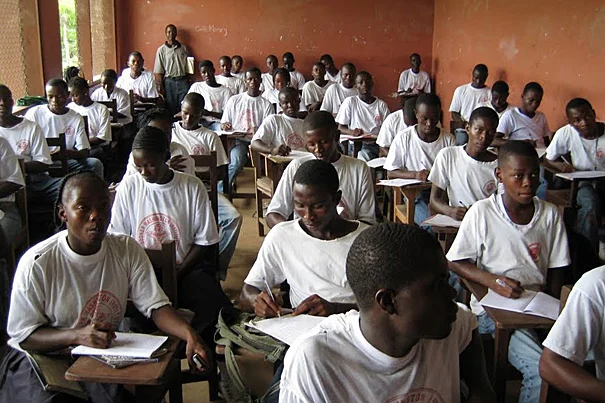
Gender equality in education stands as the bedrock of Liberia’s path toward sustainable development and true democratic maturity. As a nation emerging from the shadows of a protracted civil conflict that devastated its social fabric for over a decade, Liberia recognizes that the empowerment of its female citizens is not merely a moral imperative but an economic necessity. While the country has achieved notable milestones in political representation—most famously with the inauguration of Ellen Johnson Sirleaf in 2006 as Africa's first democratically elected female head of state—the education sector remains a theater of stubborn inequity. In Liberia, the journey to universal, gender-equal education is hindered by a complex interplay of deep-seated cultural traditions, the lingering scars of systemic violence, and the crushing weight of economic underdevelopment.
To understand why the gender parity index continues to languish, one must look beyond enrollment numbers and delve into the structural and historical realities that define the Liberian experience. Historically, the Liberian educational system was built upon a model of elitism that often marginalized rural populations, with girls facing the additional burden of societal expectations that reduced their role to domestic maintenance rather than intellectual pursuit. In many indigenous communities, the traditional role of the woman as the anchor of the household—responsible for child-rearing, subsistence farming, and community trade—has long been prioritized over formal academic attainment. This cultural architecture often views an investment in a daughter’s education as a 'loss' to the family unit, under the belief that she will eventually marry into another clan or family, whereas a son is viewed as a future provider for his parents.
These attitudes are not easily dismantled by legislation alone; they are woven into the fabric of daily life, particularly in counties outside of the capital, Monrovia. When families face economic constraints, as is the case for a significant percentage of the Liberian population living below the poverty line, these cultural biases lead to an almost binary choice: if money for school fees is limited, the boy is sent to the classroom while the girl is relegated to the home or informal labor markets. The cost of education, even in public schools which theoretically carry no tuition, involves 'hidden' expenses like uniforms, transportation, and school supplies. These costs often trigger the abandonment of schooling for girls, a phenomenon that has long-term ramifications for the national economy.
Beyond the classroom walls, the specter of gender-based violence (GBV) casts a long shadow over the educational prospects of Liberian girls. The trauma of the civil war normalized violence against women, and while the Ministry of Gender, Children and Social Protection has made valiant efforts to combat this, sexual harassment and exploitation remain pervasive within and around academic institutions. The physical journey to school, often involving long treks through isolated areas, poses a persistent danger. When parents fear for the safety of their daughters, the most common 'protective' response is to keep them home.
This cycle of fear not only deprives girls of their fundamental right to learn but also reinforces a patriarchal status quo where women are discouraged from traversing public spaces independently. The psychological burden of constant vigilance acts as a barrier to concentration and academic success, leading to higher dropout rates as girls reach puberty and become even more vulnerable to societal pressures and exploitation. Furthermore, the issue of limited resources highlights the stark inequality in the national distribution of educational infrastructure. Liberia’s schools often lack basic sanitation facilities, such as private, secure toilets, which is a critical deterrent for adolescent girls who require privacy during their menstrual cycles.
The absence of feminine hygiene products and adequate facilities often forces girls to miss several days of school each month, creating a cumulative disadvantage that eventually leads to a complete withdrawal from the system. When a student misses 20 to 30 percent of school days due to lack of sanitation, they inevitably fall behind in the curriculum, losing interest or failing out as a direct result. This is compounded by a severe shortage of qualified female teachers who could serve as role models, mentors, and protectors for young girls. Without such representation, the school environment remains a male-dominated space where the specific needs of female students are often ignored or treated as secondary concerns.
The statistical reality confirms these lived experiences. According to recent data from United Nations agencies, the net enrollment rate for primary school in Liberia remains skewed; in 2019, approximately 62 percent of girls were enrolled compared to 68 percent of boys. While these figures suggest a narrow gap at the primary level, the disparity widens significantly as children progress. The gender parity index (GPI) of 0.
91 at the primary level drops to 0.75 at the secondary level. This decline indicates that the system is losing girls at a disproportionate rate as they reach the age where societal and cultural pressures—such as early marriage or the need for domestic help—become more acute. This 'leaking pipeline' of female students results in a workforce that is predominantly male-led, perpetuating the cycle of gender inequality in professional sectors.
If Liberia is to break this cycle, a multifaceted approach is required, one that transcends mere policy drafting. Policy reforms must be paired with aggressive enforcement mechanisms that mandate gender-sensitive curricula and institutional accountability for teachers and administrators who fail to support female students. Community engagement is equally vital. The 'buy-in' of traditional and religious leaders is essential, as these figures hold immense sway over local communities.
By reframing education not as a threat to tradition but as a tool for community prosperity and poverty reduction, the narrative around girls' education can be shifted. We must also acknowledge that economic empowerment for women is the inverse of the educational struggle; when families are supported through social safety nets or conditional cash transfers that encourage school attendance for girls, the family’s reliance on child labor decreases. Investment in infrastructure must focus on 'girl-friendly' schools, including private, safe, and dignified water and sanitation facilities. Furthermore, expanding the number of women in the teaching profession—particularly in STEM fields—can provide the visual and social proof required to change the perceptions of young girls regarding their own potential.
The broader regional significance of this issue cannot be overstated. Liberia operates within the context of the Economic Community of West African States (ECOWAS), where gender parity is a stated goal for regional development. Success in Liberia could serve as a blueprint for its neighbors, demonstrating how a post-conflict nation can utilize education to reshape its social trajectory. Conversely, failing to address these gaps threatens to keep Liberia in a state of perpetual inequality, hindering its ability to compete in a global economy that demands a highly skilled, diverse workforce.
Achieving true gender equality in education is not just about counting heads in classrooms; it is about guaranteeing the safety, dignity, and future potential of every Liberian child. It requires the state to treat the education of girls as a priority, ensuring that the next generation of Liberian women is equipped to participate fully in the governance, economy, and social development of their nation. Until the systemic, cultural, and material barriers are systematically dismantled through sustained policy, investment, and advocacy, the promise of equal opportunity will remain an elusive goal for the girls of Liberia.



