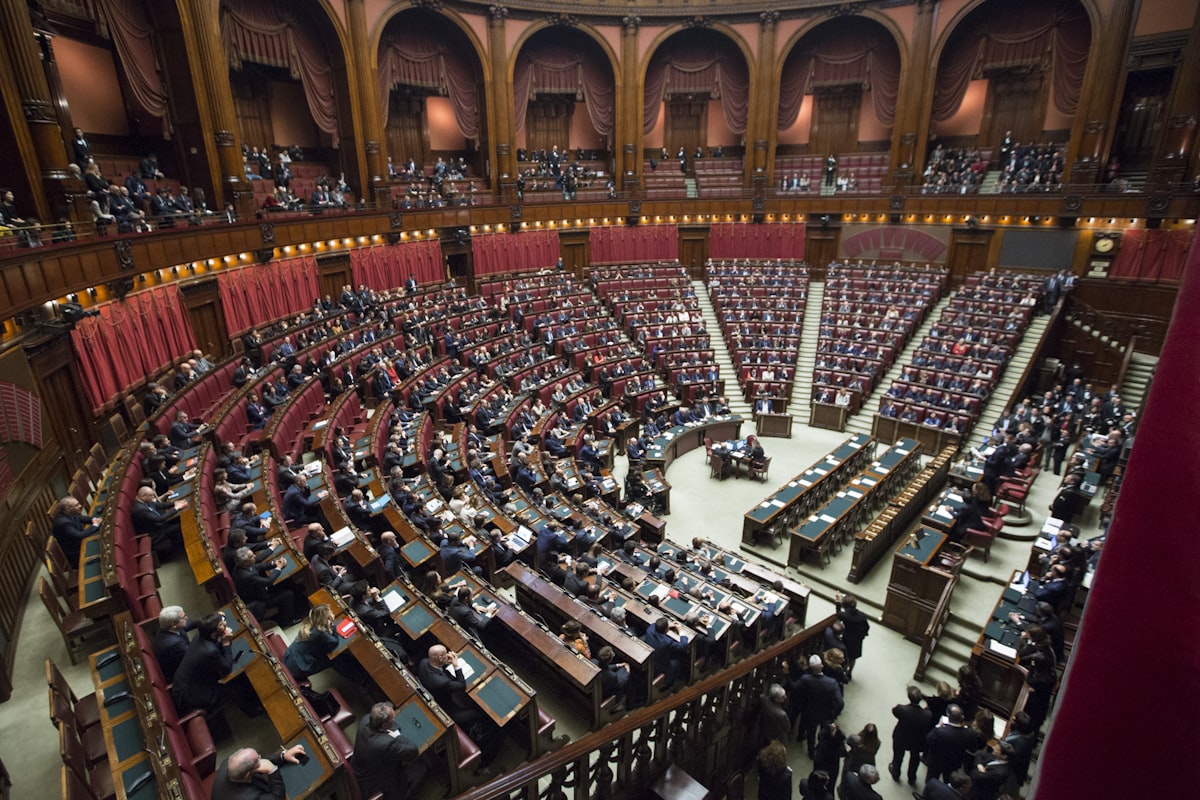
The regional legislative assembly of the Economic Community of West African States (ECOWAS) has found itself unexpectedly at the center of a profound constitutional crisis emanating from Monrovia, Liberia. In a move that has sent shockwaves through the corridors of regional diplomacy, the ECOWAS Parliament has officially rebuffed an attempt by a faction within the Liberian House of Representatives to unilaterally recall three sitting members of the regional body: Representatives Moima Briggs-Mensah, Taa Wongbe, and Samuel Enders. This development serves as a critical stress test for the integrity of West African regional integration and highlights the dangerous intersections between domestic political infighting and international protocol. The confrontation is not merely a procedural dispute; it is a fundamental clash between the sovereign whims of a domestic legislative majority and the immutable, treaty-based rules of a supranational institution.
At the heart of the matter lies a fractious power struggle within the Liberian legislature, characterized by the 'Majority Bloc's' effort to unseat the sitting Speaker, Fonati Koffa, and subsequently purge his allies from prestigious and influential positions, including those representing Liberia at the regional level. The Majority Bloc, acting under the direction of individuals aligned against Speaker Koffa, moved to withdraw the trio, alleging that their initial appointments were marred by procedural irregularities and lacked the necessary political balance mandated by internal house politics. To facilitate this, the Bloc moved to elect a new set of representatives on February 25, 2025, essentially attempting to install a rival delegation to be recognized by the ECOWAS leadership. This maneuver, however, encountered a formidable wall in the form of ECOWAS’s Supplementary Act, specifically Rule 5 of its procedural protocols.
This rule is designed to safeguard the stability of the parliament by ensuring that elected members serve out their fixed mandates, protecting them from the capricious shifts of national political winds. ECOWAS officials have been unequivocal: mid-term recalls are prohibited unless the representative dies, resigns, or is rendered incapable of fulfilling their duties through legal or physical constraints. By ignoring these explicit legal barriers, the faction in Monrovia has inadvertently exposed Liberia to potential diplomatic isolation and has raised urgent questions regarding the country's commitment to the regional treaty obligations that bind the fifteen-nation bloc. The regional implications of this standoff are severe.
For decades, Liberia has played a pivotal role in the ECOWAS project, particularly during the transition from the post-conflict era into the modern democratic framework. By challenging the autonomy of the ECOWAS Parliament, the current legislative upheaval risks undermining the credibility of the entire body. If member states were permitted to recall delegates whenever a domestic majority shifted, the regional parliament would effectively become a hollow vessel for the party politics of individual capitals, rather than a cohesive voice for the citizens of West Africa. Senator Edwin Snowe, a seasoned figure in both Liberian and regional politics, has emerged as the principal defender of the rule of law in this instance.
His sharp rebuke of the recall attempt serves as a poignant reminder that regional governance institutions must transcend local disputes. Snowe’s assertion that even the Chairman of the Authority of ECOWAS heads of state, President Bola Ahmed Tinubu of Nigeria, lacks the legal standing to interfere with these specific parliamentary protocols, underscores the degree to which the ECOWAS Parliament operates as an independent, autonomous organ. This is an essential check and balance in a region historically prone to the whims of executive or partisan overreach. The backing of the Liberian delegates by parliamentarians from Sierra Leone and Nigeria highlights a growing consensus across the region: the integrity of ECOWAS institutions must be insulated from the domestic turbulence of its constituent parts.
When Hon. Abdul Kargbo of Sierra Leone or Senator Mohammed Ali Ndume of Nigeria speak on this issue, they are not merely weighing in on a Liberian affair; they are protecting their own mandate. They understand that if the precedent for arbitrary recall is set in Monrovia, it could be weaponized in any other West African capital, effectively destroying the continuity and institutional memory of the regional legislature. For Liberia, the economic and social implications are just as grave as the political ones.
Liberia’s engagement with ECOWAS is the backbone of its foreign policy, providing a platform for trade harmonization, security cooperation, and legislative alignment that is crucial for the post-conflict recovery of the nation. When Liberia is embroiled in unnecessary, self-inflicted institutional instability, it diminishes its standing in the eyes of international investors and development partners who look to regional stability as a primary indicator of country risk. President Joseph Boakai now finds himself in an unenviable position. As the head of state, he is expected to uphold the democratic tenets of the nation, yet he is facing a legislative body that is increasingly polarized and unmanageable.
If the executive branch remains passive or fails to project a clear commitment to regional protocols, it may signal to the international community that Liberia’s legislature is descending into a state of institutional decay. Diplomatic observers suggest that the President must balance the sensitivities of his legislative peers against the absolute requirement to respect the binding agreements Liberia has signed with its neighbors. The current crisis, therefore, is a test of Liberia’s democratic maturity. It forces the question: can a nation remain a reliable partner in regional integration when its internal institutions are tearing themselves apart for the sake of narrow, partisan control?
The answer from the ECOWAS Parliament has been a resounding 'no' to the tactics employed by the Majority Bloc. By denying the legitimacy of the recall, ECOWAS has effectively rendered the efforts of the Monrovia faction null and void, forcing them to confront the reality that they cannot impose their domestic political grievances onto an international legal framework. As the dust begins to settle, it remains to be seen whether the Liberian leadership will choose to respect these regional red lines or if they will continue to press forward in a manner that further isolates the country. For the sake of Liberia’s reputation, and for the health of regional diplomacy in West Africa, the path forward must involve an immediate recalibration toward respect for institutional norms.
The ECOWAS Parliament has shown that it is not merely a collection of figureheads; it is a legislative body governed by its own charter. Liberia’s attempt to circumvent these rules serves as a cautionary tale of what happens when domestic political ambitions collide with the hard realities of international law. The stability of Liberia’s future and its role as a leader in the Mano River Union and the broader West African community depends on its ability to transcend this legislative infighting and return to a position of professional, constitutional engagement with its regional counterparts. The lesson here is clear: while power may be fleeting in the halls of the Capitol Building in Monrovia, the protocols that define Liberia’s standing in the community of nations are not.